
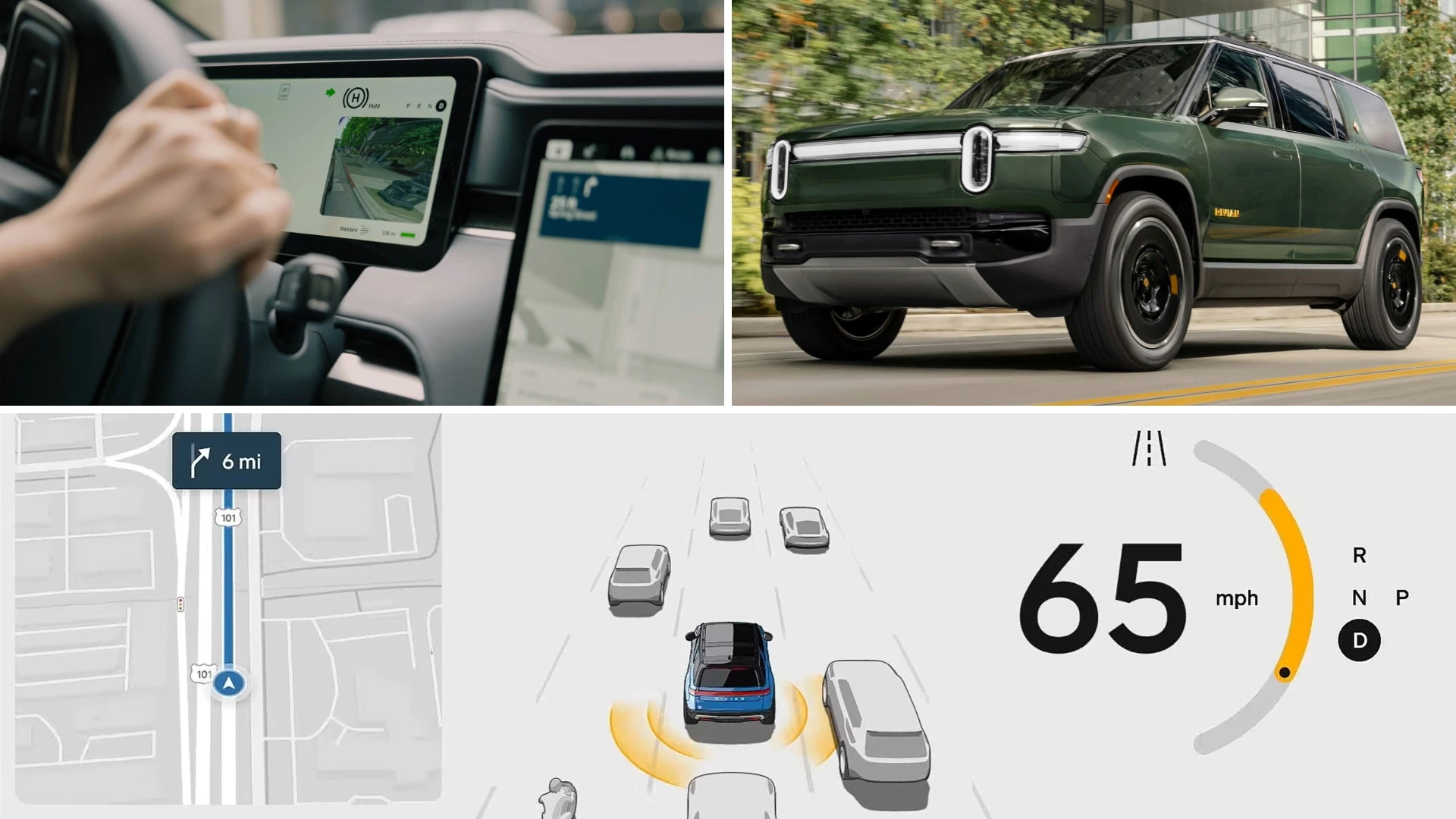
PALO ALTO, Calif. — Electric vehicle maker Rivian unveiled an aggressive path toward expanded autonomous capabilities on Thursday, detailing a series of new tools and long term plans that the company said could reshape how drivers use and share their cars.
CEO RJ Scaringe presented the strategy at an event in Palo Alto, calling it the beginning of Rivian’s most significant investment yet in autonomous driving.
Rivian’s announcement centers on a broader upgrade of its driver assistance systems and a sustained push through 2026 to advance what the company calls “Rivian autonomous driving,” a suite of technologies meant to reduce the need for human intervention on the road.
The company said its first step will be rolling out Universal Hands Free, a tool that enables hands free driving on more than 3.5 million miles of marked highways in the United States.
The feature is coming first to the second generation R1 trucks and SUVs that entered production in 2024, though drivers are still required to remain alert.
Rivian’s website acknowledges the system cannot stop for traffic lights or stop signs, a limitation shared by other advanced driver assistance systems currently on the market.
Future versions of the technology, Scaringe said, are expected to support point to point travel, allowing drivers to enter a destination and let the vehicle handle the bulk of the route.
The announcement reflects an increasingly competitive environment in the EV sector, where Rivian is attempting to regain momentum after its stock lost much of its value following its 2021 IPO.
Analysts said the push toward Rivian autonomous driving could give the company a clearer business model built on recurring software revenue.
“Rivian needs a differentiator, and autonomy could be it if they execute well,” said Mark Feldman, an automotive analyst at Velocity Research Group.
“Ford and GM have had a head start, but the market is still wide open for a credible Level 4 contender.” Rivian plans to introduce a new Autonomy+ subscription package priced at $2,500 upfront or $50 per month.
Revenue from software features has become a growing focus for automakers, and Feldman said Rivian’s strategy mirrors trends seen across the industry.
Scaringe said Rivian intends to redesign its sensing infrastructure in future EVs with upgraded lidar, radar and camera systems, supported by custom built AI chips.
These upgrades, he said, are prerequisites for achieving Level 4 autonomy, where a vehicle can operate without a human driver under most conditions.
“Level 4 capability completely changes the relationship people have with their cars,” Scaringe said at the event.
Rivian’s autonomous roadmap enters a crowded field marked by rapid change, uneven regulation and varied performance among leading systems.
Ford’s BlueCruise and GM’s Super Cruise both provide hands free highway driving, while Tesla’s Full Self Driving remains in ongoing regulatory scrutiny. Waymo and Zoox are operating limited robotaxi services but largely within constrained geofenced areas.
Industry data from the research firm Autonomy Index found that more than thirty million US vehicles now include some type of advanced driver assistance system, though only a fraction offer features comparable to Rivian autonomous driving.
The report also noted that Level 4 capability remains “years from widespread deployment,” largely because of safety, infrastructure and policy barriers.
Reaction among Rivian owners and local attendees at the launch event was mixed but largely hopeful. Sarah Valdez, a software engineer from San Jose who purchased an R1S last year, said she welcomed the updates but remained cautious about full autonomy.
“I trust Rivian’s engineering, but I still want to know exactly how these systems make decisions,” Valdez said. Others saw the technology as a natural progression.
Adam Reiner, a delivery fleet operator in Oakland, said the long term promise of Rivian autonomous driving could transform logistics.
“If Level 4 becomes reliable, small businesses like mine could cut costs dramatically,” Reiner said. “It’s not just convenience it could shift whole industries.”
Scaringe said Rivian is exploring how autonomous features could support shared or multi user vehicle models. He noted that fully self driving vehicles could serve as community assets, shuttling between households or acting as on demand transport.
The CEO did not rule out potential competition with robotaxi players like Waymo or Tesla, though he said Rivian’s priority remains personal vehicle autonomy.
Industry experts said the company is unlikely to launch a commercial rideshare platform immediately but could partner with existing services.
“The more interesting question is whether Rivian can create a profitable hybrid model of ownership and shared mobility,” said Priya Anand, a transportation researcher at Western Institute of Technology. “Autonomy enables entirely new business structures.”
Rivian’s expanded push into autonomous driving marks a pivotal moment for the young automaker as it seeks to stabilize its financial position and carve out space in an increasingly crowded EV landscape.
While the company faces technical and regulatory challenges, analysts say its commitment to long term development of Rivian autonomous driving reflects a broader industry shift toward software driven revenue and more flexible models of vehicle use.
How quickly Rivian can translate its vision into practical, road tested capability remains an open question.


