
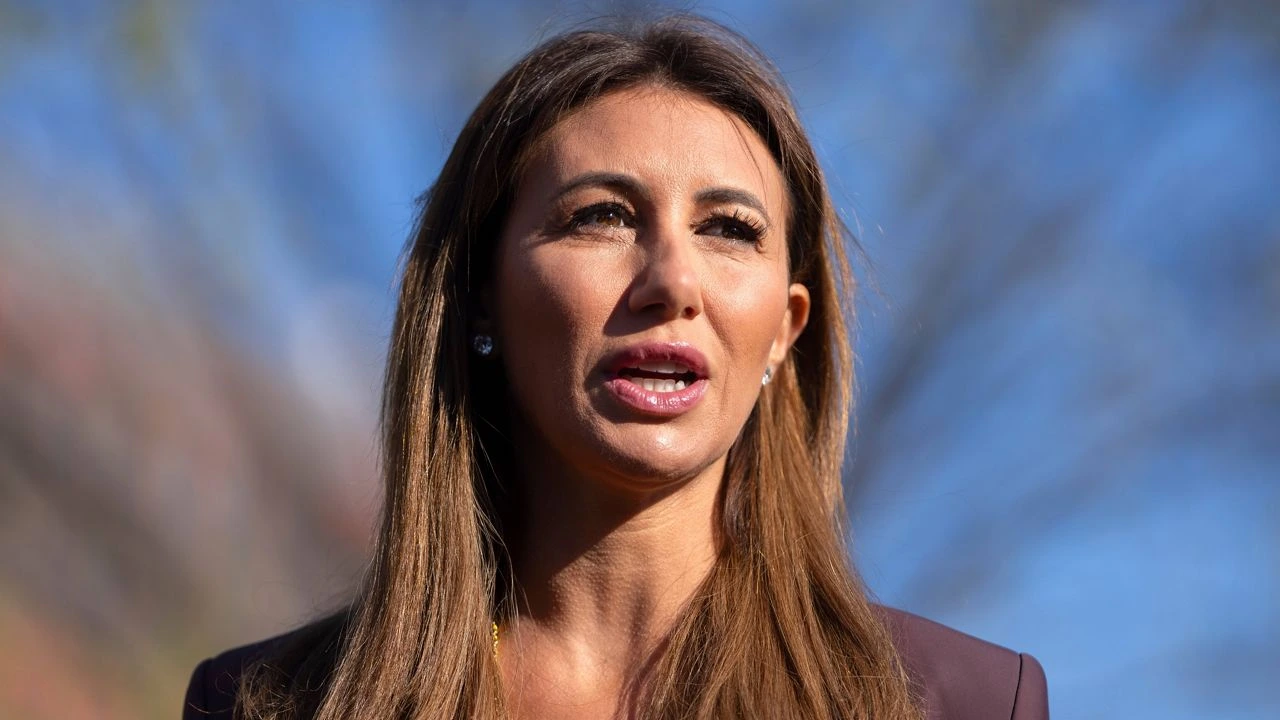
Alina Habba resigned Monday as US attorney in New Jersey after a federal appeals court ruled that her extended interim appointment violated the law, ending a turbulent nine month tenure marked by political controversy, courtroom challenges and questions over presidential authority.
The Alina Habba resignation immediately reshaped leadership inside one of the Justice Department’s busiest regional offices.
Habba, a former personal lawyer to President Trump, said she stepped down to preserve the office’s “stability and integrity,” though she sharply criticized the legal ruling that forced her exit.
Habba was appointed interim US attorney in March after serving as a prominent legal defender for Trump. When her authorized term expired in July, the Justice Department kept her in place through administrative extensions that sparked immediate lawsuits.
Last week, the Court of Appeals for the Third Circuit upheld a lower court decision that declared those extensions unlawful.
The panel ruled that federal law does not allow indefinite interim appointments without Senate confirmation or judicial designation, the two standard pathways for selecting permanent US attorneys.
The Alina Habba resignation marks a rare instance in which a federal appeals court curtailed the executive branch’s latitude in staffing key prosecutorial posts.
The decision also created uncertainty for several high profile cases her office initiated, including charges against Newark Mayor Ras Baraka and Representative LaMonica McIver after a confrontation with agents at a migrant detention center on May nine.
Legal scholars said the ruling underscores tensions between the Trump administration and the judiciary over appointment powers.
“The court sent a clear message that statutory limits apply even when political pressure is high,” said Linda Serrano, a Georgetown University law professor who studies federal appointments.
“The Alina Habba resignation highlights how the Justice Department’s workaround clashed with long standing separation of powers principles.”
Former federal prosecutor Mark Delaney said the decision could influence future administrations.
“It is unusual for the courts to intervene so directly, but this decision sets a precedent that interim appointments cannot be stretched beyond their statutory purpose,” he said.
Attorney General Pam Bondi, who called the situation “untenable,” said the department will appeal the ruling and pledged to restore Habba if the decision is overturned.
New Jersey’s US attorney’s office handles one of the nation’s highest volumes of public corruption, cybercrime and corporate fraud cases.
According to Justice Department figures, the office brought more than four hundred federal prosecutions last year, including several involving gangs and drug trafficking networks.
By comparison, the Eastern District of New York and the District of Massachusetts averaged roughly fifteen percent fewer criminal filings during the same period.
Analysts said that leadership turnover in such a high pressure office often produces operational slowdowns, particularly in long running investigations.
The restructuring following the Alina Habba resignation placed three senior prosecutors in charge of divided portfolios. Philip Lamparello will oversee criminal matters, Jordan Fox will lead civil and appellate work, and Ari Fontecchio will handle administrative operations.
Inside the New Jersey legal community, reactions were mixed. Carla Jiménez, a Newark civil rights attorney, said some trials had already been affected.
“We saw delays in court because judges were unsure whether certain filings were valid under an unlawfully extended appointment,” she said.
But Joseph Mandal, a former assistant US attorney now in private practice, said Habba kept a strong grip on day to day operations. “Despite the legal challenges, her team moved aggressively on major cases.
The Alina Habba resignation raises real questions about what happens to those prosecutions now.” Local residents expressed concern that political conflict would overshadow public safety.
“People just want the office to function normally,” said Michael Reyes, a community organizer in Jersey City. “We need stability more than anything else.”
Bondi’s vow to appeal sets up a potential Supreme Court battle over the limits of presidential discretion in appointing interim prosecutors.
Until then, the New Jersey office will operate under the tri leadership structure, which analysts say will likely keep Washington closely involved.
If the appeal fails, the ruling could restrict future presidents from extending interim appointments, forcing faster Senate confirmations or more frequent judicial designations.
That constraint would narrow the flexibility the Trump administration relied on during Habba’s tenure.
Observers said the Alina Habba resignation may also shape how Congress approaches revisions to the Federal Vacancies Reform Act, which has drawn scrutiny from both parties in recent years.
Habba’s abrupt departure leaves behind a period marked by political friction, legal tests and an unsettled debate over executive authority.
As the Justice Department navigates the aftermath of the Alina Habba resignation, officials, courts and local communities will watch closely to see whether the appeals process reshapes the boundaries of federal prosecutorial power.


