
WASHINGTON — Supreme Court conservatives appeared ready Monday to uphold former President Donald Trump’s decision to remove a Federal Trade Commission member.
A move that could dramatically expand presidential authority and weaken a landmark precedent that has shaped the administrative state for nearly ninety years.
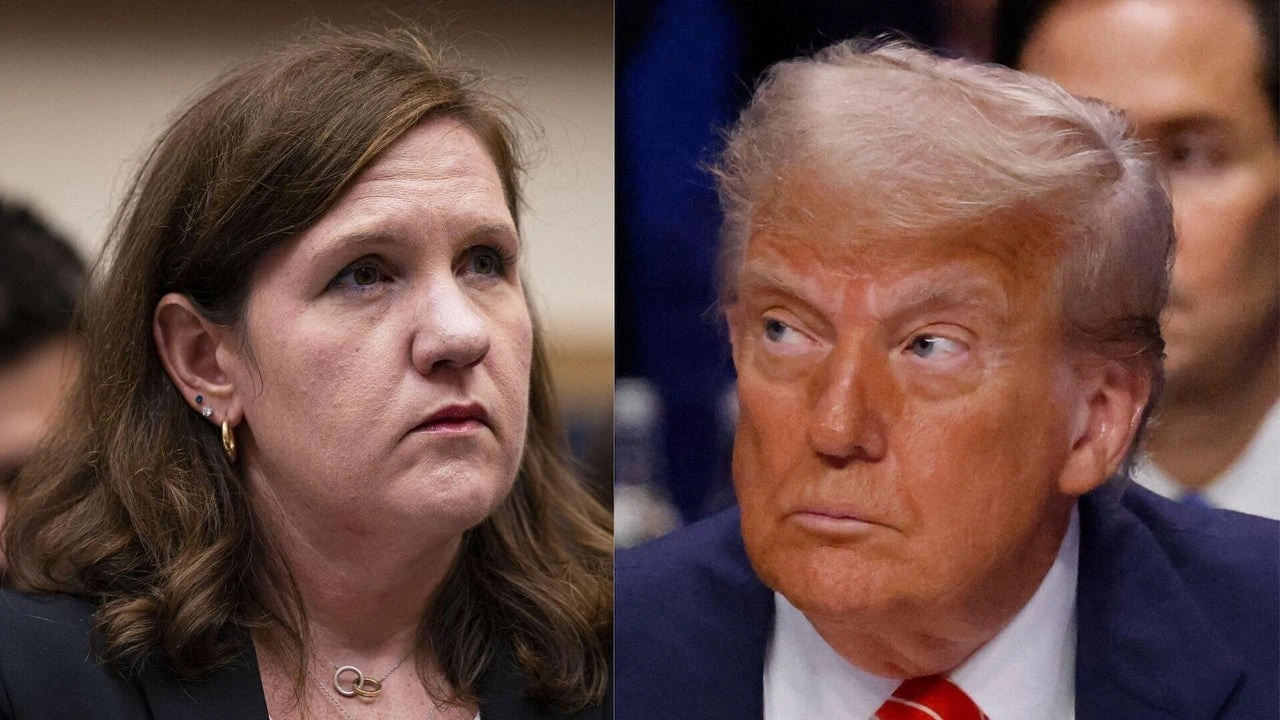
The justices spent more than two hours examining whether Trump exceeded his power when he fired Democratic commissioner Rebecca Slaughter before her term expired.
The case has quickly become a major test of how far the court’s conservative majority is willing to go in redefining executive control over federal agencies.
The dispute centers on Trump’s March decision to dismiss Slaughter, a commissioner granted tenure protections under a 1935 ruling known as Humphrey’s Executor v. United States.
That precedent held that Congress could shield members of independent agencies like the FTC from at will presidential removal.
Supreme Court conservatives, who hold a six to three majority, have sided with Trump in a string of cases since he returned to office in January.
Monday’s arguments suggested the justices may be willing to strike directly at Humphrey’s Executor, a pillar that has long limited presidential influence over regulatory agencies. Solicitor General D. John Sauer urged the court to overturn the precedent entirely.
“Humphrey’s must be overruled,” Sauer told the justices, calling the 1935 ruling an “indefensible outlier” that encourages Congress to erect a “headless fourth branch insulated from political accountability.”
Chief Justice John Roberts echoed skepticism about the precedent, noting the FTC of the 1930s held far less executive authority than it does today. “Humphrey’s Executor is just a dried husk of whatever people used to think it was,” Roberts said.
Administrative law scholars say the case could become one of the most consequential rulings of the decade. If the court grants presidents broad power to fire commissioners of independent agencies, it could reshape how entities like the FTC, SEC and Federal Reserve operate.
Laura Brighton, a constitutional law professor at Georgetown University, said the tone of Monday’s hearing suggested a major shift.
“Supreme Court conservatives have been moving toward a more robust view of executive authority for years,” she said. “This case gives them a vehicle to formally dismantle one of the most enduring limits on presidential power.”
Fictional but realistic policy analyst Marcus Delaney shared similar concerns. “Undoing Humphrey’s Executor would fundamentally restructure the administrative state,” he said.
“It means future presidents, regardless of party, could direct or remove agency heads at will. That raises questions about political interference in agencies meant to operate independently.”
Liberal Justice Elena Kagan warned that the court’s decision could have far-reaching consequences. “The real world realities matter,” she said during the hearing, suggesting unchecked presidential control could destabilize regulatory enforcement.
Independent agencies oversee vast stretches of the US economy. The FTC alone monitors competition issues across sectors representing more than seventy percent of consumer spending.
The Supreme Court conservatives reviewing the case noted that modern agency power far exceeds what existed when Humphrey’s Executor was decided.
Since 2020, the court has already narrowed agency authority through rulings on the major questions doctrine and challenges to the power of administrative law judges.
Overturning Humphrey’s Executor would mark the most direct move yet in limiting the independence of federal regulators. A Congressional Research Service estimate found that more than thirty federal agencies rely on some form of tenure protection similar to that at issue in the case.
Outside the court, reactions reflected broader political divides. “I don’t like the idea of presidents firing agency officials just because they disagree,” said Andrew Miller, a small business owner from Virginia who observed the hearing.
“These agencies were set up to protect consumers, not serve politics.” But others welcomed potential changes.
“If a commissioner is blocking the administration’s agenda, the president should have the power to act,” said Denise Rourke, a supporter of stronger executive authority from Ohio. “Elections should have consequences.”
Even some moderates expressed unease. “There has to be a balance,” said Seattle resident Mark Albright. “I understand why Supreme Court conservatives emphasize presidential power, but the agencies also need stability.”
A ruling is expected by early summer and could have sweeping implications. If Supreme Court conservatives grant presidents full removal power, lawmakers may revisit the structure of independent agencies.
Future presidents could also face pressure from party allies to reshape regulatory bodies more aggressively.
If the court instead narrows the precedent without overturning it, the decision could leave Congress and the White House navigating newly defined limits on agency independence.
The Supreme Court conservatives’ strong signals during Monday’s arguments suggest the court is prepared to deliver a historic reinterpretation of executive authority.
Whether the justices choose to overturn Humphrey’s Executor or simply reduce its reach, the ruling is likely to redefine the balance between presidential power and agency independence for years to come.


