
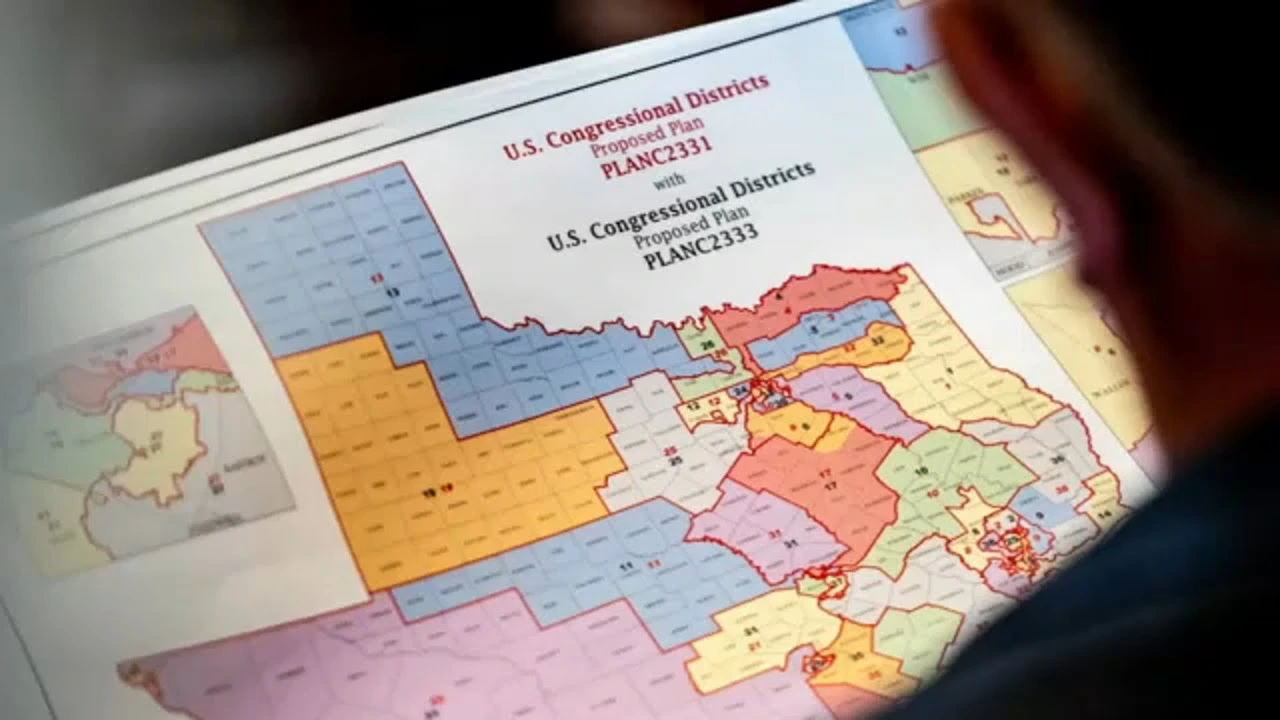
Washington, DC — The US Supreme Court on Thursday allowed Texas to move forward with a controversial congressional district map for the 2026 midterm elections.
Overriding a lower court ruling that had blocked the map over claims of racial gerrymandering. The decision, split along ideological lines, could reshape the political landscape ahead of next year’s pivotal elections.
The Supreme Court’s conservative majority, six justices in total, issued a brief unsigned order in favor of Texas, while the court’s three liberal justices dissented.
The ruling overturns a November order from a lower court that found the state had redrawn its districts to favor Republican candidates in violation of the US Constitution.
Texas officials had filed an emergency appeal, urging the Supreme Court to act swiftly, arguing that candidates needed clarity on district boundaries well in advance of the midterms.
“With campaigning already underway, voters and candidates require certainty,” said State Secretary of Elections Maria Lopez.
The contested map was originally advanced in June amid pressure from former President Donald Trump, who encouraged Republican legislators to adopt a plan that could net the party an additional five House seats. Texas, home to 38 congressional districts, currently has 25 Republican held seats.
Legal analysts note that the Supreme Court’s ruling reflects long standing precedent that lower courts generally should not change election rules close to an election.
“The court’s reasoning emphasizes stability and avoiding disruption in electoral processes,” said Dr. Helen Carter, a political science professor at the University of Texas.
“However, it also raises questions about racial representation and fairness in district design.” Experts warn that the decision could intensify partisan redistricting nationwide.
“Once one state successfully implements a gerrymandered map, it emboldens other states to do the same,” said Jordan Kim, senior analyst at the Election Law Institute.
“We’re already seeing similar efforts in Missouri and North Carolina, both aimed at securing extra Republican seats.” Since Texas’ move, a wave of redistricting efforts has spread across the country.
Missouri Republicans passed a new congressional map in September, potentially adding one seat, while North Carolina followed in October with a similar plan.
California, in contrast, recently approved a ballot initiative that replaced its independent redistricting commission with a new map favoring Democrats, likely adding five seats for the party.
According to recent Gallup polling, Trump’s approval rating fell five points to 36 percent, marking the lowest point of his second term.
Democrats hope to leverage these numbers to flip key House districts, while Republicans view strategic redistricting as critical to maintaining their majority.
Local voters in Texas expressed mixed reactions. “It’s frustrating to feel like our votes might not count equally,” said José Ramirez, a Dallas resident. “But at the same time, I understand the courts are focused on keeping the election process orderly.”
Meanwhile, Republican campaign manager Linda Howard said, “This ruling allows candidates to plan and communicate with constituents. Clarity is essential for a functioning democracy.”
Civil rights advocates voiced concern about the impact on minority communities. “Maps drawn to dilute the influence of certain voters undermine representative democracy,” said Malik Thompson, director of the Texas Voting Rights Center.
The Supreme Court’s decision is expected to influence redistricting battles in other states. Analysts predict intensified partisan strategies leading up to the 2026 midterms, as both major parties seek to maximize their House representation.
Legal challenges may continue, particularly concerning claims of racial gerrymandering and voter suppression. Some observers anticipate that federal courts may still review individual district lines, but the overall map will remain in effect for the upcoming elections.
“This ruling sets a precedent for how the courts handle last minute election disputes,” said Dr. Carter. “It underscores the tension between legal standards and political strategy.”
Thursday’s Supreme Court ruling clears the way for Texas to use its new congressional map in the 2026 midterms, amid ongoing debates over gerrymandering, voter representation, and partisan advantage.
As campaigns gear up, the decision is likely to shape both state and national political strategies while highlighting the enduring influence of redistricting on US elections.


