
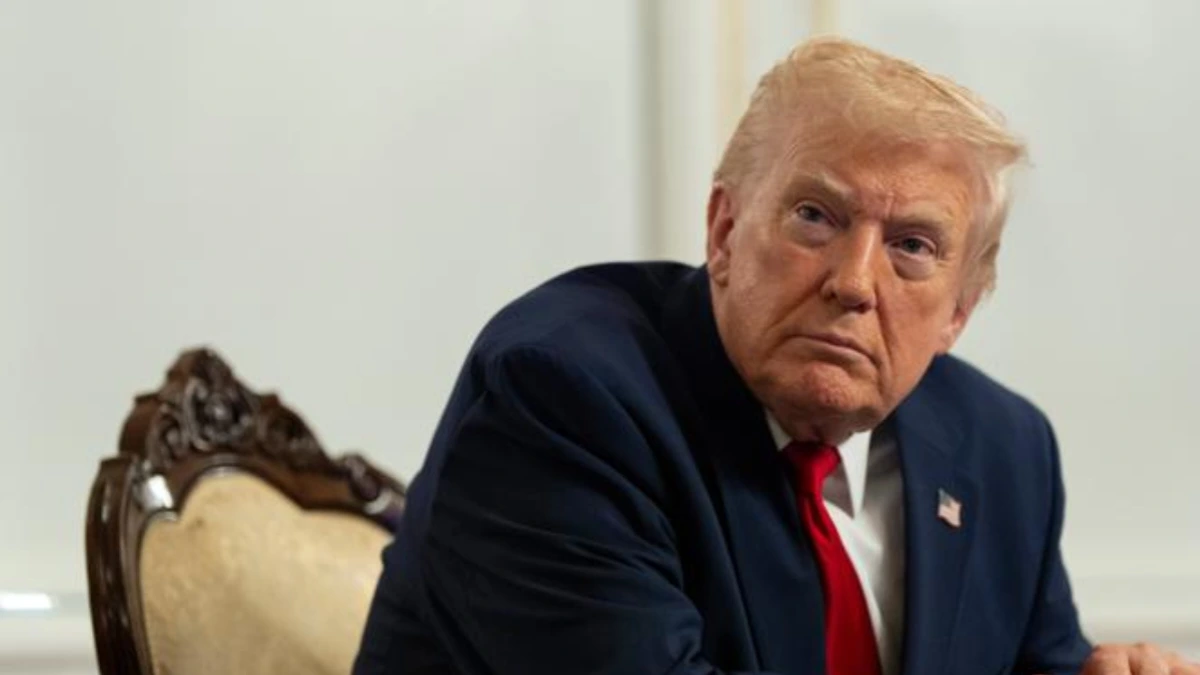
Minneapolis, Minn. — US President Donald Trump on Tuesday referred to Somali immigrants living in the United States as “garbage” and suggested they should leave, claiming without evidence that they “contribute nothing.”
The comments followed reports that federal authorities were preparing an immigration enforcement operation in Minnesota focused on Somali immigrants residing unlawfully in the country.
Almost 58 percent of Somalis in Minnesota were born in the United States, while 87 percent of foreign born Somalis are naturalized US citizens, according to state demographic records.
The remarks have drawn attention amid a broader pause this week by the Trump administration on immigration applications from Somalia, among other countries.
Somalis have fled the Horn of Africa nation for decades. The fall of dictator Siad Barre in 1991 led to violent clashes between warlords, civil war, and the rise of the al-Qaida linked al-Shabab extremist group.
Millions of Somalis were displaced internally or moved to neighboring countries such as Kenya, where some spent years in remote refugee camps before seeking resettlement in the United States or elsewhere.
“The context of Somali migration is often overlooked,” said Dr. Fatima Ali, a migration expert at the University of Minnesota. “Most Somali families arriving in the US have endured extreme conflict and instability, not just in the past but often continuously across decades.”
Inside Somalia, al-Shabab remains a persistent threat, controlling rural areas and carrying out attacks in the capital, Mogadishu. A truck bombing in 2017 killed over 100 people, while a 2019 attack claimed dozens more lives. High profile targets have included the presidential palace and several hotels.
Experts note that US immigration enforcement actions targeting Somali communities must consider the country’s prolonged instability.
“Somalia’s political and security challenges have long term implications for migration,” said Michael Henderson, a senior analyst at the International Crisis Group. “Many of those in the US arrived legally after years of waiting and have integrated into local communities.”
Henderson added that attempts to generalize the contributions of Somali immigrants overlook their economic, social, and cultural impact.
“Somalis in Minnesota, particularly in Minneapolis, operate businesses, serve in health care and education, and actively participate in civic life,” he said.
Minnesota has one of the largest Somali populations in the United States, with nearly 50,000 residents of Somali heritage. More than half were born in the US, according to the Minnesota State Demographic Center, and most foreign born Somalis are naturalized citizens.
Nationally, Somali immigrants have a high rate of entrepreneurship, particularly in small businesses and restaurants, as well as active participation in local governance.
In Minneapolis, residents expressed concern over the president’s remarks and potential enforcement actions. “We’ve built our lives here,” said Ayaan Osman, a Somali American mother of three.
“My children go to school, we contribute to the community. Hearing this language from the president is hurtful and unfair.” Local officials have urged calm.
Council member Hassan Abdi said, “Immigrant communities are a vital part of our city. Targeted enforcement without context could disrupt families and harm community cohesion.”
The pause on Somali immigration applications adds uncertainty for thousands awaiting resettlement. Analysts expect legal challenges and advocacy efforts to intensify as communities and nonprofits respond to possible enforcement operations.
Meanwhile, Somali authorities have remained largely silent publicly, though the prime minister was asked about the situation at a recent event.
“The key concern is ensuring that migration policies are informed by facts and humanitarian considerations,” said Dr. Ali. “Broad statements that dismiss entire communities do not reflect the reality on the ground.”
Somalia remains fragile, with continued insecurity, sporadic violent attacks, and complex political dynamics. In Minnesota, Somali immigrants have established strong community networks despite decades of upheaval in their homeland.
As federal immigration policies evolve, residents, experts, and local leaders emphasize the importance of balanced approaches grounded in facts, humanitarian law, and community stability.


