
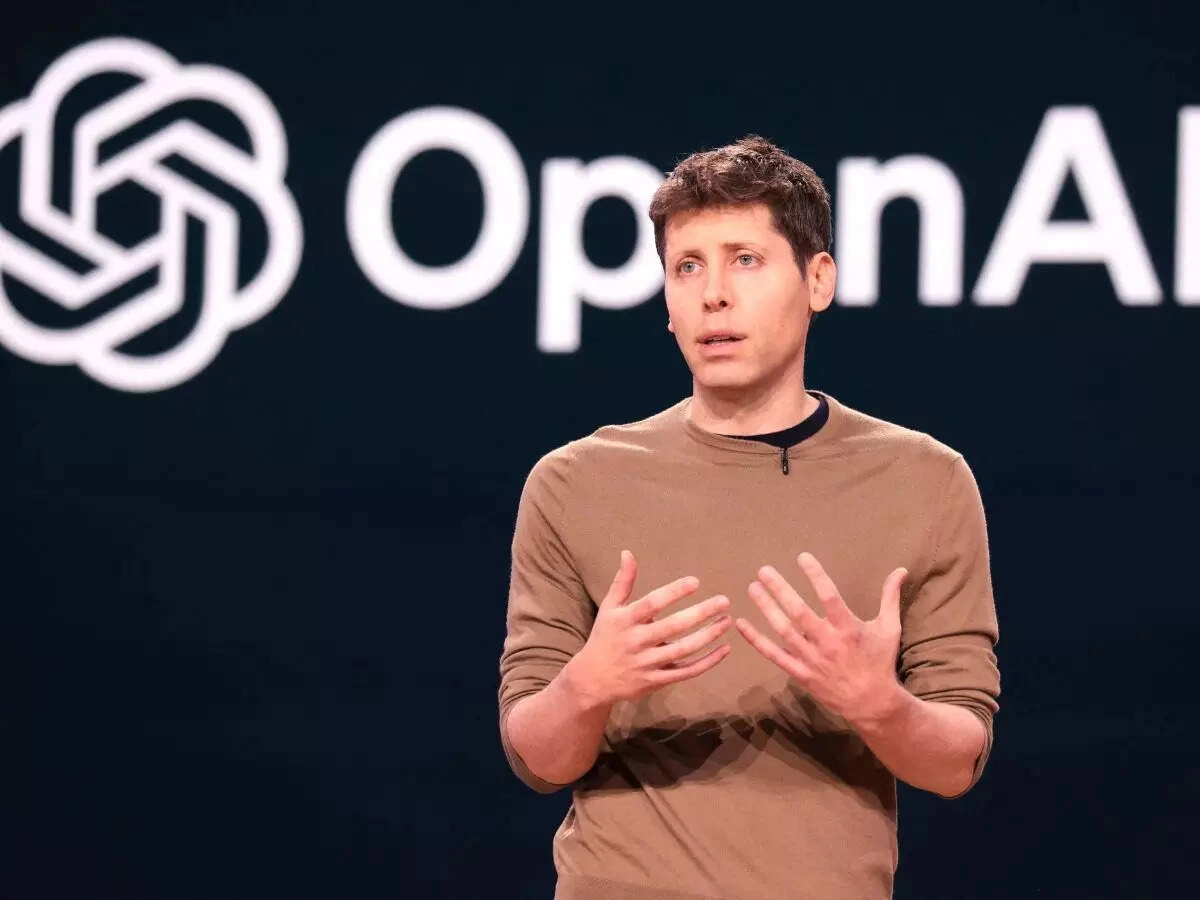
SAN FRANCISCO — OpenAI chief executive Sam Altman has declared an internal “OpenAI code red” to accelerate improvements to ChatGPT as Google intensifies efforts to reclaim its lead in artificial intelligence, according to a memo viewed by The Wall Street Journal.
The directive signals a renewed focus on the company’s flagship chatbot and a temporary pause on several nonessential projects.
Altman said teams must concentrate on enhancing ChatGPT’s reliability, speed and personalization, while expanding the range of user queries the system can answer.
The move underscores the escalating competition between OpenAI and Google, which has recently rolled out a series of upgraded models and tools aimed at narrowing performance gaps.
The memo comes at a time when OpenAI faces increasing pressure in the global AI race, with rivals releasing more advanced models and enterprises demanding consistent performance from AI assistants.
ChatGPT, launched in late 2022, quickly became one of the most widely used consumer applications in the world, but its growth has plateaued as competitors introduce models optimized for both commercial and consumer use.
Google has recently pushed forward updates to its Gemini suite, positioning it as a direct rival to GPT models. The company has also increased the speed of model deployment across its ecosystem, raising concerns at OpenAI about losing ground in areas where it once dominated.
“Declaring an OpenAI code red is a sign of just how serious the competitive pressure has become,” said Elena Morales, a professor of technological innovation at Stanford University. “The AI field is evolving so quickly that even a few months of stagnation can shift market leadership.”
Experts say the shift in priorities indicates that OpenAI aims to reinforce its foundation before expanding into new product categories. Some analysts believe the company has been stretched thin by simultaneous work on multimodal models, enterprise tools and consumer applications.
“OpenAI has been innovating at breakneck speed, but rapid expansion can create blind spots,” said Arjun Patel, an AI strategist at the research firm DataVista. “By issuing an OpenAI code red, Altman is effectively telling the company to return to basics: improving the day to day user experience.”
Industry observers note that while ChatGPT remains widely used, complaints about inconsistent responses, slowdowns and hallucinations have increased in recent months.
The company has introduced periodic updates, but users have asked for stronger personalization features, better memory capabilities and more accurate responses to domain specific queries.
“ChatGPT is still powerful, but reliability has not kept pace with new user expectations,” Patel said. “Google, Meta and several Chinese labs are pushing highly optimized systems, and that puts pressure on OpenAI to raise its standards.”
Market tracking firm Global Insight reported that usage of leading AI chatbots grew by twenty eight percent in the past year, with Google’s Gemini based systems accounting for nearly half of new corporate deployments.
OpenAI remains the market leader, but its share has dropped from fifty seven percent to forty nine percent since early 2024. Performance benchmarking labs have also indicated diminishing gaps between OpenAI and its competitors.
In a recent evaluation, Google’s top tier model outperformed GPT-4o in several reasoning and coding tests, although GPT-4o retained an edge in conversational fluency and multimodal understanding.
“OpenAI set the benchmark early, but the pack has caught up,” said Michael Brennan, a senior analyst at TechMetrics. “The OpenAI code red shows the company recognizes how critical this moment is.”
Among everyday users, reactions to the memo reflect a blend of optimism and concern. Many say they welcome a renewed emphasis on quality, while others worry that slowing new feature launches could impact long term product innovation.
“I rely on ChatGPT for my freelance work, and some days the performance varies more than I’d like,” said Maria Jennings, a graphic designer in Chicago. “If an OpenAI code red leads to more consistent results, that’s good news for people like me.”
Software developers echoed similar sentiments, noting that reliability is more important than ever as AI becomes tightly integrated into code generation pipelines.
Data scientists working with enterprise clients said the company’s shift could help restore confidence among organizations weighing AI investments.
“Businesses want predictable behavior, not surprises,” said Linda Foster, an enterprise consultant in New York. “This OpenAI code red might be the reset they need to reassure customers that quality comes first.”
OpenAI’s internal directive suggests that the company is entering a phase of consolidation rather than expansion.
Analysts expect updates to ChatGPT over the next several months to focus on quicker response times, higher factual accuracy and more personalized experiences that adapt to individual users.
Some predict the company may roll out new optimization techniques or scaled back versions of upcoming models to meet performance expectations in the short term.
Others believe OpenAI is preparing to debut a more advanced system sometime next year, using the code red period to shore up the infrastructure needed to support it.
“If this is a moment of strategic regrouping, we could see a stronger and more stable product ecosystem emerge,” Brennan said. “But OpenAI will need to deliver results quickly, because the competition is not slowing down.”
Altman’s decision to declare an OpenAI code red reflects growing urgency within the company as it confronts intensifying competition and shifting user expectations.
By prioritizing core improvements to ChatGPT, OpenAI aims to reinforce its position in a rapidly evolving market where technological leadership can change in months rather than years.
The company’s next steps, analysts say, will determine whether it maintains its lead or cedes more ground to rivals.


