
Tokyo — SoftBank Group Corp. sold its entire stake in Nvidia Corp. to free up capital for large scale artificial intelligence investments, including a significant commitment to OpenAI.
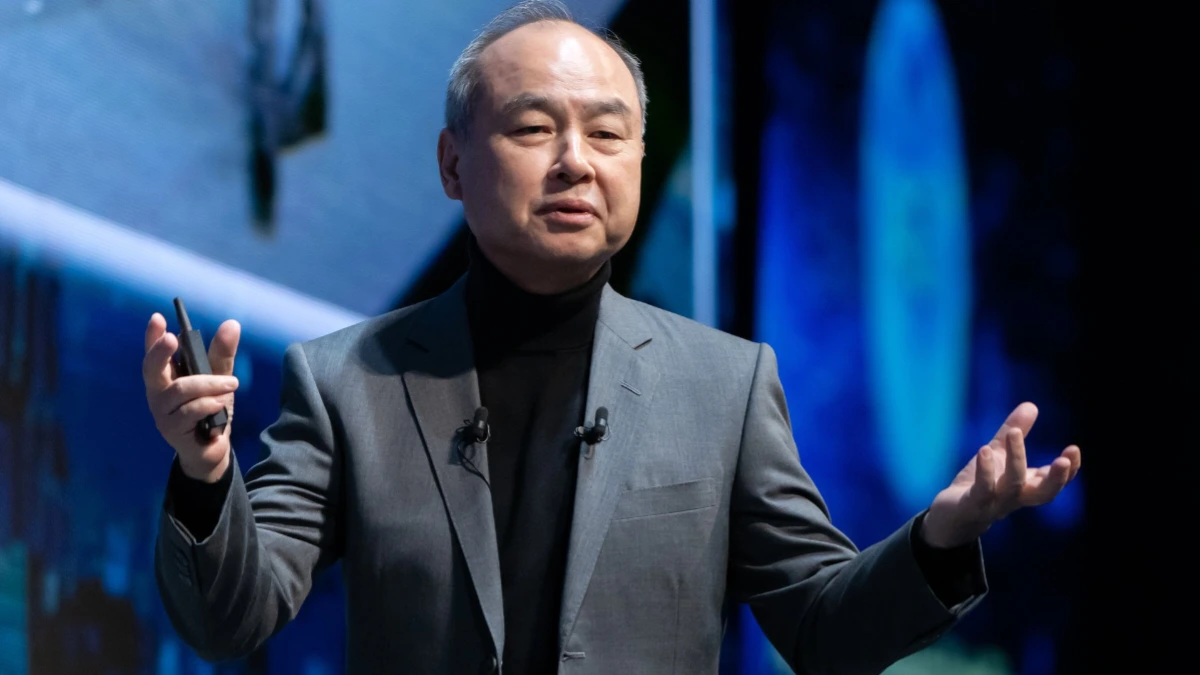
Speaking at a Tokyo forum Monday, SoftBank founder Masayoshi Son expressed personal regret over the sale, saying, “I was crying to sell Nvidia shares.”
SoftBank’s decision came after the company disclosed in November that it had divested roughly 32.1 million Nvidia shares.
The sale, which raised about $5.8 billion, was intended to support AI focused projects, including the construction of data centers and further investments in OpenAI, according to Son.
This is not the first time SoftBank has sold Nvidia shares. In 2019, the firm sold a 4.9 percent stake, generating $3.3 billion in returns on its original investment of around $700 million.
At the time, the sale was considered a strong financial move, but Nvidia’s shares have since increased significantly, prompting reflection from Son and market observers.
Market analysts interpret SoftBank’s actions as a strategic pivot from chip investments toward broader AI infrastructure.
“SoftBank is focusing on building capabilities that will support AI at scale, rather than holding passive positions in semiconductor companies,” said a Tokyo based technology fund analyst.
However, some experts note potential risks. “Nvidia’s hardware underpins nearly every advanced AI model today. Exiting now could limit SoftBank’s exposure to future growth in AI hardware,” said a San Francisco based AI researcher.
Son dismissed concerns of an AI investment bubble during the forum. “If AI captures just 10 percent of global GDP over time, the scale of investment will more than pay off, even if it reaches trillions,” he said. “Where is the bubble?”
SoftBank raised $5.8 billion from its Nvidia stake sale in October 2025. The 2019 sale of a smaller Nvidia position yielded $3.3 billion, a significant gain at the time.
Analysts estimate that retaining the full stake could have grown its value to over $150 billion today.
SoftBank plans to invest up to $40 billion in OpenAI, with $10 billion already committed earlier this year.
In Tokyo, a mid level investor commented, “Son’s remarks show he knows the value he gave up, but the scale of OpenAI’s projects may make it worth the risk.”
A European AI entrepreneur added, “Having SoftBank’s backing provides immense resources, but it also raises the stakes for the broader AI ecosystem if projects fail to deliver as expected.”
A Wall Street portfolio manager said, “The boldness is admirable, but long term infrastructure investments require careful planning and liquidity management. Economic fluctuations could impact outcomes.”
SoftBank’s move reflects a wider trend in tech investment, shifting focus from individual AI chip plays to integrated AI infrastructure, including data centers and cloud systems.
Success in these ventures could position SoftBank as a central player in global AI deployment, though the strategy carries substantial financial and operational risk.
By selling its Nvidia stake and committing to AI focused initiatives, SoftBank is doubling down on artificial intelligence as a strategic priority.
Masayoshi Son acknowledged the emotional difficulty of letting go of Nvidia shares, yet the company is betting that large scale AI investments will define its future role in the technology sector.
Whether these efforts will yield the anticipated returns remains uncertain, but the decision underscores SoftBank’s commitment to shaping the next phase of AI development.


