
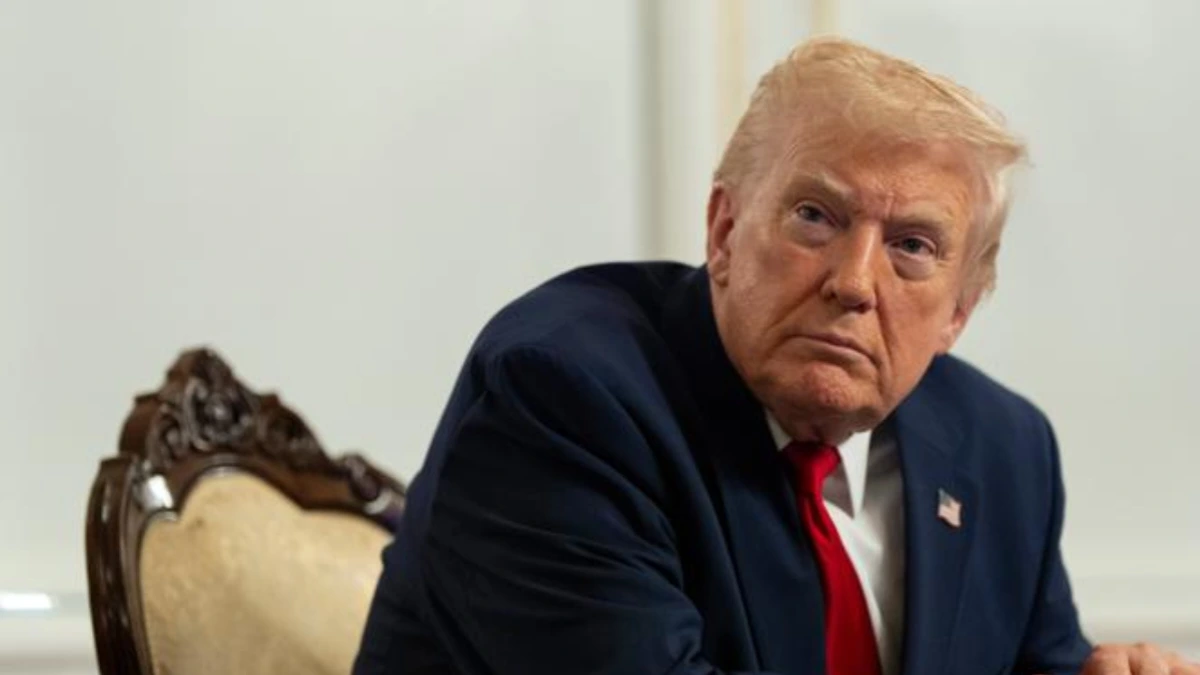
WASHINGTON — President Donald Trump said Thursday he will “permanently pause migration” to the United States from what he described as “third world countries,” a move that marks one of the most sweeping immigration proposals of his presidency.
The announcement followed a deadly shooting in Washington involving an Afghan national who entered the country under a special visa program.
Trump said the policy shift would allow the federal system “to fully recover” from what he called years of strain caused by earlier immigration rules. The White House has not released details of the plan, including which countries would be affected.
The remarks came as the Department of Homeland Security and US Citizenship and Immigration Services introduced a series of tightened measures following the shooting that killed one National Guard member and injured another.
The president’s new pledge to permanently pause migration followed the arrest of Rahmanullah Lakanwal, an Afghan national accused of shooting two National Guard members in Washington on Wednesday. One guard member later died.
Authorities said Lakanwal entered the US in 2021 through a program intended to protect Afghans who assisted American forces during the withdrawal from Afghanistan.
At the time, the Taliban had retaken Kabul, raising widespread fears of retaliation against Afghans who had worked with US agencies. Lakanwal had previously worked with the CIA in Afghanistan, the agency’s director, John Ratcliffe, said this week.
An official told CBS News that Lakanwal had applied for asylum in 2024 and was granted status earlier this year. Trump called the incident “an act of terror” and said it illustrated a “systemic national security threat.”
On Wednesday, the administration suspended the processing of all immigration requests from Afghans pending a review of security and vetting procedures.
The next day, USCIS said it would re-examine green cards issued to individuals from nineteen countries. The list referenced a June White House proclamation naming Afghanistan, Cuba, Haiti, Iran, Somalia and Venezuela.
Immigration analysts said the president’s latest comments are part of a broader repositioning of national security priorities heading into the next legislative session. The phrase “permanently pause migration” suggests a major overhaul rather than temporary restrictions.
Dr. Emily Hartwell, a senior immigration policy researcher at Georgetown University, said the response represented “a sharp acceleration of policies that were already moving in a restrictive direction.”
“When an incident like this happens, there is always political pressure to respond quickly,” Hartwell said. “But a blanket move to permanently pause migration from dozens of countries would trigger significant diplomatic and legal challenges. It’s not something the US can implement overnight.”
Former Department of Homeland Security official Michael Reyes said the administration is likely aiming to reassure the public.
“Large-scale changes often begin with broad statements,” Reyes said. “The next step will be the specifics which agencies enforce the rules, how waivers are handled and which categories of migrants are included.”
Immigrant rights organizations said they were concerned about due process and the potential for discriminatory impact.
“This kind of language risks casting suspicion on millions of lawful immigrants,” said Diana Cortez, director of the National Immigrant Justice Network. “Security reviews are normal, but labeling entire regions as unfit for migration is a dangerous precedent.”
Immigration from conflict afflicted countries has fluctuated in recent years. According to USCIS data, Afghan arrivals surged after the US withdrawal from Kabul in 2021 but declined steadily through 2023 as programs tightened.
A Congressional Research Service report last year found that Afghan evacuees who entered the US under humanitarian parole had a lower rate of criminal charges compared with the general population. Officials warned, however, that large-scale resettlement programs increase the complexity of vetting.
The US previously imposed travel restrictions on several majority-Muslim countries during Trump’s first term, though many were later modified or lifted after court challenges.
Analysts noted that a pledge to permanently pause migration goes further than earlier executive actions by signaling a long-term freeze rather than periodic suspensions.
Comparative data shows that nations in Europe and Asia have introduced similar restrictions after highbprofile security incidents.
Germany, for example, temporarily halted Afghan admissions in 2022 following attacks involving recent arrivals. Australia also paused certain visa programs for security reviews.
Reactions among residents in Washington and immigrant communities were divided Friday.
Samir Osman, a taxi driver from Somalia who gained US citizenship in 2018, said the policy felt like “collective punishment.”
“I came here to be safe and to work,” Osman said. “One person commits a crime, and suddenly everyone from entire continents is a target.”
Others said they believed the government needed to tighten controls. “I support immigration, but I also support safety,” said Alicia Herbst, a local shop owner near the shooting site. “If the system is overwhelmed, then maybe it’s time to slow things down.”
Community organizations said the sudden policy changes created confusion among migrants awaiting decisions on visas and asylum.
“We’ve had dozens of calls from families who don’t know if their applications are frozen,” said Farid Noori, director of Afghan American Voices, a nonprofit in Virginia. “People are scared. They worry the phrase ‘permanently pause migration’ means they will never see their relatives again.”
Officials have not given a timeline for when the administration will release the formal policy. Legal experts said any attempt to permanently pause migration from a broad group of countries would face court challenges, as did several Trump era immigration orders.
Diplomats from affected nations may also pressure Washington for clarification. Past restrictions on Iran, Somalia and Venezuela led to protests from foreign ministries and strained bilateral relations.
Congress, currently divided over immigration reform, is expected to seek briefings from Homeland Security and the State Department in the coming weeks.
“Congress will demand specifics,” Reyes said. “This is the beginning of a long debate over what national security looks like in the current environment.”
Trump’s pledge to permanently pause migration underscores a rapidly evolving immigration landscape shaped by national security concerns and political pressuresWhile officials continue to review existing programs, immigrant communities and policy analysts say the coming months will determine how far the administration plans to go and how the courts will respond.
For now, the federal government faces a complex balancing act between tightening security and maintaining its longstanding humanitarian commitments.


