
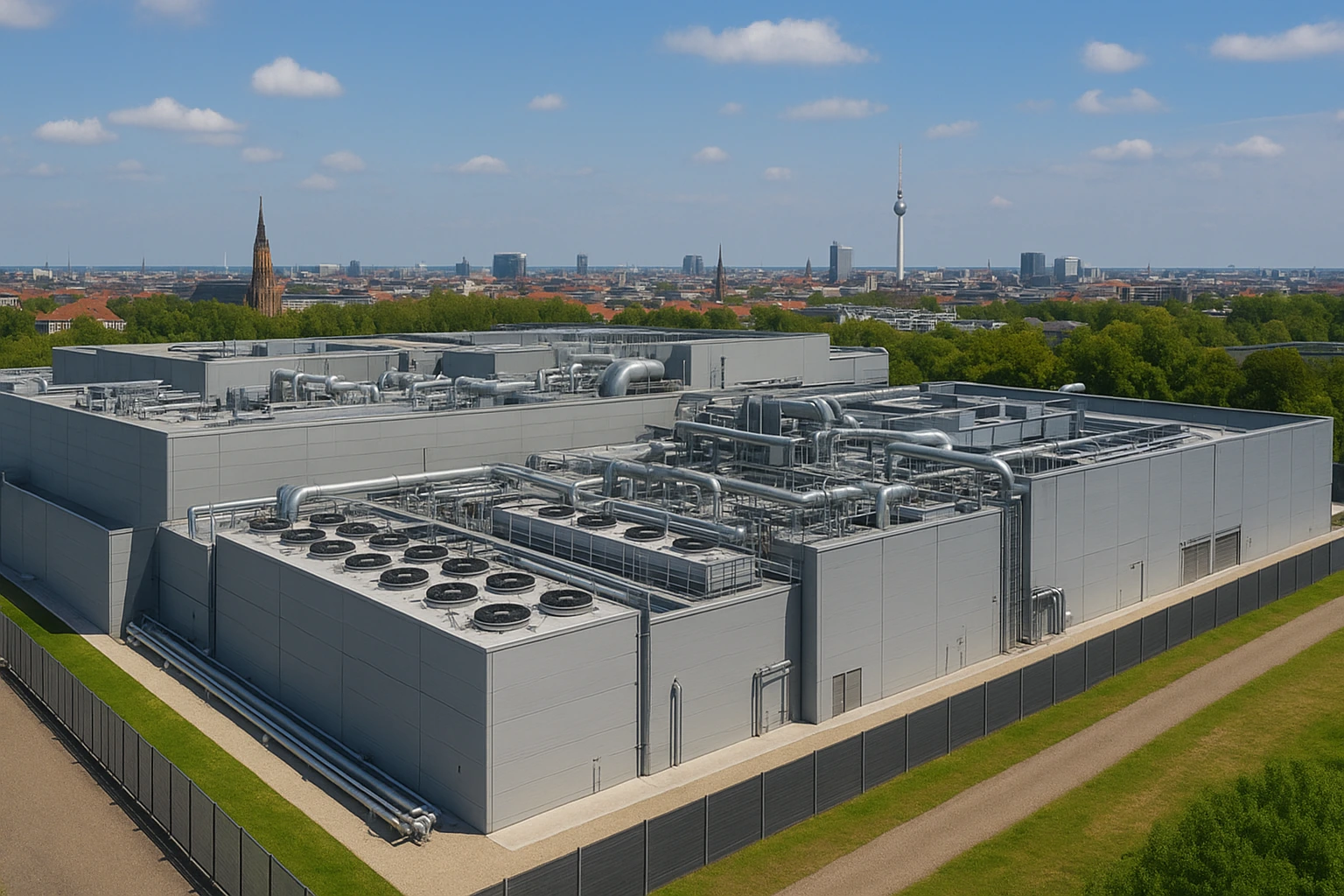
Europe’s measured approach to artificial intelligence development and data center expansion could position it uniquely in the global AI race, industry experts said, even as the region faces constraints that limit rapid scaling.
While the United States and China dominate in investment and sheer infrastructure capacity, European countries are carefully navigating energy availability, grid constraints, and regulatory hurdles to support growth in AI technologies.
The global push for AI has sparked an unprecedented demand for data center capacity.
Analysts estimate that worldwide build out of data storage and processing facilities could cost up to seven trillion dollars by 2030, with the US leading in total investment, according to Pankaj Sachdeva, a senior partner in technology at McKinsey.
Europe, by contrast, operates in a fragmented market with varying regulations, energy costs, and infrastructure readiness. “Europe is participating in this infrastructure build out and keeping pace,” Sachdeva said.
“It may not match the speed of the US, but its growth remains significant, and it is laying a foundation for sustainable expansion.”
Energy availability and cost remain the defining constraints for European AI infrastructure. The Nordics and Spain, with abundant hydropower and renewable energy resources, are emerging as attractive locations for new data centers.
Conversely, Germany and the UK face limitations due to supply constraints and rising electricity costs.
Jags Walia, head of global listed infrastructure at Van Lanschot Kempen, highlighted disparities across the continent. “Countries like Italy benefit from shorter connection times, up to three years compared with the European average of four years,” Walia said.
“Meanwhile, Germany, the UK., Ireland, and the Netherlands face grid capacity shortages that effectively impose a moratorium on new builds for the foreseeable future.”
Experts noted that Europe’s slower pace may offer benefits in resilience and sustainability.
“A deliberate approach allows countries to integrate renewable energy and smart grid technologies,” said Dr. Elena Rossi, a researcher in digital infrastructure at the European Institute for Technology. “It may not win the short term race, but it could future proof the continent’s AI ecosystem.”
European countries collectively operate around 200 to 300 data centers each, while the United States has approximately 5,400, highlighting the gap in infrastructure density, Walia said.
Investment has traditionally concentrated in FLAP-D markets Frankfurt, London, Amsterdam, Paris, and Dublin but capacity limitations are driving diversification to regions with more stable energy supplies.
The energy mix also shapes investment patterns. In the Nordics, over 60 percent of electricity comes from renewable sources, reducing operational costs and environmental impact.
In Spain, solar and wind energy projects have spurred a growing appetite for data center construction. These trends contrast with parts of central Europe, where coal dependent grids and limited renewable infrastructure create higher operational risk.
Local industry leaders say measured growth is already influencing business decisions. Marta Lopez, CEO of a Madrid-based AI startup, said her company prioritized a data center in Spain over London.
“We needed a location with stable and cost effective energy. The Nordics and Spain offered options that made sense for scaling our operations without hitting regulatory or supply bottlenecks,” Lopez said.
In Germany, companies are adapting to constraints differently. “We are forced to innovate with smaller, more efficient data centers rather than chasing massive builds,” said Thomas Berger, director at a Berlin cloud services firm.
“It is challenging in the short term but could lead to more sustainable practices long term.” While catching up with the US in sheer scale will be difficult, experts suggest Europe’s methodical strategy may yield advantages in reliability, energy efficiency, and integration of AI technologies into critical infrastructure.
Analysts predict that Europe’s data center capacity could nearly double by 2030, particularly in countries with favorable energy and regulatory conditions.
“Europe’s approach may seem slower, but it reduces the risk of overbuilding in regions with unstable grids or high energy costs,” Rossi said. “This strategic pacing may ultimately strengthen Europe’s position in the global AI landscape.”
Europe’s AI infrastructure growth is shaped by a combination of market fragmentation, energy constraints, and regulatory frameworks.
While the continent lags behind the United States in the number of data centers and investment scale, measured expansion, renewable energy integration, and strategic location selection could provide a long-term competitive edge.
By balancing growth with sustainability, Europe may position itself as a resilient and future ready hub for AI development.


