
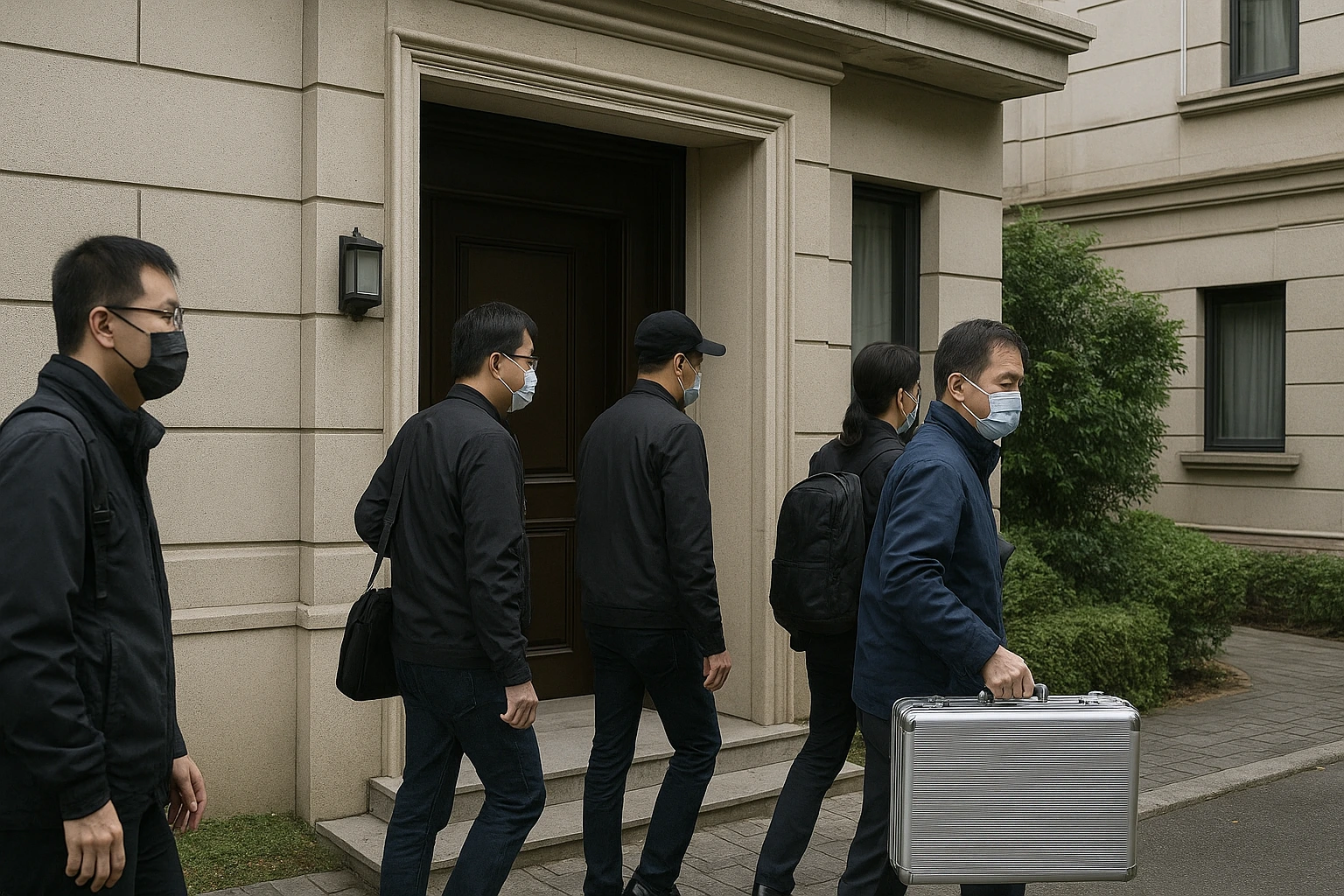
Taipei — Taiwanese prosecutors on Thursday raided the homes of a former senior executive of Taiwan Semiconductor Manufacturing Company (TSMC), seizing computers, USB drives, and other materials as part of an investigation into alleged trade secret leaks.
The executive, Lo Wei‑Jen, recently joined Intel Corporation after retiring from TSMC, sparking accusations of intellectual property misappropriation. Intel has denied any wrongdoing.
TSMC, the world’s largest contract chipmaker and supplier to companies such as Nvidia, filed a lawsuit earlier this week against Lo in Taiwan’s Intellectual Property and Commercial Court.
The company claims that Lo violated non‑disclosure agreements and misrepresented his post retirement plans when he informed TSMC he would pursue academia rather than join a competitor.
Taiwanese prosecutors said Lo is under investigation for potential violations of the National Security Act, citing concerns over sensitive semiconductor technology potentially being transferred outside the country.
Authorities obtained court approval to seize Lo’s shares and real estate alongside digital evidence collected from his residences.
Lo spent over two decades at TSMC, playing a central role in the mass production of advanced 5-nanometre, 3-nanometre, and 2-nanometre chips.
In October, he joined Intel after retiring, returning to the US semiconductor firm where he had previously worked for nearly 18 years.
Industry experts note that the case illustrates the high stakes involved in the global semiconductor race. “This is more than a corporate dispute,” said a Taipei based chip industry analyst who requested anonymity.
“When advanced node technologies are involved, the movement of key personnel can have implications for national security and industrial competitiveness.” Some analysts caution against overestimating the potential damage.
Even if sensitive data were transferred replicating TSMC’s cutting edge fabrication capabilities is extremely difficult without the full infrastructure and technical expertise, said the chairman of a Taiwan based electronics manufacturer.
Intellectual property lawyers add that courts will examine whether Lo’s obligations under TSMC’s non disclosure and non compete agreements continued post retirement and if any proprietary information was actually shared with Intel.
TSMC claims Lo contributed significantly to the company’s advanced chip nodes, including 5-nanometre, 3-nanometre, and 2-nanometre processes.
The company’s stock fell roughly 4.6 percent following the announcement of the lawsuit, reflecting investor concern over potential operational and legal impacts.
Lo’s career includes nearly two decades at Intel prior to joining TSMC in 2004, highlighting the fluid movement of talent within the global semiconductor industry. Taiwanese engineers and semiconductor employees expressed mixed reactions.
One R&D engineer at a local foundry, speaking on condition of anonymity, said, “If a former executive transferred confidential technology, it could harm Taiwan’s position in the chip industry. Trust and secrecy are critical.”
Another engineer took a more measured view: “Many engineers switch companies. Without evidence of actual leaks, it’s hard to imagine someone could hand over the know-how to replicate a 2-nanometre process.”
Government officials declined to comment on the ongoing investigation, though they emphasized that national security considerations remain a top priority for Taiwan’s semiconductor sector.
Prosecutors may pursue charges under the National Security Act if evidence shows that proprietary TSMC technology was disclosed or transferred.
TSMC could seek damages or injunctions to prevent Intel from using any alleged trade secrets, while Intel may review projects that involve Lo’s work.
The case may also influence broader industry practices in Taiwan, potentially leading to stricter controls over employee departures, enhanced non compete clauses, and more rigorous governmental oversight of sensitive technology sectors.
The investigation into former TSMC executive Lo Wei‑Jen underscores the delicate balance between corporate talent mobility and the protection of proprietary semiconductor technology.
As prosecutors continue to gather evidence, the outcome could have implications not only for TSMC and Intel but also for Taiwan’s broader chipmaking industry and its position in the global technology landscape.


