
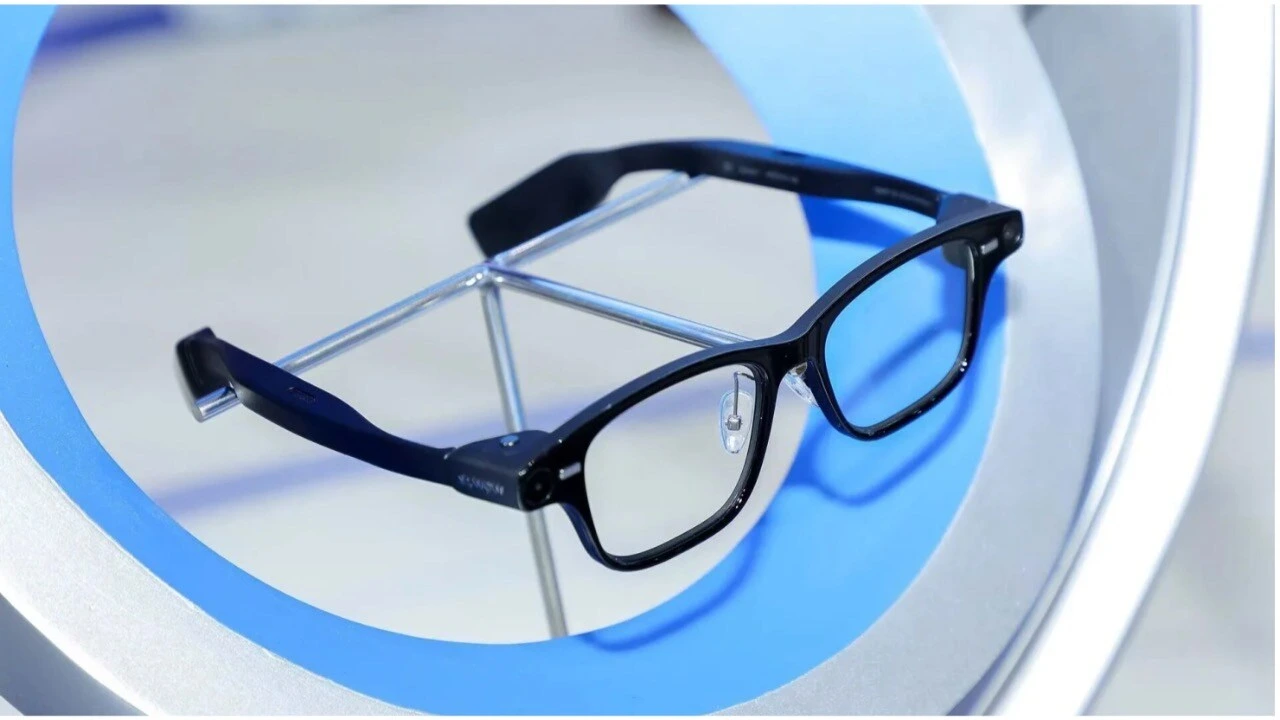
Alibaba’s AI glasses went on sale Thursday in China, marking the company’s latest effort to expand its presence in the fast growing consumer artificial intelligence sector.
The device, which integrates Alibaba’s Qwen AI system, enters a market increasingly shaped by competition from global rivals including Meta and domestic players such as Xiaomi.
The launch of the Quark AI Glasses places Alibaba in a race to develop wearable devices that many tech companies view as the next major platform after the smartphone.
The company introduced the Quark AI Glasses in July and began commercial sales this week. The device comes in two versions the S1 priced at 3,799 Chinese yuan ($536) and the lower cost G1 model priced at 1,899 yuan.
Alibaba’s AI glasses include built-in cameras, display lenses and real-time connectivity to the firm’s newly released Qwen app, allowing users to access translation, AI generated meeting summaries and visual search.
Users can snap a product with the embedded camera and instantly view pricing from Taobao, Alibaba’s flagship ecommerce platform.
“Wearable AI is moving from concept to reality in China,” said Liu Cheng, an analyst at Beijing based FutureTech Insight. “The launch of Alibaba’s AI glasses shows that major companies see this as a long term gateway to the next era of personal computing.”
The rollout comes as Alibaba continues to reposition itself around cloud, AI and high margin enterprise products. The company reported improved cloud computing growth last quarter, driven largely by demand for AI infrastructure and model deployment.
Analysts say Alibaba’s entry intensifies pressure on local and international competitors. Meta’s $799 Meta Ray-Ban Display glasses, released in September, added a display screen to a product previously centered on audio and camera features.
Xiaomi and AR startup Xreal also have devices targeting Chinese consumers. “Alibaba’s AI glasses are priced aggressively compared to Meta’s offering, which could help the company gain traction in the domestic market,” said Vivian Ho, a senior researcher at Singapore based tech consultancy Asia Digital Review.
But long-term success will depend on ecosystem development, not hardware specs. Ho said that Alibaba’s biggest advantage may be its integration with Alibaba Cloud and the Qwen AI model.
“If the AI can deliver more natural interaction and reliable real time responses, that could be a differentiating factor,” she said.
Industry observers note that Alibaba’s AI glasses arrive as the company seeks to restore momentum after years of restructuring and regulatory pressures.
The successful launch of the Qwen AI app, which saw more than ten million downloads in its first week of public beta testing, has strengthened investor confidence in the company’s AI strategy.
The global smart glasses market remains small but is projected to expand rapidly. Research firm Omdia forecast that shipments of AI enabled glasses will exceed more than ten million units in 2026, doubling from the previous year.
Compared to Meta’s device, Alibaba’s AI glasses focus heavily on information retrieval and productivity features rather than gesture control. The S1 model includes a higher resolution display, while the G1 is positioned as an affordable entry-level option.
“Consumers are still figuring out what they need from smart glasses,” said Henry Zhao, a Hong Kong based trade analyst. “Early adopters are mostly tech enthusiasts and professionals, so companies are experimenting with different use cases.”
Zhao noted that Alibaba’s integration with Taobao could appeal to China’s ecommerce driven consumer market. “The ability to identify products instantly and compare prices could be a powerful feature in a country where mobile shopping dominates daily life,” he said.
In Hangzhou, where Alibaba is headquartered, early testers said the device offered a glimpse into the future but required refinement.
“The translation feature is impressive, especially for business travel,” said Chen Rong, a logistics manager who tested the S1 at a retail demonstration. “But the battery life needs improvement if this is going to replace phone based tools.”
A university student who tried the G1 model said the glasses feel lighter than expected. “I like the idea of getting meeting notes automatically,” said Li Mei, a graduate student. “If the price drops a bit more, students would definitely consider buying it.”
Store staff in Shanghai reported steady interest following the launch announcement. “Many customers want to compare Alibaba’s AI glasses with Xiaomi’s model before deciding,” said retail associate Xu Wen. “People are curious but also cautious because they want something practical, not just a tech novelty.”
Alibaba aims to build a broader ecosystem around its AI services, positioning the Quark AI Glasses as a gateway for future consumer devices.
The company is also working on expanding Qwen AI’s capabilities, including improved voice recognition, contextual responses and multimodal processing.
Analysts expect China’s wearable AI market to see significant investment over the next two years as companies test new form factors, including wristbands, AR headsets and lightweight display frames.
“Every major tech company wants to build the next essential device,” Ho said. “Alibaba’s AI glasses are a step in that direction, but it will take time before these devices compete with smartphones in daily usage.”
Global competition is also expected to intensify. Meta is expanding its partnership with Ray-Ban, while Apple is developing vision based devices that may eventually integrate lighter form factors.
Chinese firms aim to use cost efficient supply chains and rapid iteration cycles to maintain an advantage in domestic markets.
Alibaba’s AI glasses represent a significant move in the company’s broader shift toward consumer AI products and cloud based services.
While the wearable technology market is still maturing, Alibaba is betting the combination of competitive pricing, integrated AI and ecommerce links will drive demand.
As tech firms worldwide race to shape the next generation of personal devices, Alibaba’s latest offering positions the company firmly within that global contest.


