
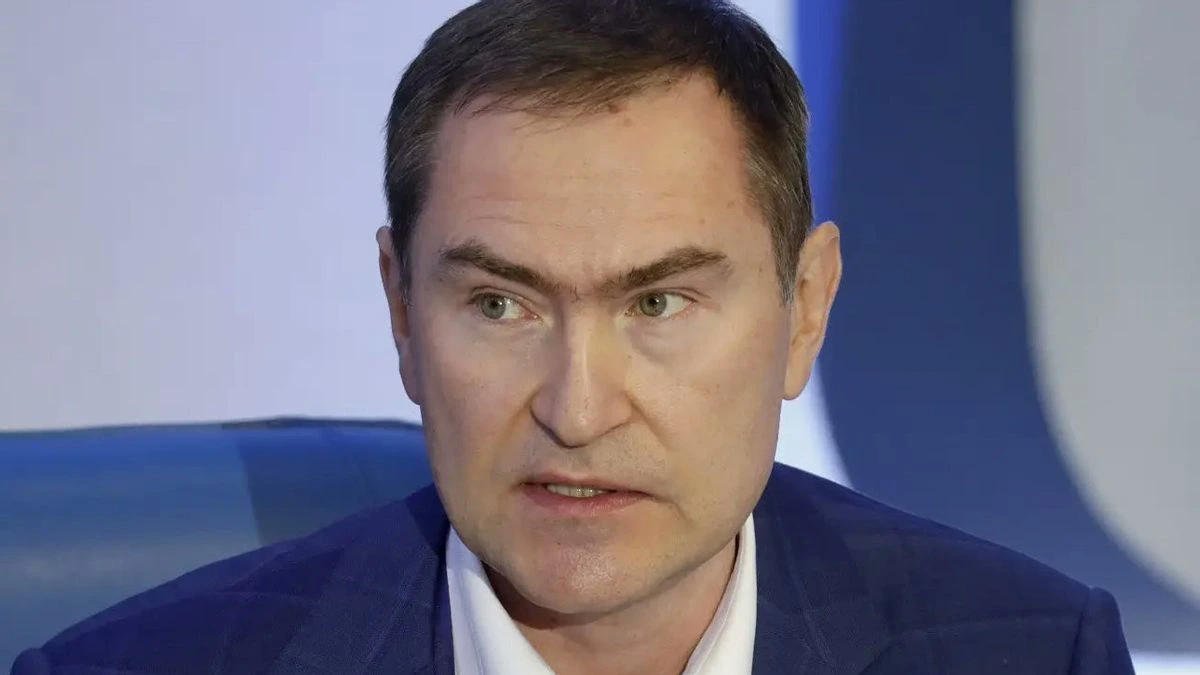
Moscow — Artificial intelligence could give countries influence on par with nuclear technology for those who move quickly, a top Russian tech executive said, signaling Moscow’s push to develop indigenous AI capabilities amid global competition.
Alexander Vedyakhin, first deputy CEO of Sberbank, told Reuters in an interview at Russia’s annual AI Journey conference that Russia’s position among seven nations with home grown AI represented a strategic advantage.
AI is like a nuclear project. A new ‘nuclear club’ is emerging globally, where either you have your own national large language model or you don’t, Vedyakhin said.
He emphasized the need for Russia to develop multiple original AI models, rather than retraining foreign systems, for use in sensitive areas such as healthcare, education, and public services.
“It is impossible to upload confidential information into a foreign model. It is simply prohibited. Doing so would lead to very unpleasant consequences,” he said.
Russia has accelerated efforts to develop domestic artificial intelligence as part of a broader strategy to reduce reliance on foreign technology. President Vladimir Putin highlighted last week that home grown AI models were vital to preserving Russian sovereignty.
Sberbank, traditionally a major lender, and technology firm Yandex are leading initiatives to catch up with US and Chinese companies that dominate AI development. Russia faces challenges in computing infrastructure and access to advanced hardware, largely due to Western sanctions.
Vedyakhin acknowledged the gap. “The US and China are ahead of the rest of the club, including Russia, by about six to nine months, and membership is effectively closed,” he said.
In this race, every day matters, but those who haven’t started are falling behind the leaders by much more than a day with each passing day. For those who decide to join now, it will be extremely costly, almost impossible.
Experts note that comparing AI to nuclear technology underscores the transformative potential of artificial intelligence in global power dynamics. Dr. Elena Petrov, a senior researcher at the Moscow Institute of Technology, said AI could influence economic, military, and cyber capabilities.
“Countries that successfully develop domestic AI models can gain strategic leverage, similar to how nuclear capabilities reshaped global security in the twentieth century,” she said.
John Larson, a Washington based AI policy analyst, said Russia’s strategy reflects broader trends. “The notion of a ‘nuclear club’ for AI is apt.
Only a handful of countries possess the computing power, funding, and talent to lead. The US and China have a clear head start, and others face an uphill battle to catch up,” Larson said.
Current estimates suggest the US and China hold the most advanced AI infrastructure, with hundreds of billions invested in research, data centers, and specialized chips.
According to a 2025 report from the Global AI Council, Russia ranks seventh globally in domestic AI capabilities, alongside nations such as the UK, Germany, and Japan.
Sberbank and Yandex have each developed proprietary large language models, though experts note these models remain behind the scale and versatility of OpenAI’s GPT series or China’s Yuan models.
Computing limitations and sanctions on advanced microchips present ongoing hurdles for Moscow, constraining AI training capacity.
At the AI Journey conference, technology professionals echoed Vedyakhin’s message about sovereignty and strategic necessity.
Maria Ivanova, an AI engineer at Yandex, said, “We are aware of the limitations, but creating our own models is not just a technical challenge it is about securing national data and ensuring that critical services are reliable.”
Meanwhile, in public discourse, opinions are mixed. A Moscow schoolteacher, who participated in a government led AI workshop, said, “It is exciting to see AI being applied in education.
But we also need to understand the ethical and security implications before relying too heavily on domestic AI systems.
Russia plans to expand AI development with a focus on healthcare, public administration, and education, aiming to produce at least two or three fully original AI models.
Analysts suggest that closing the gap with US and Chinese leaders will take years and significant investment, especially in hardware, talent, and regulatory frameworks.
Larson noted, “Even if Russia succeeds in developing competitive AI models, the lead of US and Chinese companies is significant.
Strategic cooperation, talent retention, and access to cutting edge computing resources will be critical factors in determining Russia’s success.”
Vedyakhin said Russia’s approach will remain focused on long term self sufficiency rather than short term gains.
We appreciate what Chinese and American companies have done. We understand they have a strong head start with plenty of money, experts, and computing power, he said.
Russia’s emphasis on home grown AI models reflects an emerging global competition where artificial intelligence is increasingly viewed as a strategic asset akin to nuclear power.
While the US and China continue to lead, Moscow is committed to building indigenous models for sensitive sectors. Experts suggest that the trajectory of AI development in Russia will hinge on overcoming technological and financial constraints while safeguarding national data.


