
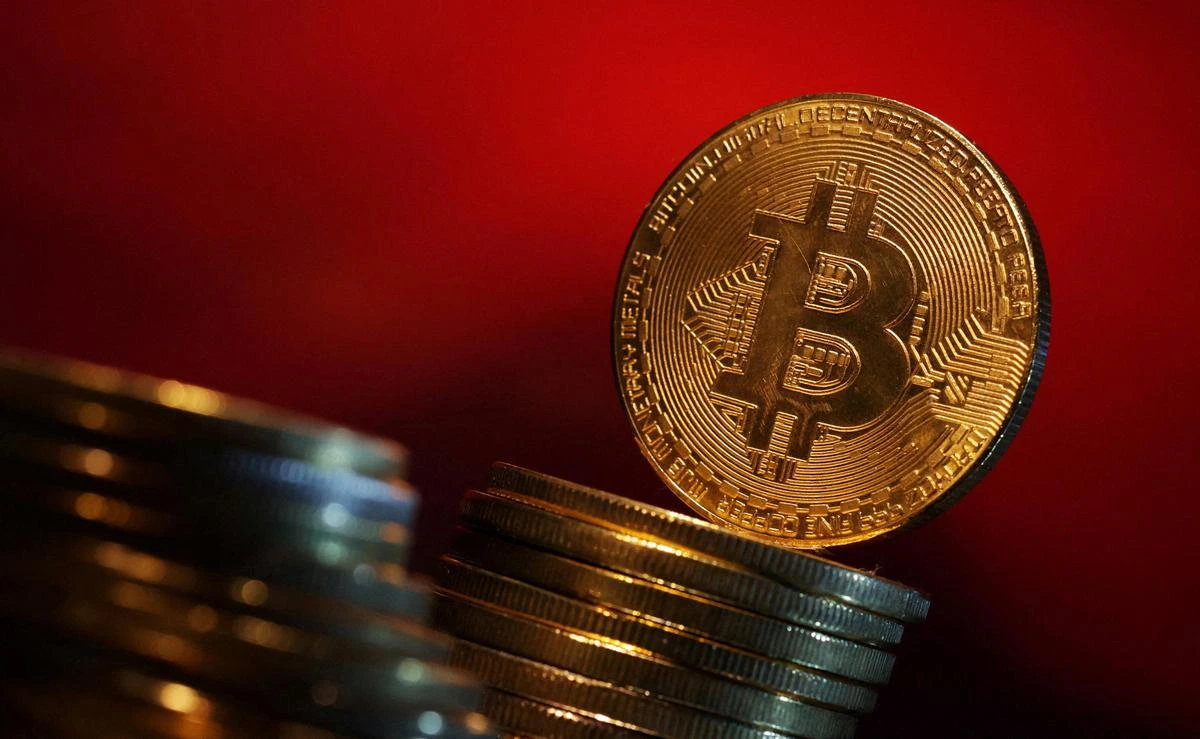
BEIJING — Bitcoin mining in China is quietly resurging four years after Beijing imposed a sweeping ban on cryptocurrency activity, as miners in energy rich western provinces exploit low cost electricity and a boom in private data centers.
The rebound, supported by industry trackers and equipment makers, has pushed China back into the top ranks of global mining activity despite the ban still being officially in place.
The renewed growth of bitcoin mining in China coincides with a volatile period for the digital currency, which hit record highs in October following pro crypto policies introduced by US President Donald Trump.
Although bitcoin has since lost roughly one third of its value, miners in China are expanding operations in pockets where electricity remains abundant.
China was the world’s largest hub for crypto mining until the government outlawed both mining and trading in 2021, citing risks to financial stability and heavy energy consumption.
The National Development and Reform Commission and several provincial governments carried out widespread closures of mining farms, prompting thousands of operators to move equipment to North America and Central Asia.
Industry data at the time showed China’s share of global mining fell from more than two thirds to effectively zero. But according to Hashrate Index, which tracks global mining activity, the country regained a fourteen percent market share by the end of October.
“This recovery is happening under the radar,” said David Hume, a blockchain researcher at the University of Hong Kong. “The state policy has not formally changed, but local dynamics in certain provinces have opened space for activity to return.”
Industry analysts say the resurgence is driven by regional energy economics rather than national policy shifts. Provinces such as Xinjiang, Inner Mongolia and parts of Sichuan generate more electricity than their local grids can transmit.
Operators in these areas often sell surplus power at steep discounts, a trend that has drawn miners back despite regulatory uncertainty.
“The renewed rise of bitcoin mining in China signals that economic incentives in certain regions remain stronger than regulatory deterrence,” said Patrick Gruhn, CEO of Perpetuals.com, a crypto infrastructure provider.
“Even small hints of local flexibility can reshape global mining dynamics.” Gruhn added that while China has not formally eased restrictions, mining activity tends to fluctuate with internal policy cycles.
“The country often takes a pragmatic view when excess energy is involved,” he said. Canaan Inc, a major mining rig manufacturer listed in the United States, has also reported fast-rebounding sales in China.
A senior company executive, who requested anonymity because of the sensitivity of the issue, said inquiries from Chinese buyers began rising late last year.
“It became clear that certain pockets of the market were coming back,” the executive said. “These are mostly private buyers rather than large corporate farms, but the demand is unmistakable.”
The fourteen percent global share represents a significant turnaround for an industry that had effectively vanished in China after the 2021 crackdown.
Hashrate Index data shows that China is now the third largest mining country, behind the United States and Russia.
Energy analysts note that regions like Xinjiang generate vast amounts of coal and wind power that cannot always be transported east through the national grid. As a result, electricity prices can fall to some of the lowest levels in Asia during off peak seasons.
“The economics are compelling,” said Zhou Ming, an energy consultant in Urumqi. “If you have stranded power and a ready buyer, the local authorities sometimes close one eye to small scale operations, particularly when they boost local service industries.”
The rebound of bitcoin mining in China also comes at a moment when the global crypto sector is recalibrating. With dwindling risk appetite worldwide, miners are increasingly looking for jurisdictions with stable or low electricity costs to maintain profitability.
In Shanshan County in eastern Xinjiang, dusty roads leading to industrial parks show signs of recent construction. Small data center buildings run quietly at night, their rows of cooling fans humming behind tall metal fences.
Wang, a private miner who asked to be identified only by his family name, said he restarted mining late last year. He operates several dozen rigs inside a rented warehouse unit.
“A lot of energy cannot be transmitted out of Xinjiang, so you consume it here in the form of mining,” he said. “People mine where electricity is cheap. New projects are under construction and the business is more active than outsiders think.”
A local hardware shop owner, who has supplied cooling fans and electrical cables to miners, said demand has “clearly picked up” since the summer. “We don’t ask too many questions, but we can see which direction business is moving,” he said.
However, not all residents welcome the trend. A community worker in the nearby town of Turpan said some small operators caused power fluctuations during peak winter heating hours.
“The local grid is already under pressure,” she said. “When these miners run machines all night, we sometimes get voltage drops.”
The Xinjiang government and China’s state planning body did not respond to Reuters’ requests for comment.
Analysts caution that the future of bitcoin mining in China remains uncertain because national restrictions still formally apply. Any shift in enforcement could disrupt operations quickly, as seen during the 2021 crackdown.
But several experts believe Beijing may tolerate limited activity in remote regions where surplus energy would otherwise go unused.
“China’s policy approach often leaves room for local flexibility when strategic sectors or local economic pressures are involved,” said Hume of the University of Hong Kong. “Miners understand the risks, but they also see the opportunities.”
Gruhn noted that even if Beijing does not officially alter its stance, the perception that China is again part of the mining ecosystem could support global bitcoin prices. “Market psychology is powerful,” he said.
The resurgence of bitcoin mining in China underscores the complex relationship between national policy, regional energy economics and global crypto markets.
While the country has not reversed its ban, miners in western provinces are quietly expanding operations as cheap electricity and renewed demand revive a once-dominant industry.
Whether the trend continues will depend on how long local flexibility remains and whether Beijing decides to intervene again.


Can you be more specific about the content of your article? After reading it, I still have some doubts. Hope you can help me. https://www.binance.info/en-IN/register?ref=A80YTPZ1