
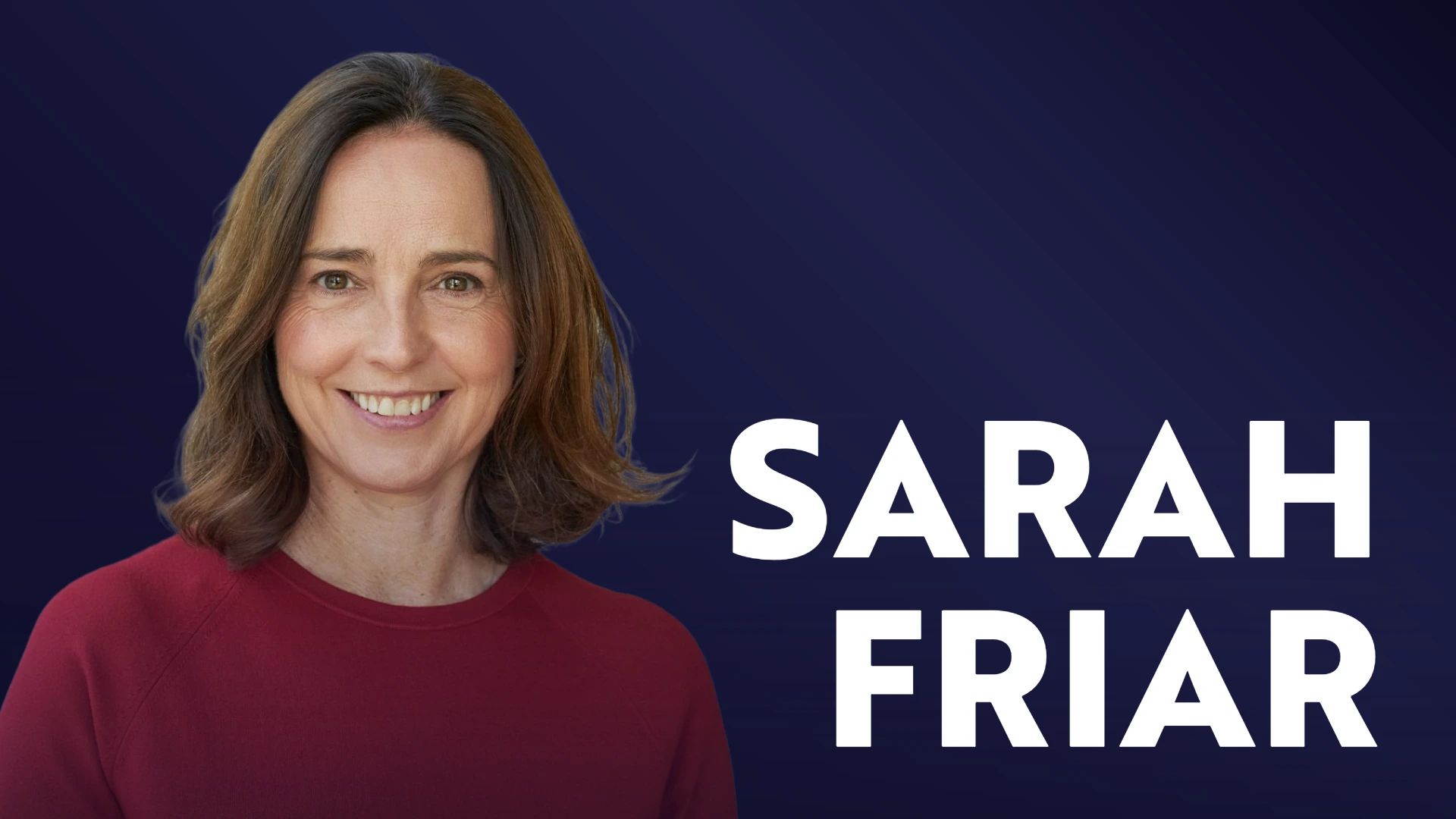
SAN FRANCISCO — OpenAI Chief Financial Officer Sarah Friar clarified late Wednesday that the artificial intelligence company is not seeking a government backstop for its ambitious infrastructure projects, following remarks at a Wall Street Journal technology conference that sparked widespread speculation about federal involvement.
In a LinkedIn post, Friar said her earlier use of the term “backstop” at the WSJ Tech Live event “muddied the point” and that the company’s expansion plans remain driven primarily by private investment and industrial partnerships.
“I was making the point that American strength in technology will come from building real industrial capacity,” Friar wrote. “That requires the private sector and government playing their part.”
The clarification comes as OpenAI faces growing scrutiny over how it plans to finance an estimated $1.4 trillion in infrastructure deals aimed at meeting soaring demand for generative AI technology.
OpenAI, the maker of ChatGPT, has emerged as one of the fastest growing technology firms in history, with its products powering major advances in artificial intelligence.
The company’s infrastructure investments, including data centers and advanced chips, have positioned it as both a technological pioneer and a financial outlier.
In September, Friar told CNBC that OpenAI expected to generate around $13 billion in annual revenue, a figure later disputed by CEO Sam Altman.
On a podcast interview with investor Brad Gerstner over the weekend, Altman said the company was making “well more revenue than that,” but did not provide specific figures.
Altman appeared frustrated when pressed about the gap between revenue and spending commitments. “Brad, if you want to sell your shares, I’ll find you a buyer,” he said. “Enough.”
The exchange fueled speculation about OpenAI’s financial stability and whether government backing might eventually be necessary to sustain its expansion.
Industry analysts say Friar’s clarification was intended to temper speculation that OpenAI was seeking federal financial guarantees something that could have far reaching policy and political implications.
“Using the term ‘backstop’ was unfortunate because it evokes the 2008 financial crisis, when the government literally stepped in to guarantee private assets,” said Martin Keller, a technology finance professor at Stanford University. “What OpenAI likely meant was partnership not a bailout.”
Keller added that OpenAI’s reliance on infrastructure heavy investments, including chip manufacturing and cloud capacity, reflects a broader shift in the AI economy from software innovation to hardware dominance.
“AI models like GPT-5 are extremely compute intensive,” he said. “To keep pace, OpenAI must secure long term supply chains for energy, data, and chips that’s a national scale project.”
According to recent financial disclosures and media reports, OpenAI’s $1.4 trillion in infrastructure commitments dwarf those of its competitors.
By comparison, Google parent Alphabet and Microsoft have each announced roughly $100 billion in AI related investments over the next several years.
The scale of OpenAI’s commitments has raised eyebrows across the tech and investment community. While the company has not disclosed detailed financing structures, industry observers believe it is leveraging a mix of partnerships with private equity firms, cloud providers, and chip manufacturers.
“OpenAI is attempting to do what few startups have ever done build the physical backbone of the next computing era,” said Priya Raman, an analyst at CB Insights.
“But $1.4 trillion is an extraordinary number, and it’s not clear how that capital will be raised without some form of sovereign or institutional guarantee.”
Reactions among investors and industry professionals have been mixed. Some view Friar’s clarification as a sign of transparency while others see it as an effort to control damage.
“I think Sarah Friar is being realistic,” said Jessica Moore, a venture capitalist based in Menlo Park. “If OpenAI is building out national scale infrastructure, they’ll naturally have to coordinate with the US government, but that doesn’t mean they’re asking for a bailout.”
Others worry the company’s rapid expansion could strain the private funding ecosystem. “Every investor in Silicon Valley is watching this closely,” said Omar Diaz, managing partner at Horizon Growth Partners.
“If OpenAI’s financing model falters, it could ripple across the entire AI supply chain from chipmakers to cloud providers.”
Despite the clarification, OpenAI’s relationship with the US government appears poised to deepen. Friar emphasized that Washington has been “forward leaning” in its approach to artificial intelligence, calling it a “national strategic asset.”
Experts predict that as AI infrastructure becomes increasingly critical to economic and national security, public private collaboration will intensify even if formal guarantees never materialize.
“The US government doesn’t need to write OpenAI a check,” said Keller, the Stanford professor. “But it can shape the ecosystem through grants, regulatory frameworks, and strategic partnerships that ensure America leads in AI development.”
OpenAI’s financial ambitions also highlight broader questions about the sustainability of large scale AI growth.
Energy consumption, supply chain constraints, and environmental impact remain ongoing challenges as companies race to deploy generative AI worldwide.
Sarah Friar’s clarification underscores the delicate balance OpenAI must strike between ambition and accountability.
As the company pursues trillion dollar infrastructure projects, it faces the dual challenge of maintaining investor confidence and managing public perception.
For now, OpenAI remains committed to private sector leadership in its infrastructure drive, even as it acknowledges the government’s strategic role.
“AI is not just a business opportunity,” Friar wrote. “It’s an industrial and national imperative.” Whether that imperative can be sustained without direct federal backing may determine the shape of America’s AI future.


