
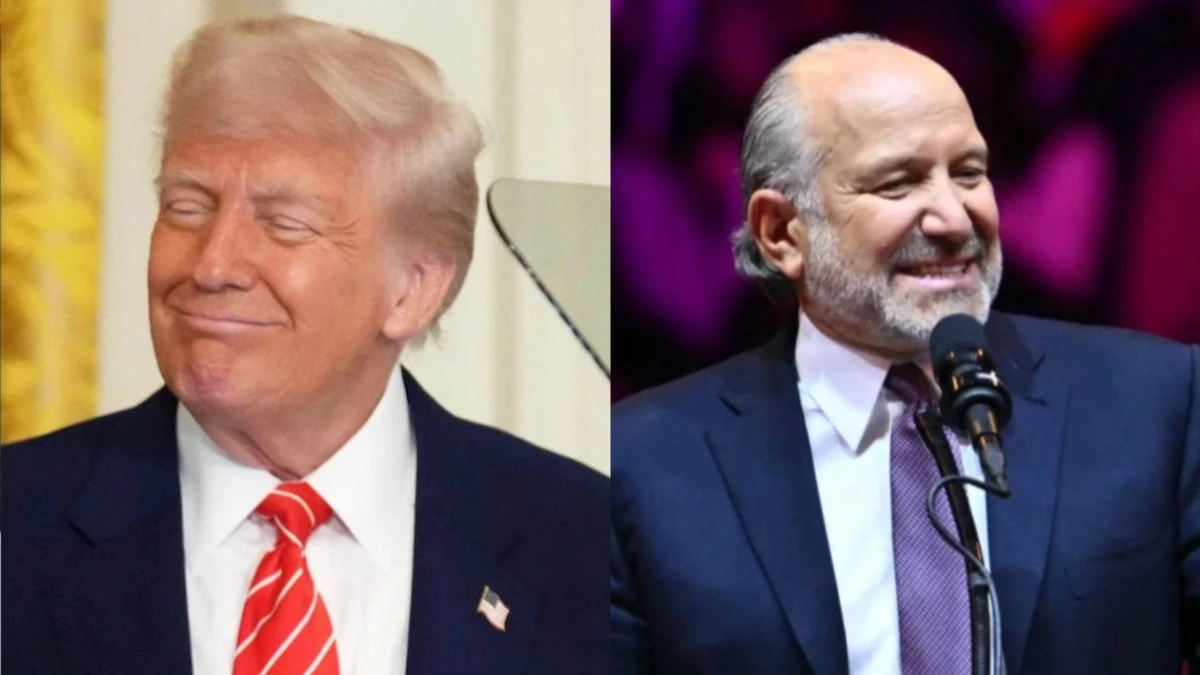
WASHINGTON — As the federal government enters another shutdown, one name has emerged at the center of the administration’s response Russ Vought.
The director of the White House Office of Management and Budget, a longtime policy strategist and ally of former President Donald Trump, is playing an outsized role in determining how the shutdown unfolds including decisions over layoffs, funding priorities and the scope of executive power.
Vought, who previously led the OMB during Trump’s first term, joined Vice President JD Vance and Republican leaders this week to announce that the administration would begin mass layoffs of federal workers “in a day or two,” signaling a sharp break from the traditional practice of temporary furloughs.
President Trump publicly praised Vought on Oct. 2, crediting him with shaping the administration’s budget decisions during the shutdown and hinting at “irreversible” spending cuts that could outlast the impasse.
The shutdown began after last minute talks between the White House and congressional Democrats failed to produce a funding deal. With Congress gridlocked, the administration has gained expanded discretion over which employees and programs are considered “essential” to government operations.
Vought’s leadership has taken on new prominence as the executive branch wields that authority. A key architect of Project 2025, a conservative policy blueprint for a potential second Trump term, Vought has long advocated for a stronger presidential hand in managing federal spending.
In a 2020 Senate confirmation hearing, Vought drew bipartisan criticism for suggesting that Congress sets only a “ceiling” on spending and that the president retains authority to decide how funds are allocated.
He has argued that the executive branch must have flexibility to align budgets with presidential priorities a stance that legal scholars say challenges long standing interpretations of congressional power.
“This moment is the culmination of years of preparation,” Sen. Mike Lee, R-Utah, said on Fox News. “Russ Vought has a plan, and that plan will reshape how the government functions.”
Legal and budget experts say Vought’s approach could test constitutional boundaries. Shutdowns have historically been used as a pressure tactic, not as a means to permanently restructure government, said Dr. Helen Marcus, a constitutional law professor at Georgetown University.
What we’re seeing now is an attempt to use the shutdown as a policy tool one that could redefine the balance between Congress and the executive branch.
The White House has directed agencies to prepare reduction in force plans essentially permanent layoffs for employees deemed “nonessential” or “not consistent with the President’s priorities,” according to internal guidance first reported by Politico.
Using a shutdown to enact layoffs rather than furloughs is unprecedented in modern times, said Daniel Krauss, a former OMB official under the Obama administration. “It changes the shutdown from a temporary budget crisis into a mechanism for long term workforce reduction.”
Democrats have sharply criticized the move, warning that permanent staff cuts could hollow out key federal agencies. “This is not just a shutdown it’s a restructuring of government by executive fiat,” said Rep. Maria Lopez, D-Calif., a member of the House Appropriations Committee.
In past shutdowns including the 35 day closure in 2018-2019 the government furloughed approximately 800,000 workers but ultimately reinstated them with back pay. Permanent layoffs were not implemented.
This time, Vought’s directive could impact tens of thousands of employees, according to early estimates from federal unions. The American Federation of Government Employees said it has received notices from multiple agencies preparing layoff plans affecting up to 15% of their staff.
Federal courts have previously blocked similar efforts to bypass congressional spending directives. However, during a shutdown, the executive branch holds broader discretion over “essential” operations, creating legal gray areas that experts say could lead to new litigation.
For many federal workers, uncertainty is mounting. “I’ve been through three shutdowns, but never one where they talk about layoffs,” said Jenna Morales, a program analyst at the Department of Education. “It feels like our jobs are being used as leverage.”
Outside Washington, some voters support the administration’s aggressive stance. “Government spending has been out of control,” said Tom Erickson, a small business owner in Des Moines, Iowa. “If this shutdown is what it takes to get serious about cuts, then maybe it’s worth the pain.”
Still, local officials warn of ripple effects if layoffs become permanent. “Communities that rely on federal offices from Social Security to agriculture programs could see lasting disruptions,” said Mayor Linda Carter of Topeka, Kansas.
The administration’s strategy suggests it may use the shutdown to advance long-term changes in federal operations. Trump has publicly floated the idea of “irreversible” actions, including benefit cuts and program eliminations, arguing that “a lot of good can come from shutdowns.”
Experts say courts may eventually intervene if agencies begin enacting layoffs or policy changes without congressional approval. “There’s a real possibility this ends up before the Supreme Court,” said Marcus. “The question will be whether executive discretion during a shutdown overrides statutory protections for federal workers.”
Meanwhile, negotiations in Congress remain stalled. Republican leaders argue that Democrats, by refusing compromise, have “ceded spending authority” to the White House. Democrats counter that the administration is using the crisis to consolidate power.
As the shutdown deepens, Russ Vought’s influence underscores the shifting dynamics of federal governance. His assertive approach rooted in years of policy planning could redefine the role of the OMB and the scope of presidential authority over the budget.
Whether the administration’s actions hold or are checked by the courts, the episode marks a pivotal test of how far executive power can stretch during a government funding lapse and what it means for the millions of Americans who depend on federal programs and paychecks.


