
SAN FRANCISCO — DoorDash is expanding its services beyond traditional food delivery, introducing restaurant reservations and autonomous robot deliveries in select US markets as it looks to stay ahead in the competitive on demand delivery industry.
The San Francisco based company announced Tuesday it will roll out a new Going Out tab for restaurant reservations and begin using a custom built delivery robot named Dot in the greater Phoenix area. The move marks DoorDash’s latest step to diversify its platform and maintain its lead as the largest US food delivery provider.
DoorDash reported a 20 percent increase in total orders to 761 million in the second quarter of this year, reflecting strong consumer demand.
The shift to autonomy is happening right now, and DoorDash is uniquely positioned to do something like this, Co-Founder Stanley Tang said during an interview at the company’s headquarters. We need more delivery options to keep up with rising complexity and volume.
The company’s new Going Out feature will allow users to book tables directly through the DoorDash app. The reservation service will first launch in New York and Miami before expanding to additional cities later this year.
In markets without reservation functionality, the tab will still offer rewards and in store deals to encourage in person dining. DashPass members, who pay $9.99 per month for free delivery on most orders, will receive additional benefits such as access to exclusive tables.
DoorDash’s move into reservations follows its $1.2 billion acquisition of SevenRooms, a New York-based hospitality management platform, announced in March.
This is a natural extension of our mission to bring more business to merchants, said DoorDash Chief Business Officer Christopher Payne. “We’re building deeper relationships with restaurants and helping them attract new patrons.”
During early testing in San Francisco, 80 percent of customers using the Going Out tab visited restaurants they had never ordered from before, according to the company.
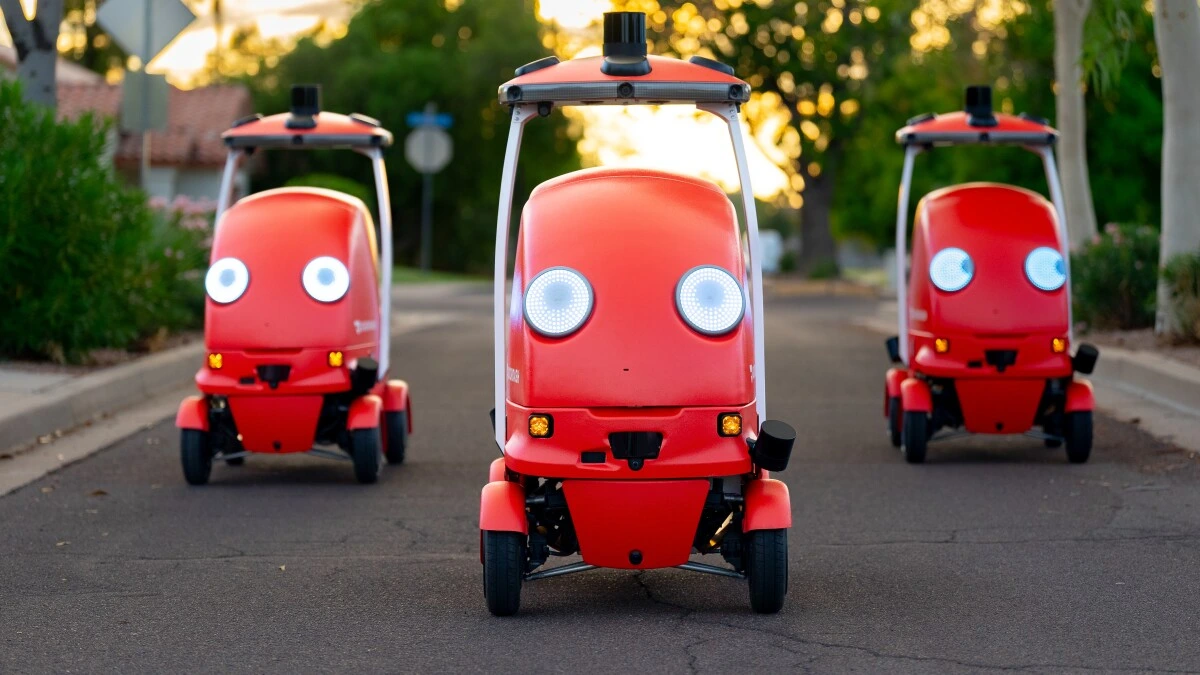
Alongside its reservation service, DoorDash will begin deploying its proprietary autonomous delivery robot, Dot, in parts of Tempe and Mesa, Arizona.
The bright red robot roughly the size of a stroller travels up to 20 miles per hour and can carry 30 pounds of food. Developed over seven years, Dot is designed for suburban neighborhoods, where DoorDash completes a large portion of its orders.
We realized existing delivery robots couldn’t handle the variety and distance of deliveries we manage, Tang said. “After 10 billion deliveries, we’ve learned what works and what scales.”
DoorDash is responsible for storing, maintaining, and operating the robots a logistical challenge Tang acknowledged but company executives view autonomy as key to future efficiency.
The firm also continues testing drone delivery in Texas, North Carolina, and Australia. Our vision is hybrid, Tang said. Human couriers and autonomous systems working together to expand access and improve reliability.
Analysts say DoorDash’s expansion underscores how on demand delivery firms are racing to diversify amid slowing growth and rising costs.
Adding reservations and autonomous delivery creates new revenue streams and strengthens brand loyalty, said Maya Patel, a logistics researcher at the University of California, Berkeley.
But managing robots introduces new challenges from regulation to safety to cost of maintenance. DoorDash’s new offerings also intensify competition with rivals like OpenTable and Instacart.
Following DoorDash’s announcement Monday that it would expand its partnership with Kroger to cover deliveries from 2,700 U.S. stores, Instacart shares fell 10 percent.
DoorDash is positioning itself as a one stop logistics platform, said Ethan Rogers, an analyst at MarketSight Research. “If successful, this could disrupt not just food delivery but the broader retail and hospitality landscape.”
The delivery sector has evolved rapidly since the pandemic. According to Technomic, US restaurant delivery sales reached nearly $35 billion last year, up from $26 billion in 2019.
DoorDash commands an estimated 65 percent market share in the United States, ahead of Uber Eats and Grubhub. Analysts expect continued growth as companies integrate technology and automation to streamline operations.
Globally, the market for autonomous delivery robots is projected to surpass $2 billion by 2030, according to Allied Market Research, driven by labor shortages and consumer demand for faster service.
Local businesses in pilot cities are cautiously optimistic. We’ve seen more first time customers since joining the DoorDash reservation beta, said Maria Gonzalez, owner of Café Verde in San Francisco. “It’s helping us fill tables on weeknights, which used to be slow.”
Some customers, however, expressed skepticism about robots replacing human drivers. “I like the idea of faster delivery, but I’d be concerned about safety and reliability,” said Jordan Lee, a Tempe resident. “What happens if the robot breaks down or someone tries to steal the food?”
DoorDash said Dot is equipped with cameras, sensors, and GPS to navigate safely and securely. The company has partnered with local authorities to ensure compliance with traffic and pedestrian laws.
DoorDash executives view these initiatives as part of a broader shift toward integrated mobility and dining solutions. The company envisions a future where algorithms automatically determine the best delivery method human, robot, or drone based on distance, order size, and terrain.
Autonomy is not a replacement for people, Tang said. “It’s a supplement that helps us scale and serve more customers more efficiently.”
Analysts say widespread adoption could take years, as companies navigate regulatory hurdles and public perception. But early success in pilot programs could accelerate deployment nationwide.
With its push into restaurant reservations and robot deliveries, DoorDash is signaling an ambitious new phase in its evolution. By blending technology, data, and hospitality, the company hopes to strengthen ties with restaurants, attract new diners, and sustain growth in a fiercely competitive market.
Whether Dot and the Going Out tab become core features or niche experiments, the initiative reflects a broader industry trend where convenience, automation, and customer experience increasingly define the future of food and retail logistics.


