
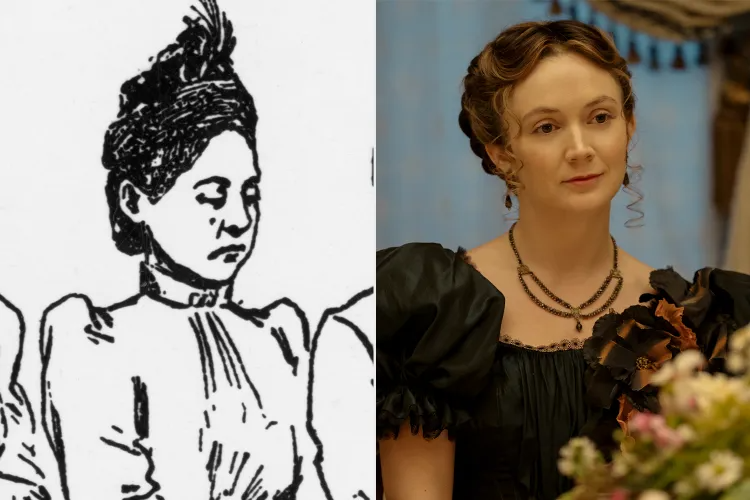
Emma Borden remained closely involved in Lizzie Borden’s life through her 1893 murder trial and acquittal, but the sisters’ relationship later ended in a bitter separation.
Born March 1, 1851, Emma was nine years older than Lizzie. According to Vanity Fair, author Cara Robertson said Emma took on a protective, almost maternal role after their mother died in 1863. Emma reportedly promised her mother that she would look after Lizzie.
Unlike her younger sister, Emma was described by The New York Times as intensely private. She never married, remained largely outside public life and reportedly avoided having her portrait drawn.
She attended Wheaton College for 15 months and was characterized as quieter and more conservative than Lizzie. Their family relationships had already become strained before the murders.
During testimony, Emma described a dispute with their father, Andrew Borden, and stepmother, Abby Borden, over property and money. She said the sisters became particularly unhappy after Andrew bought a house for Abby’s half-sister.

Emma’s Role in the Trial
After Andrew and Abby were killed with a hatchet in August 1892, Emma became an important part of Lizzie’s support network.
The Lizzie Borden House website says she managed finances and helped fund Lizzie’s defense, which included former Massachusetts Gov. George D. Robinson.
Emma was away visiting friends in Fairhaven when the killings occurred, according to The Herald News. During the trial, however, she testified about the circumstances surrounding evidence investigators considered significant.
One disputed piece of evidence was a dress Lizzie burned several days after the killings. Both sisters said it was stained with paint. Emma testified that the garment was also faded and had become dirty from dragging along the ground.
She further said the idea of burning it had been hers, although she did not see Lizzie actually set it on fire. The jury acquitted Lizzie on June 20, 1893, after deliberating for about an hour.

Life at Maplecroft
Following the acquittal, the sisters used their inheritance to purchase a home on French Street in Fall River. Lizzie named the property Maplecroft, and the pair lived there together for 12 years.
That arrangement ended in 1905. According to NewEngland.com and accounts cited in The Borden Murders: Lizzie Borden and the Trial of the Century, disagreements surrounding Lizzie’s social life and her friendship with actress Nance O’Neil contributed to the sisters’ separation.
Emma moved to Newmarket, New Hampshire, while Lizzie remained at Maplecroft. Accounts cited by The Boston Sunday Herald said the sisters did not see or speak to each other again.
Emma Borden’s Legacy
Emma died from chronic nephritis in June 1927, nine days after Lizzie, at age 76. The sisters were buried beside their parents at Oak Grove Cemetery in Fall River.
Her estate revealed a side of Emma’s life far removed from the sensational murder case. The New York Times reported that she left more than $100,000 to charities, including organizations supporting children, animals and community services.
Emma also established scholarships in her father’s name and left substantial bequests to relatives and her friend Josephine Ridlon. Her charitable legacy became one of the clearest documented parts of her life after the trial.


