
SUMMARY
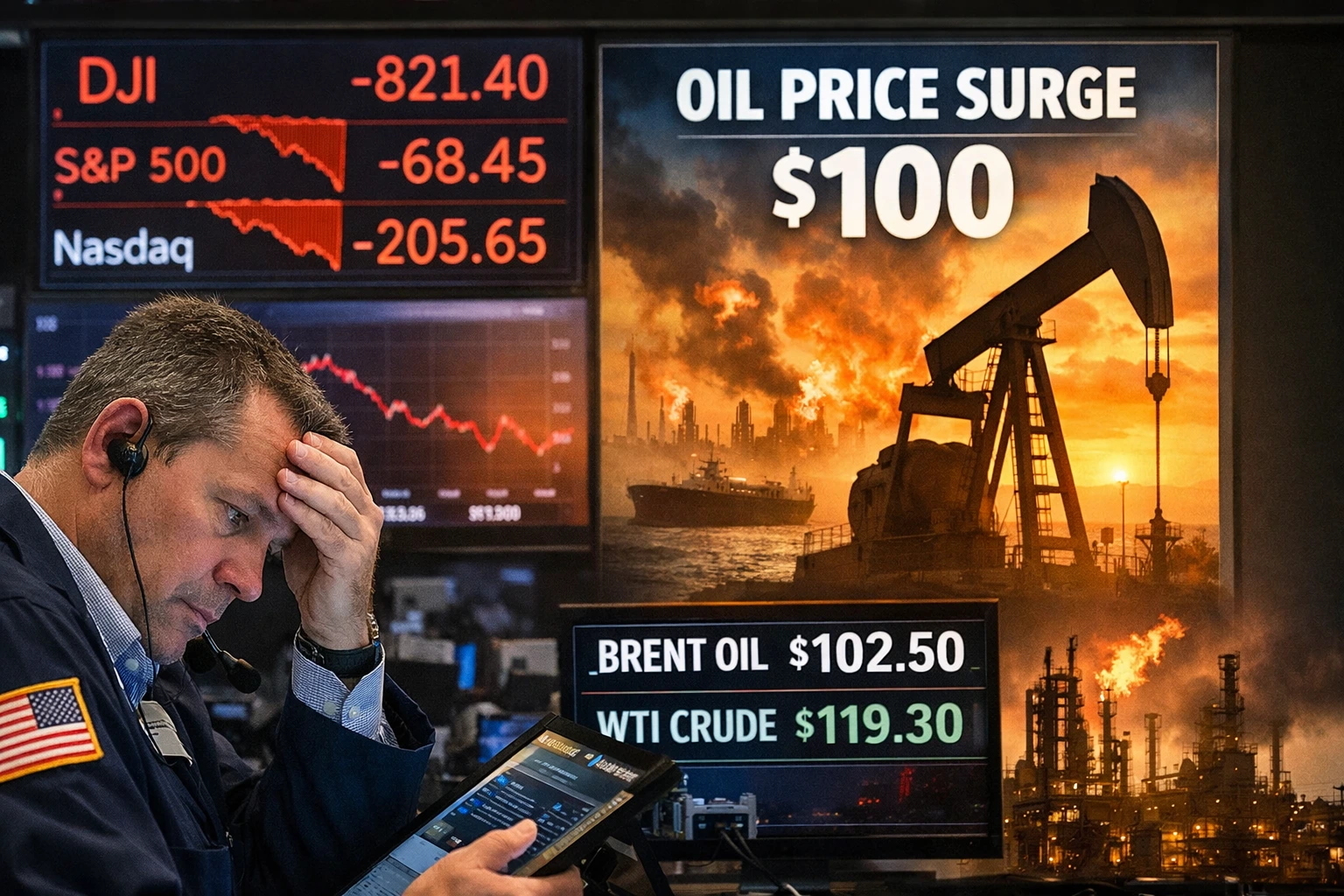
Oil prices exceeded $100 per barrel for the first time since 2022, intensifying concerns about inflation and economic growth.
US stock indices posted significant losses, reflecting investor anxiety over rising energy costs.
Finance ministers from the G7 nations planned a meeting to discuss potential releases from strategic petroleum reserves.
NEW YORK — USequities fell sharply Monday as crude oil prices climbed past $100 per barrel, driven by escalating conflict in the Middle East and disruptions to global supply.
Investors reacted to the prospect of prolonged energy shortages and renewed inflationary pressures.
The Dow Jones Industrial Average declined more than 800 points, or 1.7 percent, while the S&P 500 dropped 1.5 percent and the Nasdaq Composite slipped 1.3 percent.
The market sell-off followed a weekend surge in crude, with West Texas Intermediate rising above $119 per barrel and Brent crude surpassing $102.
Oil price spikes were triggered by regional conflict near Iran, which prompted production cuts and disrupted tanker routes through the Strait of Hormuz, a key artery for global crude exports.
Kuwait confirmed production reductions, while Iraq’s output reportedly fell by roughly 70 percent.
“This is a serious supply shock that markets cannot ignore,” said Ed Yardeni, chief investment strategist at Yardeni Research.
“Even short term disruptions can ripple through transportation and manufacturing costs, affecting inflation and consumer spending.”
Ministers from the Group of Seven leading economies are meeting to discuss coordinated releases from International Energy Agency (IEA) reserves.
Fatih Birol, IEA executive director, emphasized that strategic reserves could provide temporary relief but cannot fully offset prolonged supply constraints.
| Indicator | Latest Value |
|---|---|
| WTI Crude | ~$119 per barrel |
| Brent Crude | >$102 per barrel |
| Dow Jones | Down 1.7% |
| S&P 500 | Down 1.5% |
| Nasdaq Composite | Down 1.3% |
The US market sell-off comes after a challenging prior week, in which the Dow posted its steepest weekly decline in nearly a year.
Rising energy costs are expected to affect transportation, logistics, and consumer prices, with potential implications for monetary policy decisions by the Federal Reserve.
Sarah Lawson, portfolio manager at Crescent Capital, noted, “Investors are recalibrating for a higher cost environment. Oil above $100 changes the risk profile for equities, especially in energy intensive sectors.”
Michael Chen, oil analyst at Global Energy Insights, added, “While temporary reserve releases can dampen volatility, sustained disruptions in the Gulf region could keep global crude prices elevated for weeks.”
Markets will closely monitor upcoming US economic indicators, including the Consumer Price Index and Personal Consumption Expenditures, for signs of inflation trends.
G7 deliberations on reserve releases and further production decisions from the Middle East will remain critical for energy and equity markets.
The current volatility underscores the interconnected nature of geopolitical events, energy markets, and global financial stability.
NOTE! This article was generated with the support of AI and compiled by professionals from multiple reliable sources, including official statements, press releases, and verified media coverage. For more information, please see our T&C.


