
SUMMARY
- US-Israel strikes on Iran targeted military sites, according to President Donald Trump, who said the campaign may last several days.
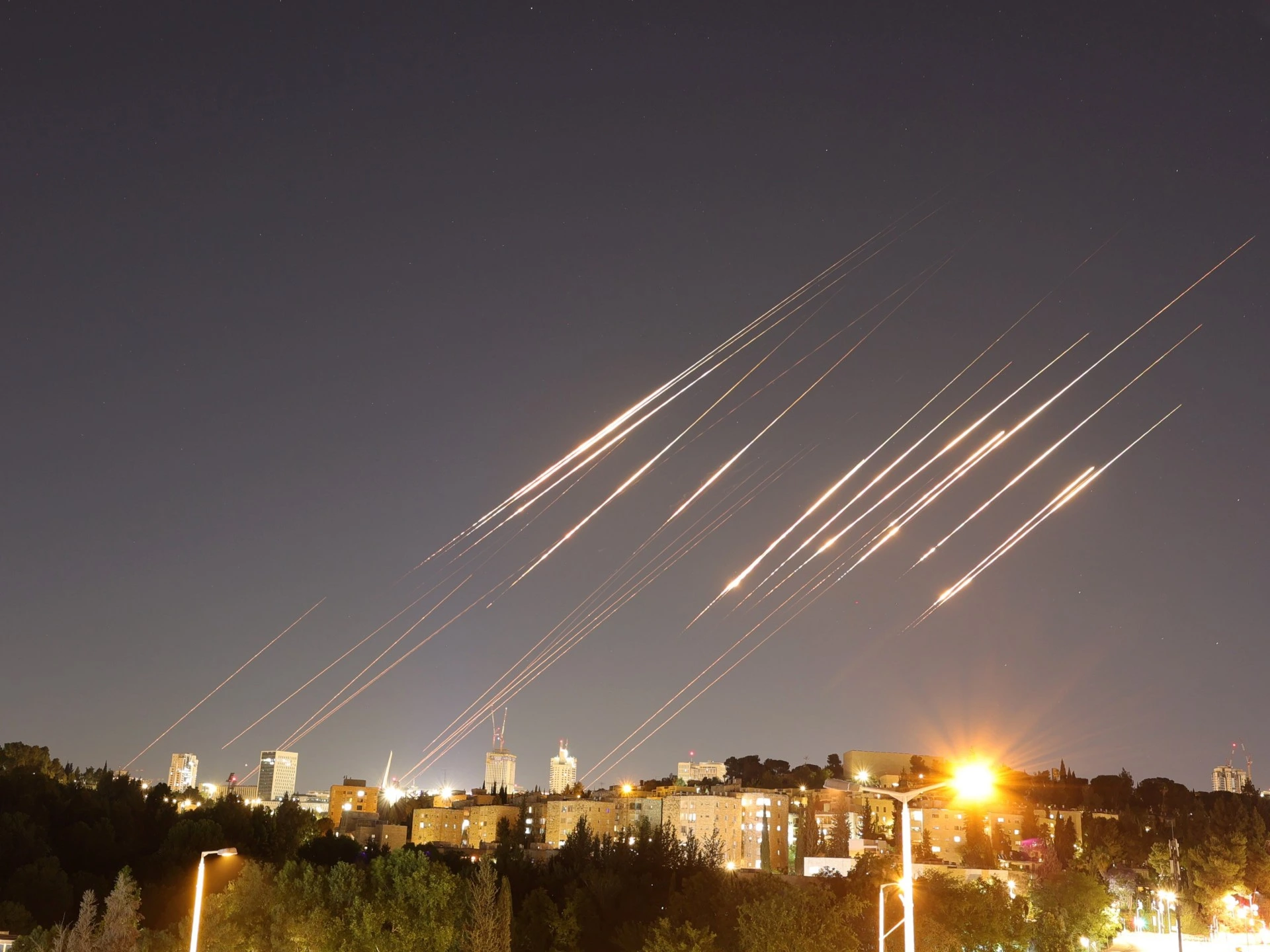
- Iran responded by launching dozens of ballistic missiles toward Israel, escalating tensions across the region.
- The strikes occurred a day after indirect nuclear talks in Geneva, raising uncertainty about future diplomacy.
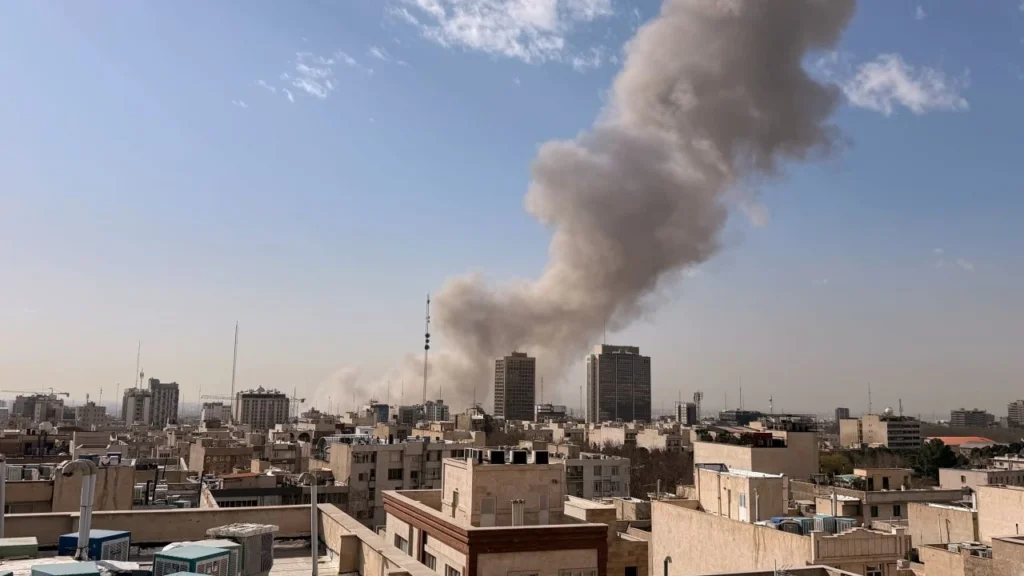
TEHRAN, Iran — The United States and Israel launched coordinated military strikes on Iran early Saturday, triggering explosions in Tehran and several other cities and prompting Tehran to fire dozens of ballistic missiles toward Israel in a rapid escalation that threatens to widen conflict across the Middle East.
US President Donald Trump described the operation as “massive and ongoing,” saying American forces targeted Iranian military infrastructure.
Israeli Prime Minister Benjamin Netanyahu thanked Trump for what he called “historic leadership” and urged Iranians to “cast off the yoke of tyranny.”
Iran’s state media reported that air defenses were activated in Tehran and other cities and said the country was preparing a “crushing response.”
Within hours, outlets affiliated with the Islamic Revolutionary Guard Corps said dozens of ballistic missiles had been launched toward Israel.
The Israeli military confirmed it detected incoming missiles and began interception operations.
The coordinated US-Israel strikes on Iran mark one of the most direct confrontations between Washington and Tehran in years.
The operation unfolded against the backdrop of stalled nuclear negotiations and weeks of heightened military deployments in the Middle East.
Trump said the decision followed Iran’s refusal to renounce nuclear weapons ambitions. Tehran has consistently maintained that its nuclear program is for civilian purposes only.
The immediate exchange of fire US and Israeli airstrikes followed by Iranian missile launches underscores the fragility of regional stability and places US forces, Israeli civilians and commercial shipping lanes at heightened risk.
Tensions between the United States and Iran have fluctuated for decades, centered on Iran’s nuclear activities and its support for regional proxy groups.
Last year, a 12 day conflict between Israel and Iran culminated in US strikes on Iranian nuclear facilities, which Trump later said had “obliterated” key sites.
Since then, indirect nuclear talks resumed intermittently. On Friday in Geneva, Iranian Foreign Minister Abbas Araghchi said a deal was “within reach” if diplomacy was prioritized.
Trump said he was dissatisfied with the pace of negotiations, stating Iran had not committed to abandoning nuclear weapons development.
The renewed US-Israel strikes on Iran occurred hours after those diplomatic exchanges.
Iran’s Supreme Leader Ali Khamenei had warned in recent weeks that any attack would prompt retaliation.
Iranian media reported Saturday that airspace was closed and schools were ordered shut as authorities prepared for further escalation.
Israel’s Home Front Command sent mobile alerts warning residents to prepare to enter protected spaces. The Israel Defense Forces said its air force was intercepting threats but cautioned that defenses were not “hermetic.”
Military analysts say the scale and duration of the strikes will determine whether the confrontation remains limited or expands regionally.
“The significance of the US-Israel strikes on Iran lies not only in the targets but in the messaging,” said Dana Stroul, director of research at the Washington Institute for Near East Policy and former deputy assistant secretary of defense for the Middle East.
“Public calls for regime change represent a political escalation that goes beyond deterrence.”
Stroul said the move may complicate diplomatic channels that were still open a day earlier.
Ali Vaez, director of the Iran Project at the International Crisis Group, said missile exchanges risk miscalculation.
“When ballistic missiles are launched toward population centers, even with interception systems in place, the margin for error narrows dramatically,” Vaez said.
“Regional actors will now calibrate their own positions, including Gulf states hosting US forces.”
Trump has asserted that Iran was developing long range missiles capable of reaching the United States.
US officials familiar with intelligence assessments have said there is no evidence Iran currently possesses missiles able to strike the American homeland, though it does maintain short- and medium range ballistic capabilities that threaten US troops in the Middle East.
Eyal Hulata, former Israeli national security adviser, said missile defense systems were activated shortly after early warnings.
“The interception effort is layered, but civilians must follow instructions because no system offers one hundred percent protection,” Hulata said in a televised briefing.
In Tehran, political analyst Mohammad Marandi said the strikes would strengthen hard-line elements within Iran’s leadership. “External attacks reduce the political space for compromise,” Marandi said. “Domestic opinion will likely consolidate around resistance.”
A senior US defense official, speaking on condition of anonymity because he was not authorized to discuss operational details publicly, said the military was preparing for several days of action depending on Iranian responses.
The official said force protection measures for US personnel in Iraq, Syria and the Gulf had been elevated.
Commercial airlines began rerouting flights away from Iranian airspace following closure notices from Tehran’s civil aviation authority.
The US-Israel strikes on Iran have immediate implications for energy markets and maritime security.
Iran has previously threatened to disrupt shipping in the Strait of Hormuz, a key passageway for global oil exports.
The escalation also places US forces stationed in the Middle East at increased risk. Iran backed groups in Iraq and Syria have targeted American bases in the past, citing US support for Israel.
European governments have urged restraint. While Washington has pushed Tehran to formally renounce nuclear weapons development, European diplomats involved in prior negotiations have emphasized phased confidence building steps.
The confrontation unfolds during a period of shifting alliances in the region, including recent normalization efforts between Israel and several Arab states.
Military operations were continuing Saturday, and US officials indicated additional strikes could follow depending on battlefield developments.
Iran’s leadership has vowed retaliation but has not publicly detailed the scope of its planned response.
Diplomatic channels remain technically open, though their viability is uncertain following the exchange of fire.
Security analysts say the next forty eight hours will be critical in determining whether the conflict stabilizes or expands.
The US-Israel strikes on Iran and Tehran’s missile response mark a sharp escalation in a long running confrontation over nuclear policy and regional security.
With military operations ongoing and diplomatic talks disrupted, governments across the Middle East and beyond are closely monitoring developments that could reshape the balance of power and test the resilience of international diplomacy.
NOTE! This article was generated with the support of AI and compiled by professionals from multiple reliable sources, including official statements, press releases, and verified media coverage. For more information, please see our T&C.


