
SUMMARY
- Dow futures fell roughly 800 points, while S&P 500 and Nasdaq 100 futures each dropped about 1.5 percent.
- US and Brent crude prices surged as Middle Eastern producers cut output and shipping through the Strait of Hormuz was disrupted.
- Rising energy costs and market volatility increased concerns about inflation and slower growth across global markets.
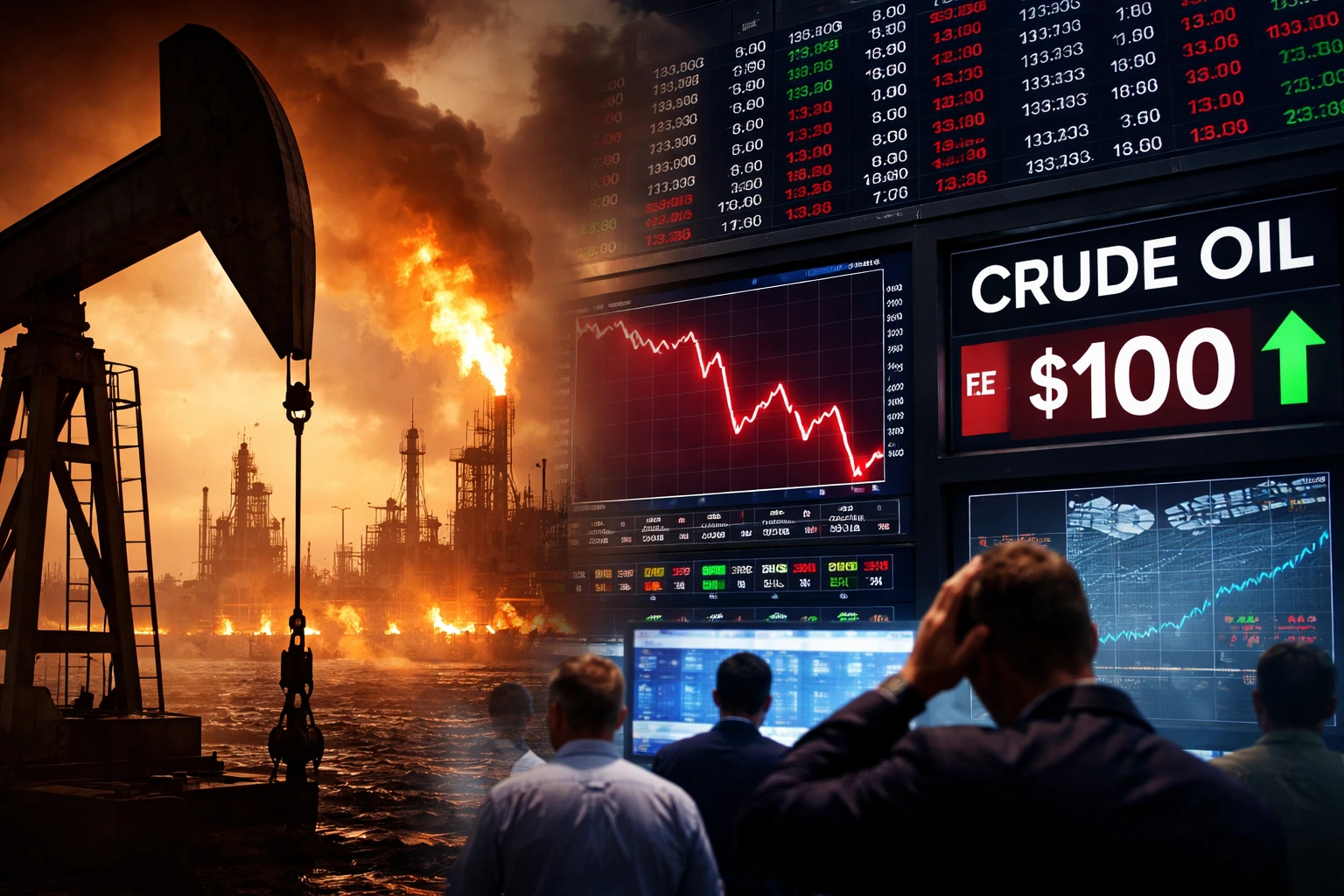
US stock index futures opened sharply lower Monday as West Texas Intermediate crude surged above $100 a barrel, driven by escalating military tensions between the United States and Iran that disrupted Middle East energy supply routes and raised concerns about a potential global economic slowdown.
Investors began the week with caution as surging crude prices rattled futures markets. The spike, fueled by the US/Iran conflict, is renewing concerns about inflation and potential slowdowns in both US and global economic activity.
Market participants are weighing the immediate disruption to oil supplies against the duration of the geopolitical crisis.
Oil prices have risen sharply as hostilities disrupted shipping through the Strait of Hormuz, a key artery for roughly 20 percent of the world’s seaborne oil. Kuwait and Iraq announced production cuts, compounding supply concerns.
West Texas Intermediate crude surpassed $108 a barrel, while Brent crude exceeded $107, levels not seen since mid-2022 amid the Ukraine crisis. US oil began the year below $60 a barrel.
Bruce Kasman, chief economist at JPMorgan Chase & Co., said, “Any extended disruption in Middle Eastern oil flows will quickly ripple through global inflation and growth forecasts.”
Mohamed El-Erian, chief economic adviser at Allianz, added, “Rising energy costs put additional pressure on central banks to reconsider monetary policy if inflation expectations rise.”
| Indicator | Current | Reference |
|---|---|---|
| WTI crude price | $108+ per barrel | Last above $100 in July 2022 |
| Brent crude price | $107+ per barrel | Highest since mid-2022 |
| Dow futures | Down ~1.7% | Largest weekly drop in nearly a year |
Elena Holtz, global markets strategist at Confluence Research, said, “Higher oil costs are already affecting transport and production expenses, influencing equity valuations.”
Matthew Canton, managing partner at Larkspur Commodities, added, “Insurance rates for Gulf shipments are rising, and some cargoes are delayed, reflecting real supply risks.”
Investors will closely monitor diplomatic developments and central bank reactions.
Persistently high oil prices could constrain consumer spending and tighten global inflation, influencing equities, bonds, and commodities. Economic data on employment and production will be pivotal in shaping market sentiment.
The surge in oil prices amid US/Iran tensions highlights how geopolitical conflicts can quickly affect global markets. Financial volatility is expected to continue as traders respond to evolving developments in the region.
This is a breaking news story. Check back for updates.
NOTE! This article was generated with the support of AI and compiled by professionals from multiple reliable sources, including official statements, press releases, and verified media coverage. For more information, please see our T&C.


