
SUMMARY
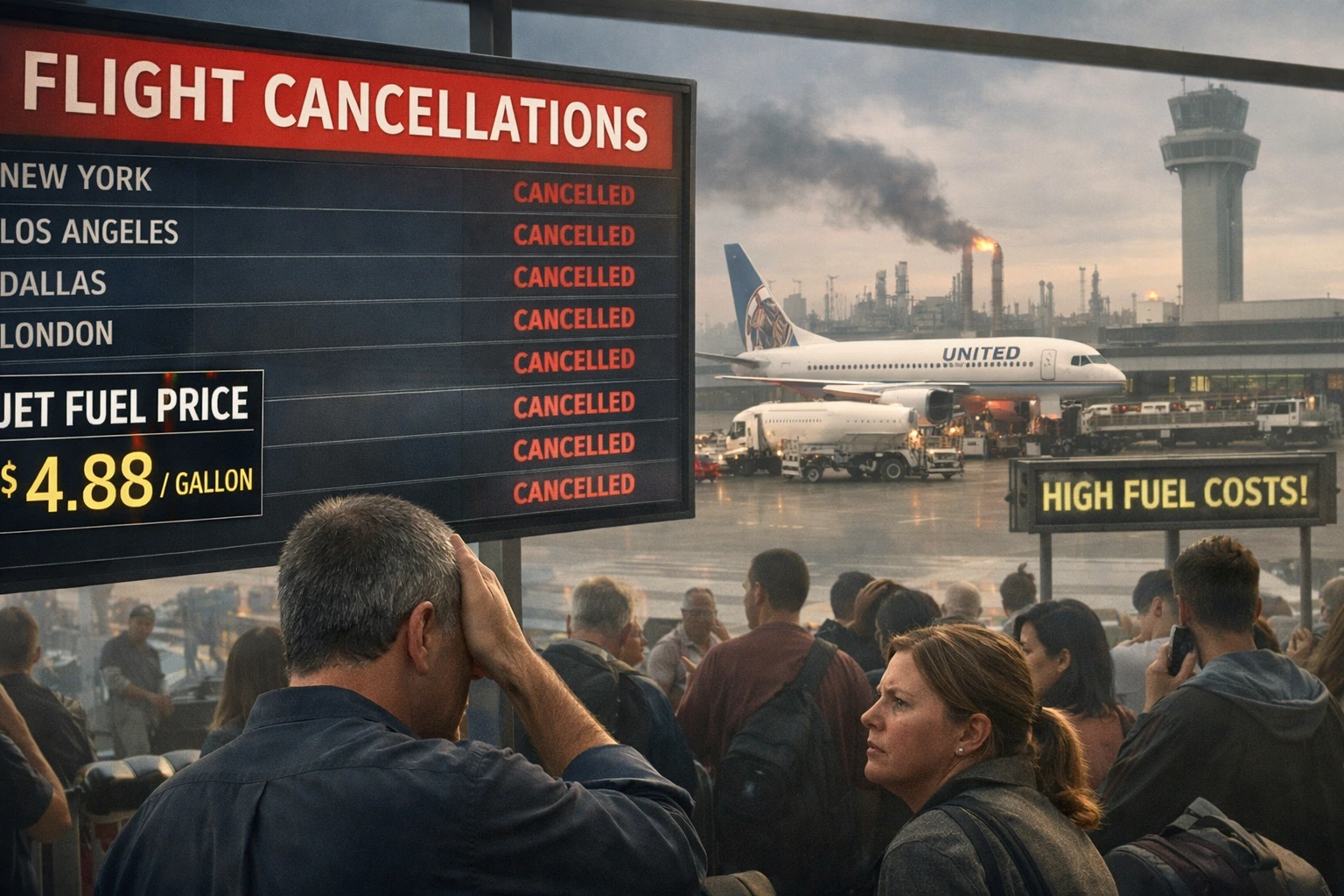
- Jet fuel prices in the US have surged 95 percent since late February, sharply increasing airline operating costs.
- More than 7,000 global flights were canceled in a single day, with North America hit hardest.
- Airlines are cutting routes and raising fares, signaling prolonged disruption for travelers worldwide.
Global aviation faces disruption as US airline flight cancellations surpass 7,000 in one day, driven by soaring jet fuel costs linked to the Iran conflict as of early April 2026.
The spike in US airline flight cancellations reflects a rapidly escalating aviation crisis tied to geopolitical instability in the Middle East.
As fuel markets react to supply shocks, airlines are adjusting capacity and pricing in real time, affecting global travel patterns in March and April 2026.
The disruption traces back to late February when U.S. military actions against Iran intensified regional tensions. Within days, oil supply routes tightened, particularly around the Strait of Hormuz.
By early March, jet fuel prices began climbing sharply, forcing airlines to reassess schedules.
By April, cancellations had surged beyond pandemic era norms, signaling a structurally different crisis driven by supply constraints rather than demand collapse.
Nicholas Calio, president and CEO of Airlines for America, said fuel now represents the largest uncontrollable cost for carriers, noting that sustained prices near $200 per barrel could “materially alter global airline capacity.”
Helima Croft, managing director at RBC Capital Markets, highlighted the geopolitical risk, stating that disruptions in the Strait of Hormuz impact “not just crude flows but refined products critical to aviation.”
This crisis differs from past oil shocks due to synchronized demand recovery post-2025 and limited spare refining capacity. Airlines are not only paying more for fuel but also facing constrained supply availability, amplifying operational risk.
An underreported impact is the shift in route economics. Midweek and red-eye flights, traditionally low margin, are being cut first. This reduces affordable travel options, disproportionately affecting budget travelers while pushing average ticket prices higher.
Scott Kirby, CEO of United Airlines, said the carrier is reducing five percent of planned routes, citing “unsustainable cost pressure if fuel remains elevated.”
Greg Foran, CEO of Air New Zealand, confirmed over 1,100 cancellations, stating the airline must “prioritize financially viable routes.”
Sara Nelson, president of the Association of Flight Attendants, warned that operational cuts are increasing workload strain on remaining crews while reducing scheduling stability.
Over the next six to twelve months, fuel prices are expected to remain volatile due to constrained refining output and geopolitical uncertainty.
The US Energy Information Administration indicates that inventory drawdowns and limited spare capacity could delay price stabilization even if hostilities ease.
Airlines may continue trimming low demand routes while focusing on premium and long haul markets where margins are stronger.
The surge in US airline flight cancellations underscores the aviation sector’s vulnerability to geopolitical supply shocks.
As fuel markets tighten, global travel systems face sustained pressure, reshaping pricing, accessibility and operational strategy across the industry.
NOTE! This article was generated with the support of AI and compiled by professionals from multiple reliable sources, including official statements, press releases, and verified media coverage. For more information, please see our T&C.


