
SUMMARY
- UK High Court finds the government’s ban on Palestine Action disproportionate and unlawful.
- The ban remains legally in effect pending government appeal, prompting criticism from rights groups and some Labour politicians.
- Palestine Action co-founder says the ruling increased public awareness of the group’s activism against UK based arms manufacturers.
London, United Kingdom – The United Kingdom’s High Court on Friday ruled that the government’s decision to proscribe the pro-Palestinian activist group Palestine Action as a terrorist organisation was unlawful.
A legal victory hailed by the group’s co-founder as a setback for the Labour government of Prime Minister Keir Starmer.
Huda Ammori, co-founder of Palestine Action, said the ban had “backfired massively,” giving the group wider public recognition and amplifying its message.
“They have spread the message and the power that ordinary people have to shut down weapons factories across the country and across the world,” Ammori told Al Jazeera.
The High Court ruling marks a significant challenge to the UK government’s approach to political activism linked to the Israel/Palestine conflict.
By overturning the proscription, the court underscored the limits of governmental power in criminalizing activism and placed the spotlight on legal protections for protest and assembly.
“The decision to proscribe Palestine Action was disproportionate,” the judges wrote, emphasizing that while the organisation promotes its political aims through criminal activity, only a small number of its actions could be classified as terrorist.
Founded in 2020, Palestine Action targets companies it alleges contribute to Israeli military operations in Gaza, particularly Elbit Systems, Israel’s largest arms manufacturer, which maintains several UK sites.
Activists have carried out raids and vandalism at arms factories and military bases, sometimes leaving symbolic red paint to represent blood.
In June 2025, the UK government added Palestine Action to its list of proscribed terrorist organisations, equating it with groups such as ISIS and al-Qaeda.
Critics including the United Nations human rights chief and Irish novelist Sally Rooney condemned the move as excessive and politically motivated.
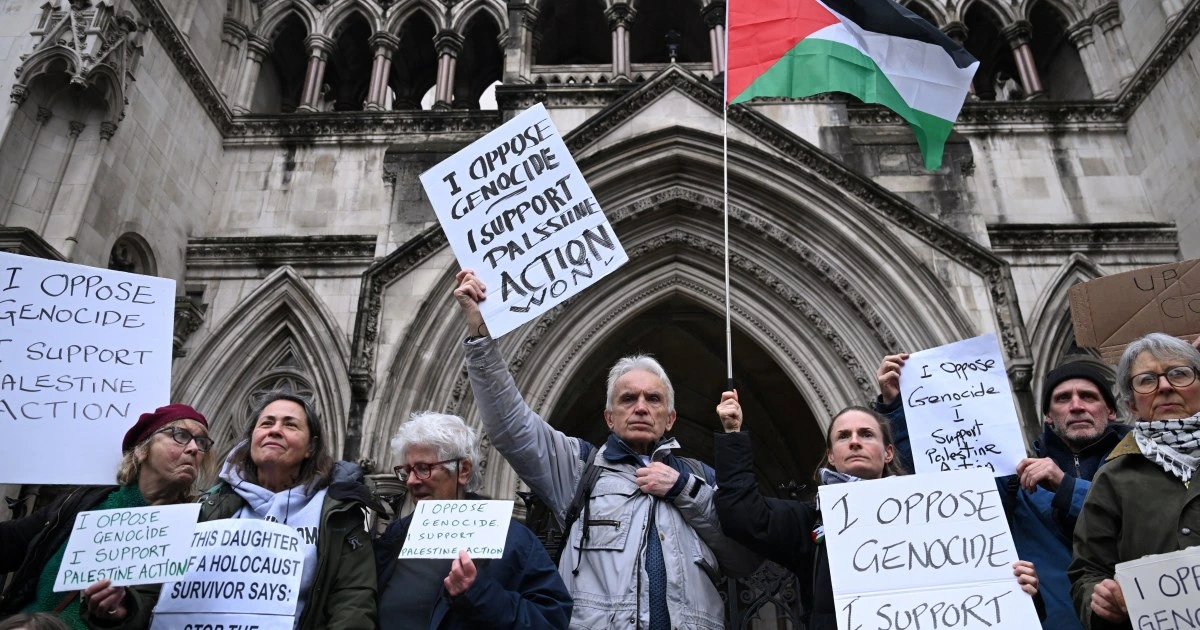
The ban prompted mass protests, resulting in nearly 3,000 arrests for displaying pro-Palestinian placards. Among those arrested were members of the so called “Filton 24,” accused of breaking into a Bristol facility of Elbit Systems.
Six of the activists were later acquitted of aggravated burglary, and five were released on bail.
Experts argue that the court ruling may have wider implications for civil liberties and government regulation of political activism in the UK.
Professor Mark Beeson, a political scientist at the University of Western Australia specializing in global security, said, “This case highlights the tension between national security and civil rights.
The ruling reinforces judicial oversight over executive power, particularly when it comes to criminalising protest movements.”
John McDonnell, former UK shadow chancellor and MP who opposed the ban, said on X, “We have a right to protest, to assemble, and to speak freely in this country this has been secured largely by direct action over centuries.”
Ammori, 31, of Iraqi and Palestinian heritage, emphasized direct action as central to the group’s mission.
“Rather than ask somebody else to stop those weapons going and being used to commit genocide, we go to the source, and we stop those weapons ourselves,” she said.
Shabana Mahmood, the UK Home Secretary, said she was “disappointed” by the ruling and intends to appeal.
Human rights groups, however, have criticized this approach as a continuation of unlawful suppression of political expression.
The High Court decision may shape ongoing debates on the legality of proscribing activist groups in the UK and set a precedent for judicial review over politically motivated bans.
Any appeal by the government will likely draw renewed scrutiny from both legal experts and civil rights organisations.
Friday’s ruling represents a notable affirmation of civil liberties in the UK while highlighting tensions between government security measures and activist movements.
Palestine Action’s co-founder says the group will continue its campaigns, and the court decision has already increased its visibility on a national and international level.
NOTE! This article was generated with the support of AI and compiled by professionals from multiple reliable sources, including official statements, press releases, and verified media coverage. For more information, please see our T&C.


