
SUMMARY
- The Court held that imposing import taxes is a power reserved for Congress and cannot be enacted solely under IEEPA.
- A segment of the Court applied a legal standard requiring clear legislative authorization for policies with substantial economic or political impact.
- The ruling could affect billions in collected tariffs and reshape the balance of executive and legislative power in trade decisions.
WASHINGTON — The US Supreme Court on Friday struck down a series of tariffs imposed by former President Donald Trump, ruling that his use of emergency powers under the International Emergency Economic Powers Act (IEEPA) exceeded the authority granted by Congress.
The 6-3 decision represents a rare check on executive power in trade policy and carries implications for US commerce and international markets.
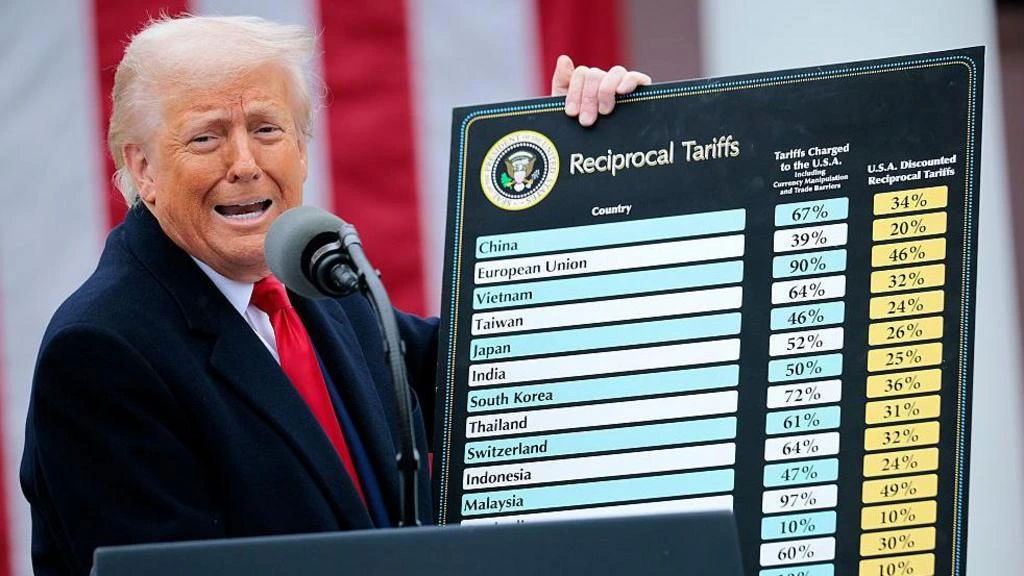
The Supreme Court’s ruling in Learning Resources, Inc. v. Trump addresses tariffs imposed under the pretext of national emergencies related to trade imbalances and foreign competition.
Chief Justice John Roberts, writing for the majority, explained that IEEPA allows presidents to regulate trade in emergencies, but does not authorize taxation or duties on imports.
“The statutory language does not grant the president authority to impose taxes,” Roberts wrote. The decision prevents former President Trump from maintaining tariffs implemented without explicit congressional approval.
IEEPA, enacted in 1977, was designed to provide presidents with tools to address national security threats and emergencies affecting trade.
In 2025, Trump used the statute to justify tariffs on imports from countries including China, Mexico, and Canada, with rates reaching up to 25 percent.
Legal challenges argued that these tariffs effectively functioned as taxes, which require congressional authorization under Article I of the Constitution.
Previous cases had rarely addressed IEEPA in the context of broad economic measures.
Legal scholars said the decision reaffirms constitutional checks on executive authority.
Erwin Chemerinsky, dean of the UC Berkeley School of Law, stated, “This ruling emphasizes that Congress must speak clearly when delegating powers that carry major economic consequences.”
R. Anthony Reese, a law professor at Michigan State University, noted, “The Court’s partial reliance on the major questions doctrine signals that courts will scrutinize expansive presidential claims, even when asserted by a Republican administration.”
The ruling also reflects political divisions within the Republican Party, separating traditional free market advocates from those favoring aggressive trade interventions.
Rep. Mike Levin, chair of the House Trade Subcommittee, said, “The Supreme Court has clarified that taxing power lies with Congress. This restores the constitutional balance and provides certainty for American businesses.”
Mark Johnson, CEO of a Midwest import export company, said the ruling “removes uncertainty over tariffs that were inflating costs for manufacturers and consumers alike.”
The decision leaves open the possibility for future tariffs under statutes that explicitly authorize them, but sets clear limits on unilateral executive action.
Legal experts expect Congress may need to pass clarifying legislation if presidents seek broader trade powers in emergencies.
Retroactive refunds of duties collected under the now invalid tariffs could involve substantial costs for the Treasury and affect international trade relationships.
The Supreme Court’s ruling in Learning Resources curtails the ability of a president to unilaterally impose tariffs using emergency powers.
By reaffirming the role of Congress in taxation and trade policy, the decision strengthens constitutional safeguards and may influence US economic and foreign policy for years to come.
NOTE! This article was generated with the support of AI and compiled by professionals from multiple reliable sources, including official statements, press releases, and verified media coverage. For more information, please see our T&C.


