
SUMMARY
- Trump’s presence in the courtroom breaks historical norms and raises questions about judicial independence.
- Justices scrutinized the administration’s interpretation of the 14th Amendment’s Citizenship Clause.
- A decision, expected by late June or early July, could reshape immigration policy and demographic reporting.
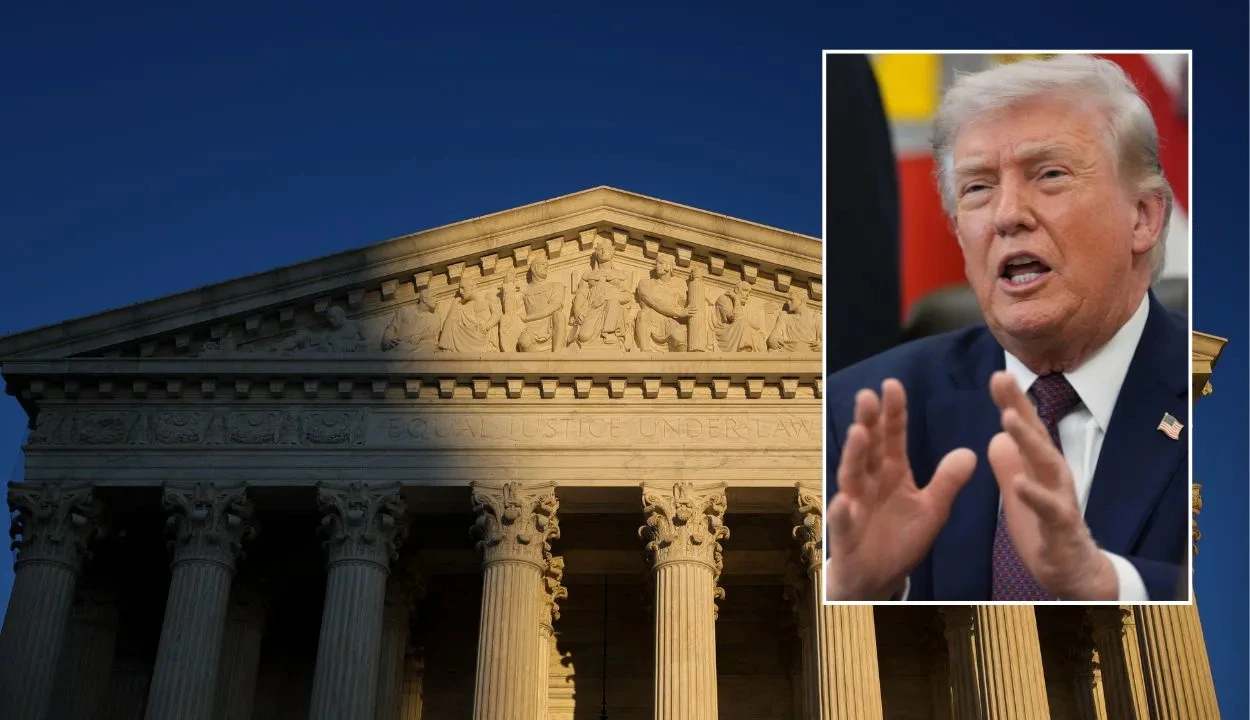
President Donald Trump attended oral arguments at the US Supreme Court on April 1, 2026, in Trump v. Barbara, marking the first time a sitting president has been present for such proceedings in a case concerning birthright citizenship.
The appearance of a sitting president inside the Supreme Court underscores the global significance of US birthright citizenship law.
As governments and migration analysts monitor the case, its outcome could influence legal interpretations and administrative practices worldwide.
On January 20, 2025, President Trump issued an executive order attempting to deny automatic citizenship to children born in the United States to noncitizen parents, including those on temporary visas.
Multiple federal courts blocked the measure, ruling it likely unconstitutional. The administration appealed directly to the Supreme Court, which agreed to hear arguments on April 1, 2026.
Previous administrations have had policies challenged in the Supreme Court, but no sitting president has attended oral arguments in a case directly affecting their executive actions until this instance.
The legal debate centers on the 14th Amendment, ratified in 1868, which grants citizenship to “all persons born or naturalized in the United States.”
Professor Sarah H. Cleveland, Sterling Professor of International Law at Yale, explained, “The clause has been consistently applied to confer citizenship broadly. Any shift would fundamentally alter constitutional precedent.”
Former US Circuit Judge David Barron, now a Harvard Law lecturer, noted, “The administration’s argument relies on a narrow interpretation that diverges from Reconstruction era intent and prior case law, making this a test of judicial consistency and legal philosophy.”
Politically, Trump’s presence is unprecedented. Retired federal judge and legal analyst Judith Miller said, “This moment demonstrates the merging of executive visibility and judicial proceedings, challenging traditional norms of separation.”
Maria Sanchez, an immigration lawyer representing affected families, said, “This decision affects the legal status of children and shapes their futures.”
Antonio Ruiz, an immigrant father attending protests, added, “The ruling will touch real families, not just constitutional texts.”
If the Supreme Court upholds the executive order, federal agencies will need to revise citizenship protocols, triggering legislative and administrative adjustments.
Striking it down would maintain current citizenship rules, but the political debate over immigration policy will likely continue. Analysts project potential litigation over implementation and compliance regardless of the outcome.
The Supreme Court case and Trump’s unprecedented attendance highlight the intersection of law and executive power.
The decision on birthright citizenship will influence constitutional interpretation, federal policy, and demographic law, reinforcing the court’s role in shaping the legal and civic framework of the United States.
NOTE! This article was generated with the support of AI and compiled by professionals from multiple reliable sources, including official statements, press releases, and verified media coverage. For more information, please see our T&C.


