
SUMMARY
- Blanche’s appointment signals deeper White House influence over Justice Department operations and priorities.
- Internal restructuring has reshaped federal prosecution strategy and personnel nationwide.
- Legal experts warn of long term implications for judicial trust and institutional independence.
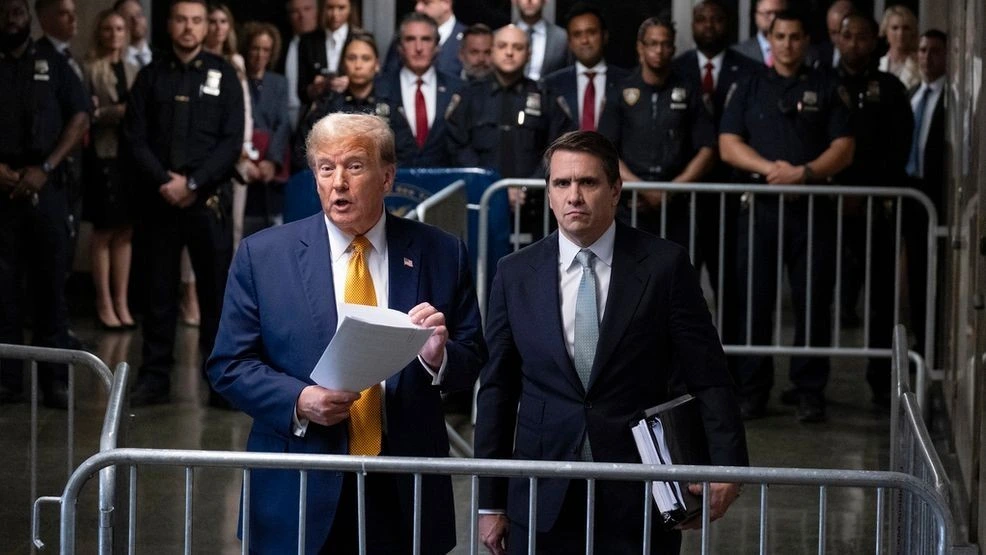
WASHINGTON — President Donald Trump has appointed Todd Blanche as acting attorney general in April 2026 following the abrupt dismissal of Pam Bondi, placing his longtime defense lawyer at the helm during a period of institutional strain.
The appointment of Todd Blanche as acting attorney general arrives at a critical moment for the Justice Department, as global observers assess the durability of U.S. legal institutions and their independence from executive power in 2026.
Blanche emerged as a central figure during Donald Trump’s legal battles between 2023 and 2025, defending him in multiple criminal cases.
While Trump was convicted in New York, Blanche secured procedural victories in federal cases led by special counsel Jack Smith.
Following Trump’s reelection, Blanche assumed the deputy attorney general role, overseeing daily operations and internal restructuring.
Bruce Green, a professor at Fordham University School of Law, said Blanche’s trajectory reflects a shift in institutional norms.
“The traditional buffer between the White House and the Justice Department has narrowed significantly,” Green noted.
Paul Rosenzweig, a former deputy assistant secretary for policy at the US Department of Homeland Security, emphasized operational risks.
“Centralizing authority around personal loyalty can disrupt prosecutorial consistency and weaken federal case credibility,” he said.
Blanche’s tenure has included personnel changes across federal agencies, including dismissals tied to prior Trump investigations.
This restructuring has coincided with a measurable decline in case filings linked to politically sensitive matters, according to Justice Department data reviewed by the Transactional Records Access Clearinghouse.
James Trusty, a former federal prosecutor and defense attorney, said internal morale has shifted. “Career prosecutors are recalibrating expectations under new leadership dynamics,” he stated.
Aakash Singh, a senior Justice Department aide, confirmed operational changes. “Priorities are now aligned more closely with executive directives,” he said.
Colleen Murphy, a federal public defender in Chicago, noted courtroom effects. “We are seeing more cautious judicial responses in politically adjacent cases,” she said.
Over the next six to twelve months, legal analysts anticipate continued personnel realignment and tighter executive coordination.
Congressional oversight hearings and potential judicial challenges may shape the department’s operational boundaries.
Blanche’s leadership marks a pivotal phase for the Justice Department, with implications extending beyond domestic law enforcement into global perceptions of US governance and rule of law standards.
NOTE! This article was generated with the support of AI and compiled by professionals from multiple reliable sources, including official statements, press releases, and verified media coverage. For more information, please see our T&C.


