
SEOUL — South Korea exports rose sharply in November, surprising analysts and continuing a strong streak of trade growth. Exports climbed eight point four percent from a year earlier to US$61.04 billion, according to data released Monday by the Ministry of Trade, Industry and Energy.
The surge was led by a record high in semiconductor shipments and a rebound in automobile exports following a new US trade agreement.
Exports from Asia’s fourth largest economy are seen as a bellwether for global trade flows because of South Korea’s heavy reliance on technology and manufacturing goods.
Growth in exports has been a rare bright spot amid global economic uncertainty. In November, the trade surplus widened to US$9.7 billion, the largest since September 2017. Imports rose modestly by one point two percent to US$51.30 billion after a decline in the prior month.
Momentum has also been building as the central bank the Bank of Korea suggested it may be nearing the end of its monetary easing cycle, citing strong growth in exports and renewed global demand for advanced chips.
“Demand for memory chips used in data centers has surged globally, pushing up both volumes and prices,” said Kim Ji‑won, a trade analyst at the Korea Institute for Industrial Economics and Trade. “That alone has lifted South Korea exports beyond expectations.”
A spokesman for the Ministry of Trade, Industry and Energy added that the uptick in auto exports was “largely driven by resolved uncertainties over US tariffs after the bilateral agreement finalized in November.”
He noted that stronger sales of Korean made vehicles abroad underscored renewed investor and consumer confidence. Economists also cautioned that trade patterns may remain uneven.
While semiconductors and autos have carried exports this month, other sectors like machinery and steel continue to struggle under tariff pressures and weaker global orders, said Park Sung‑hee, senior economist at Hanwha Investment & Securities.
- Semiconductors: Exports jumped 38.5 percent year on year to US$17.26 billion, marking a record monthly high. Robust demand for advanced chips used in data centers fueled much of this growth.
- Automobiles: Auto exports rose 13.7 percent, bouncing back after months of uncertainty over US trade tariffs.
- Regional shipments: Exports to China rose 6.9 percent. Shipments to Southeast Asian countries increased 6.3 percent.
By contrast, exports to the European Union fell 1.9 percent and exports to the United States slid 0.2 percent, as steel products, machinery and auto parts were hit by lingering tariff and tariff related pressures.
The trade balance reached a surplus of US$9.7 billion, up from US$6.0 billion in the previous month.
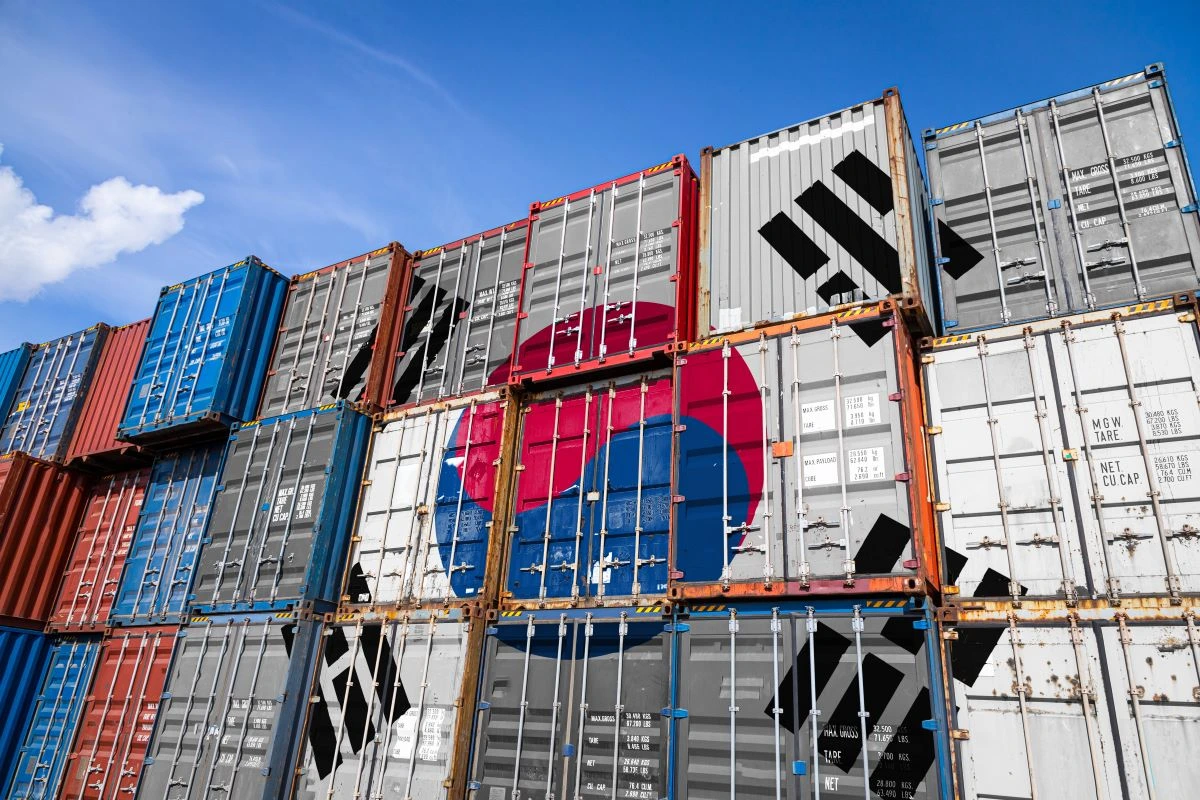
At a container terminal at Busan Port, exporter Lee Hyun‑soo described November as one of the “busiest months in recent years.”
Lee said his firm shipped dozens of containers loaded with memory chips destined for cloud computing firms overseas, adding We could feel the demand was rising again after a few slow quarters.
Meanwhile, a small auto trader in Incheon, Kim Min‑ju, noted her orders surged after the US deal was confirmed. “Many of our clients had held off on purchases until the trade agreement was signed. Once that happened demand shot up,” she said.
However some in the machinery export sector remained cautious. One mid‑sized industrial machinery exporter, speaking on condition of anonymity, said “We saw very little change in demand, and rising shipping costs are still a challenge.”
Analysts said the outlook for South Korea exports remains cautiously optimistic, albeit dependent on global demand for chips and autos.
The strong performance in semiconductors may encourage local manufacturers to accelerate production plans, but pressure remains on sectors that face trade friction or weakened global orders.
“Assuming technology demand stays stable and auto firms continue to benefit from smoother trade relations, we could see export growth continue into the first quarter of next year,” said Park Sung‑hee.
She added that any worsening of global economic slowdown or new trade tensions could quickly reverse the gains. The government and central bank are expected to monitor these trends closely.
With the Bank of Korea already signaling a slowdown to its monetary easing, rising export revenues could support a firmer economic outlook for 2026.
South Korea exports in November delivered a stronger‑than‑expected performance, driven by robust semiconductor shipments and a rebound in auto exports after a US trade deal.
While exports to China and Southeast Asia rose, shipments to the US and European markets remained soft, reflecting lingering tariff pressures and weak demand in some sectors.
Many exporters and policy makers are watching closely to see whether this momentum can continue into the new year, especially if global economic challenges intensify.


