
SUMMARY
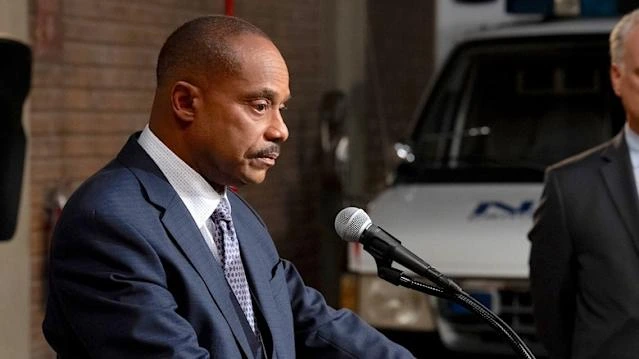
- Rocky Carroll’s character Leon Vance dies in NCIS’ 500th episode, ending an 18-season tenure
- Actor confirmed the exit was not his decision but acknowledged the storyline’s narrative impact
- Episode highlights agency’s future threats and sets up leadership transitions for the team
CBS’ long running procedural NCIS marked a dramatic milestone on Tuesday, March 24, as Director Leon Vance, played by Rocky Carroll, was killed in the 500th episode.
Carroll confirmed the decision was driven by the network and producers, not his own choice, delivering one of the series’ most significant plot developments in nearly two decades.
The NCIS 500th episode showcased a high stakes narrative while honoring the show’s legacy.
Carroll’s exit underscores the evolving storytelling approach in long running television series, where major character deaths are used to raise dramatic tension and refresh storylines for audiences.
The episode aired at 8 p.m. ET on CBS and was widely discussed across social media platforms.
Leon Vance, introduced in 2008, had become a stabilizing figure in NCIS, guiding central characters including Mark Harmon, Michael Weatherly, and Cote de Pablo.
Carroll’s portrayal spanned 18 seasons, during which the character evolved into a key authority figure, maintaining both the narrative continuity and leadership of the fictional agency.
According to Carroll, executive producer Steven D. Binder framed Vance’s death as part of a larger arc in which NCIS faces internal threats.
Vance’s sacrifice was designed to protect the agency and its staff, creating a storyline that combined both narrative weight and emotional resonance.
Television analysts note that milestone episodes increasingly employ high-impact character exits to retain viewer engagement.
“Long running series use major character departures as a tool to reset stakes,” said Amanda Lotz, professor of media studies at Queensland University of Technology. “It ensures the story remains compelling and introduces opportunities for creative renewal.”
Robert Thompson, director of the Bleier Center for Television and Popular Culture at Syracuse University, explained, “Milestone episodes serve a dual purpose they honor legacy while signaling evolution.
In procedural dramas, such narrative risks often align with business strategies to sustain ratings.” Carroll described the decision as externally driven but creatively justified.
“It was basically presented to me that the studio and the network wanted to do something really big,” he told TV Insider. “When they explained the full storyline, I thought it was actually a terrific story.”
Binder emphasized narrative intent. “We wanted to honor Rocky and his legacy on the show as best as we could,” he said. “Giving his life so the agency could survive was the most meaningful way to handle it.”
Melissa Becker, a television industry analyst at Kagan, noted, “Audience attachment to long standing characters like Vance is strong. How fans respond will influence future storylines and character development.”
Following Vance’s death, NCIS will focus on how the team manages leadership transitions while responding to ongoing threats.
Producers have indicated that the narrative will gradually shift to emphasize both operational continuity and character development, rather than immediately replacing the director role.
Rocky Carroll’s exit represents a major turning point for NCIS, concluding an 18 year narrative arc while opening new opportunities for storytelling.
By combining character legacy with high stakes drama, the series demonstrates its commitment to evolution while honoring nearly two decades of procedural history.
NOTE! This article was generated with the support of AI and compiled by professionals from multiple reliable sources, including official statements, press releases, and verified media coverage. For more information, please see our T&C.


