
SUMMARY
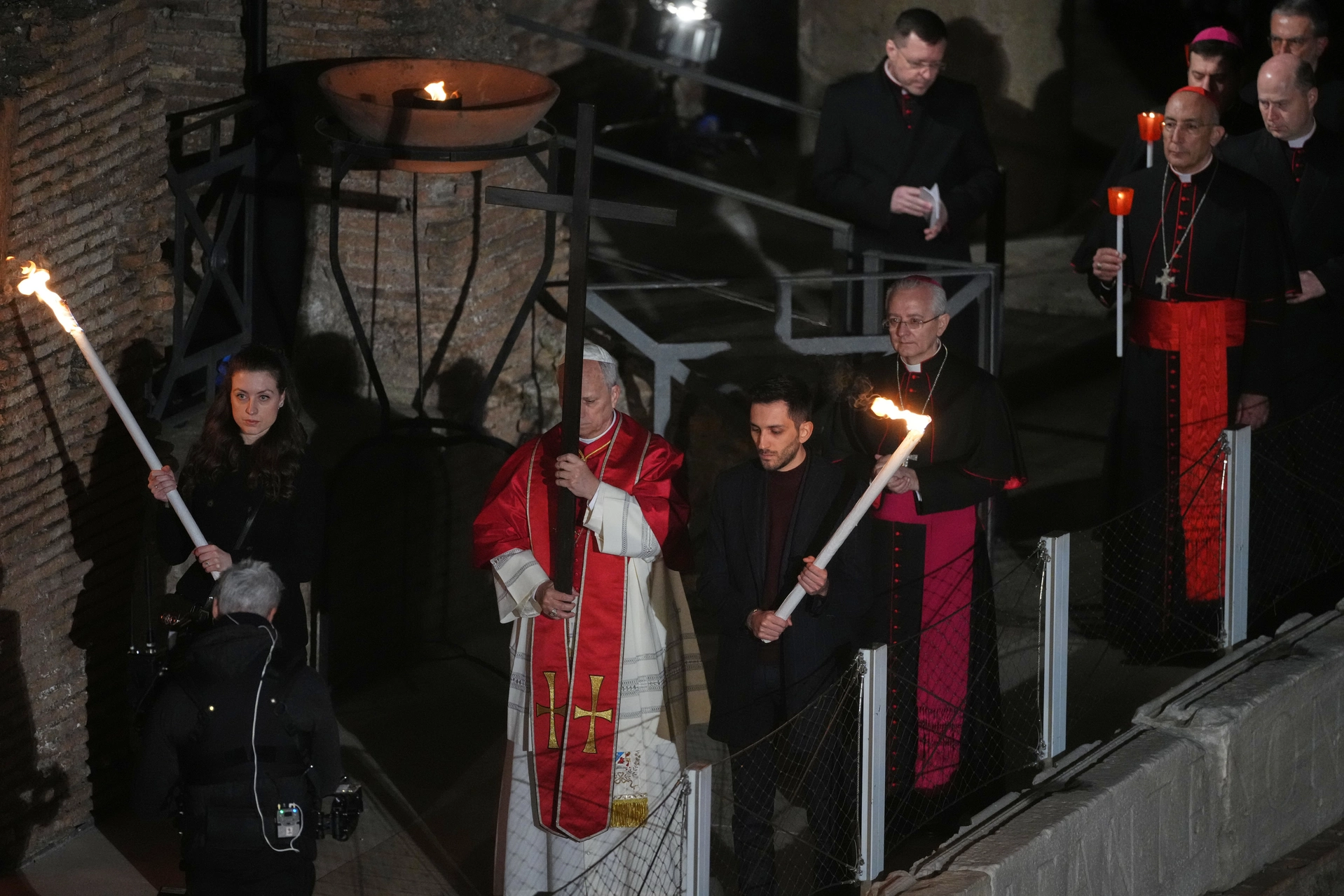
Pope Leo XIV carried the cross through all 14 stations, the first full route by a pope in decades.
- The act underscores Vatican emphasis on suffering and global moral leadership under Leo.
- Analysts link the gesture to renewed focus on Christian tradition amid declining church participation.
ROME — The Pope Leo XIV Way of the Cross observance Friday at the Colosseum in Rome drew thousands and marked the first full papal carriage of the cross in decades. The tradition commemorates Jesus’ final hours and resonates across global Catholic communities.
The event holds significance beyond liturgy, as the Vatican reasserts moral presence worldwide in early 2026.
The Good Friday Way of the Cross devotion has origins in early Christian pilgrimages to Jerusalem.
Popes regularly led the stations at the Colosseum from 1960s through the late twentieth century. Pope John Paul II carried the cross fully until 1995, then partially.
Pope Benedict XVI carried only the first station. Pope Francis participated without carrying the cross due to health challenges.
After Francis’ death Easter 2025, Pope Leo XIV’s full carriage marks a notable restoration.
Pope Leo XIV’s decision to carry the cross for all 14 stations reflects a push toward embodied liturgical leadership.
“This act symbolizes tangible solidarity with suffering,” said Maria Giannini, professor of theology at the Pontifical Gregorian University.
“It reinforces the Vatican’s focus on compassion in global crises.” Religious observers see strategic timing. The Vatican has faced declining participation in Western Europe and Latin America.
According to the Vatican’s 2025 statistics, weekly Mass attendance fell below fifty percent in several major dioceses, including Milan and Buenos Aires.
Anthony Smith, senior analyst at the Pew Research Center Religion Program, said the gesture may address secularization by emphasizing visual and participatory worship.
Economically, Holy Week pilgrimages boost local sectors. Rome’s hotel occupancy hit ninety-two percent for Easter week, according to the Italian Hotel Federation. Religious tourism supports over 200,000 jobs in the region.
“Celebrations like the Pope Leo XIV Way of the Cross mobilize both faith communities and local services,” said Claudia Russo, president of the federation.
Theologically, the focus shifts from abstract doctrine to lived experience. The meditation at the first station stressed accountability of authority figures, weaving moral imperatives into contemporary geopolitics.
Sister Pelenatita Kieoma Finau, Missionary Sisters of the Society of Mary, said, “Being here with Romans and pilgrims deepens our faith in shared suffering and hope.”
Local vendor Marco Bianchi said, “This event brings Rome alive each year economically and spiritually.”
Over the next six to twelve months, Vatican engagement strategies may lean further into participatory traditions to retain adherents, particularly in regions with declining church membership.
Religious tourism is expected to grow modestly with targeted pilgrim programs. The Pope Leo XIV Way of the Cross at the Colosseum this Good Friday represents a confluence of tradition, leadership symbolism, and strategic church engagement.
The gesture reinforces Vatican liturgical identity as global religious and cultural dynamics shift.
NOTE! This article was generated with the support of AI and compiled by professionals from multiple reliable sources, including official statements, press releases, and verified media coverage. For more information, please see our T&C.


