
SUMMARY
- Flagship rallies in Minnesota feature Senator Bernie Sanders, Jane Fonda, Bruce Springsteen, and Joan Baez.
- Majority of participants come from nonurban, Republican leaning counties, reflecting cross partisan mobilization.
- ICE presence at protests may deter undocumented participants, prompting legal rights campaigns by ACLU.
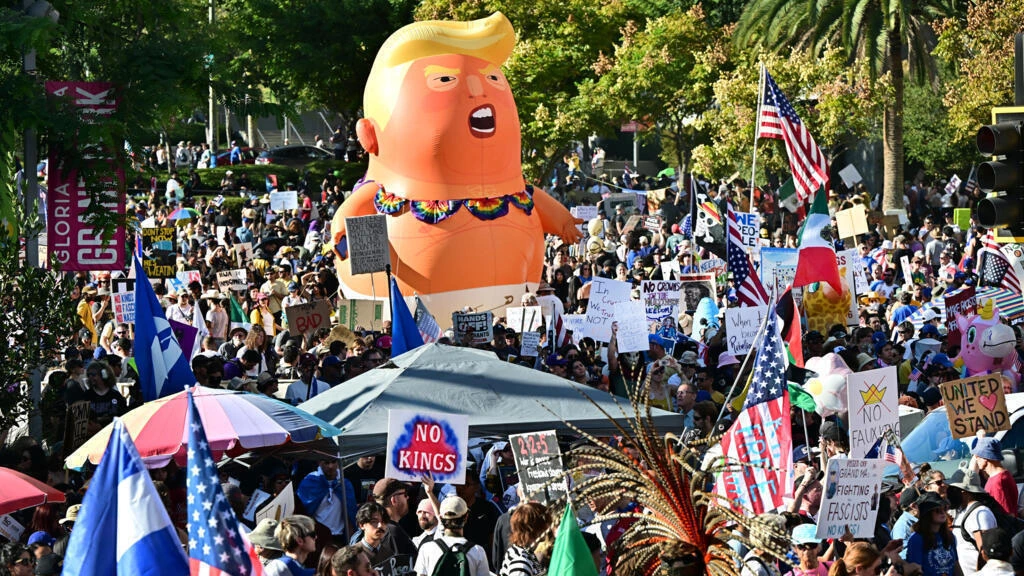
Millions of Americans are set to join No Kings protests nationwide on Saturday, with more than 3,000 events in all 50 states and 16 countries, challenging federal immigration and voting policies.
The 2026 No Kings protests highlight widespread domestic dissent over federal immigration enforcement, economic pressures, and civil liberties concerns. Global audiences track US mobilizations as indicators of policy stability and social cohesion.
The No Kings movement began in June 2025 with nationwide protests against Immigration Customs Enforcement raids and voting restrictions.
The second event in October drew seven million participants. Saturday marks the third coordinated mobilization. Minnesota’s Twin Cities have become symbolic, responding to ICE operations this winter.
Ezra Levin, co-founder of Indivisible, projected March 28 as “the largest protest in American history.”
Leah Greenberg, co-founder, emphasized outreach to outside urban centers, including Republican strongholds.
Sarah Parker, executive director of Voices of Florida, noted economic stressors rising fuel and grocery prices as mobilization catalysts.
Political analyst Dr. Hanna Ortiz, University of Chicago, said, “The protests demonstrate decentralized activism that can influence local electoral engagement and shape national policy discourse.”
Economically, economist Michael Chen, American Policy Institute, highlighted potential consumer impact from transit disruptions and heightened local security spending.
Renee Whitman, St. Paul resident, said, “People here want accountability but also safety. Legal guidance is crucial.” ICE spokesperson James Hall confirmed “routine monitoring” at public events.
Organizer Malik Johnson noted, “Nonurban engagement reflects broader national concerns beyond metropolitan areas.” Analysts expect continued civic mobilization into the 2026 midterms.
Policy shifts on immigration and voting rights, coupled with grassroots engagement, may influence federal priorities and local election outcomes over the next 6–12 months.
The No Kings protests illustrate sustained domestic mobilization with global observation, signaling the interplay between civic activism, policy enforcement, and economic pressures across US regions.
NOTE! This article was generated with the support of AI and compiled by professionals from multiple reliable sources, including official statements, press releases, and verified media coverage. For more information, please see our T&C.


