
KEY POINTS
- Expiration of New START ends legally binding limits on deployed strategic nuclear warheads and delivery systems for the US and Russia.
- United Nations officials warn the lapse increases the risk of miscalculation and a renewed nuclear arms buildup.
- Emerging technologies, including AI-enabled autonomous weapons, may amplify the destabilizing effects of unconstrained nuclear arsenals.
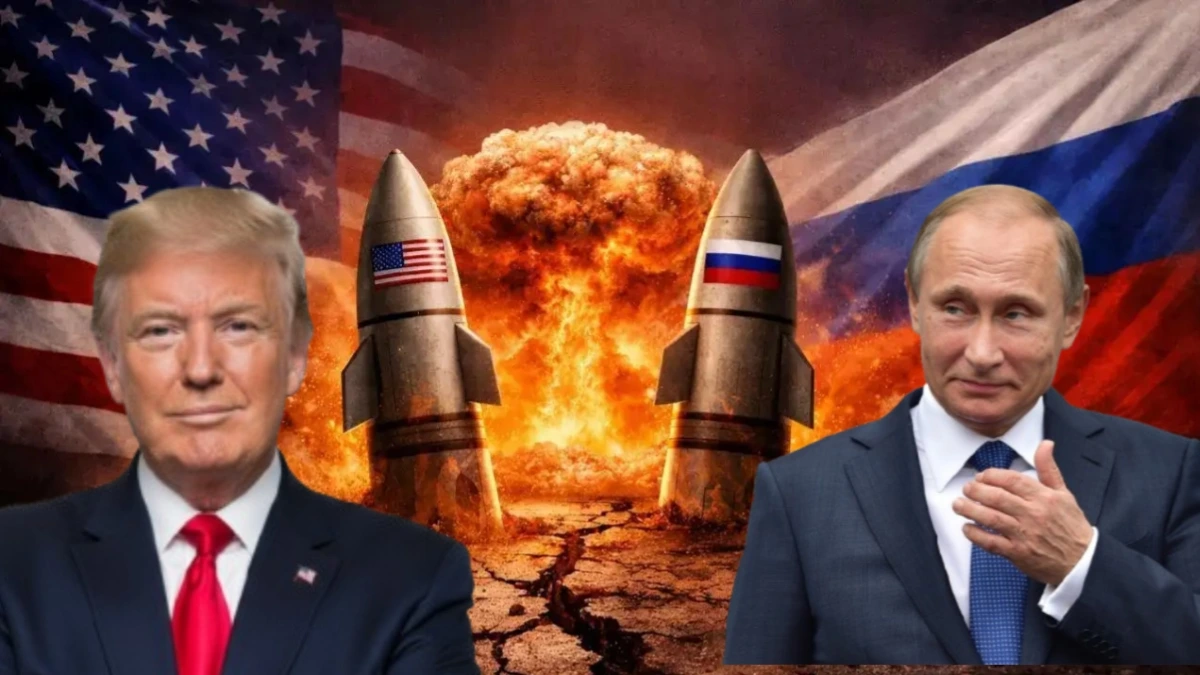
WASHINGTON — The New Strategic Arms Reduction Treaty (New START) between the United States and Russia officially expired Thursday, removing the last formal limits on the world’s two largest nuclear arsenals and raising concerns about renewed strategic instability.
The treaty’s lapse coincides with rising tensions in Europe, ongoing conflict in Ukraine, and accelerating developments in artificial intelligence for military applications.
New START, signed in 2010 and extended in 2021, capped each country at 1,550 deployed nuclear warheads and 700 deployed launchers.
The treaty also established inspection protocols, notifications, and transparency measures that allowed both sides to monitor compliance and reduce uncertainty.
The expiration removes these constraints and raises questions about future arms control efforts.
“Without the verification mechanisms of New START, both nations are effectively flying blind regarding the other’s strategic forces,” said Elaine Bunn, senior fellow at the Center for Strategic and International Studies in Washington.
“This creates an environment ripe for miscalculation and rapid escalation.” The original START framework dates to the Cold War, when US and Soviet leaders negotiated to limit arsenals amid fears of first strike scenarios.
At its peak, the United States held more than 26,000 nuclear warheads, and the Soviet Union over 14,000. Even with such overwhelming numbers, leaders sought treaties to prevent catastrophic missteps.
New START was designed to provide similar guardrails in a modern context, focusing on deployed strategic weapons and including routine inspections.
Russia partially suspended participation in 2023, further reducing transparency, though both sides largely adhered to the treaty’s limits until its expiration.
The treaty’s expiration comes at a time when both Moscow and Washington are pursuing new technological capabilities.
Russia’s use of intermediate range missiles with multiple independently targetable warheads (MIRVs) in Ukraine demonstrates a willingness to employ dual capable systems in conventional conflicts, challenging long standing norms separating nuclear and conventional forces.
Daryl Kimball, executive director of the Arms Control Association, warned, “The end of New START could trigger an arms buildup not only in the US and Russia, but eventually China as well. The loss of transparency is the most destabilizing element.”
Additionally, AI-enabled autonomous systems are increasingly integrated into military operations, shortening decision timelines.
Rachel Whitlark, a senior defense technology analyst at the RAND Corporation, said, “AI tools can magnify uncertainty in crises.
When combined with unconstrained nuclear forces, the risk of miscalculation rises significantly.”
UN Secretary General António Guterres described the expiration as “a serious setback for international security,” urging immediate diplomatic efforts to restore transparency.
Russian Deputy Foreign Minister Sergei Ryabkov said Moscow is prepared to operate independently of treaty constraints, adding, “Our strategic posture will remain responsible, but we will act in accordance with our national interests.”
A senior Pentagon official, speaking on condition of anonymity, confirmed that the United States is reviewing its nuclear posture in light of the treaty’s expiration, emphasizing the importance of maintaining credible deterrence.
The immediate focus for policymakers will likely include exploring either a successor treaty or unilateral confidence building measures, such as enhanced communication and notification mechanisms.
Incorporating AI and autonomous systems into any new framework will be essential to managing the accelerated decision timelines that these technologies create.
The expiration of New START marks a turning point in global nuclear governance. Without renewed agreements or new stabilizing measures.
The world faces an era of heightened uncertainty, where nuclear competition intersects with technological innovation in ways not seen since the Cold War.
The decisions of Washington, Moscow, and other nuclear powers over the coming months will shape strategic stability for years to come.
NOTE! This article was generated with the support of AI and compiled by professionals from multiple reliable sources, including official statements, press releases, and verified media coverage. For more information, please see our T&C.


