
SUMMARY
- The Iowa Florida NCAA Tournament altercation resulted in double technical fouls, avoiding ejections.
- Officials reviewed video evidence before determining no flagrant-2 foul occurred.
- The incident highlights ongoing concerns about physical play and officiating consistency in March Madness.
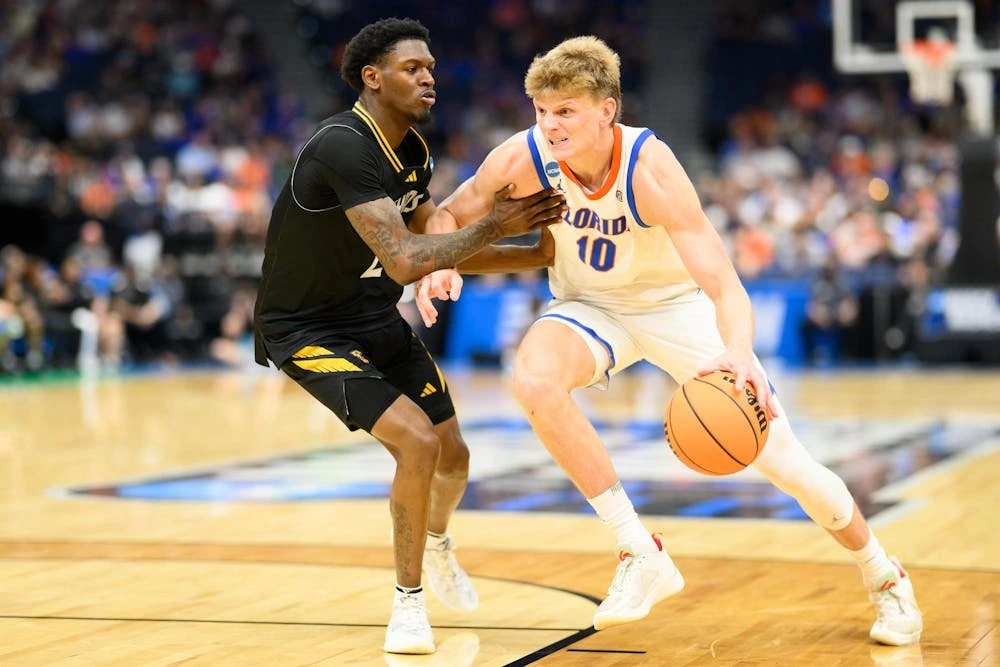
A tense moment in the 2026 NCAA Tournament escalated when Iowa forward Alvaro Folgueiras and Florida’s Alex Condon were involved in a physical altercation during a first-round game, prompting officials to issue double technical fouls after video review.
The Iowa Florida NCAA Tournament altercation unfolded late in the first half, drawing immediate attention from players, coaches and broadcasters.
The sequence raised questions about player safety, officiating standards and how physical confrontations are handled on one of college basketball’s biggest stages.
The incident occurred when Folgueiras secured a rebound following a missed shot by Condon. As both players fought for possession, a held ball was called.
After the whistle, Condon continued pulling the ball, dragging Folgueiras to the floor. Moments later, players from both teams converged.
Replay footage showed Folgueiras making a striking motion toward Condon, though contact appeared to come from his forearm rather than a closed fist.
Officials reviewed the play and ruled it a double technical foul, allowing both players to remain in the game.
“Officials are increasingly relying on replay to distinguish between hostile acts and incidental contact,” said Gene Steratore, former NCAA referee and rules analyst for CBS Sports. “In this case, intent and point of contact likely influenced the decision.”
John Adams, NCAA national coordinator of men’s basketball officiating, has previously emphasized consistency in such calls.
“The standard is whether an act is excessive or intentional,” Adams said in prior NCAA guidance on flagrant fouls.
Florida coach Todd Golden expressed frustration following the ruling, visibly arguing with officials and directing comments toward the Iowa bench.
“I don’t know, they were just going for the ball,” Iowa coach Ben McCollum said during a broadcast interview. “Everybody got sensitive. We’re here to compete.”
Clark Kellogg, CBS Sports analyst, noted during the broadcast that “these situations test both discipline and officiating clarity in high pressure environments.”
The Iowa AFlorida NCAA Tournament altercation is likely to be reviewed internally by NCAA officials as part of ongoing evaluations.
Tournament games often serve as benchmarks for refining officiating protocols and player conduct expectations.
While the decision avoided ejections, the Iowa Florida NCAA Tournament altercation underscores the fine line between competitive intensity and rule violations, a balance that remains central to the integrity of March Madness.
NOTE! This article was generated with the support of AI and compiled by professionals from multiple reliable sources, including official statements, press releases, and verified media coverage. For more information, please see our T&C.


