
KEY POINTS
- Punxsutawney Phil saw his shadow, traditionally indicating a longer winter.
- Meteorologists note that the groundhog’s forecast has no scientific reliability, with historical accuracy below 50 percent.
- Groundhog Day remains a cultural and economic event, rooted in 19th century European traditions adapted in the United States.
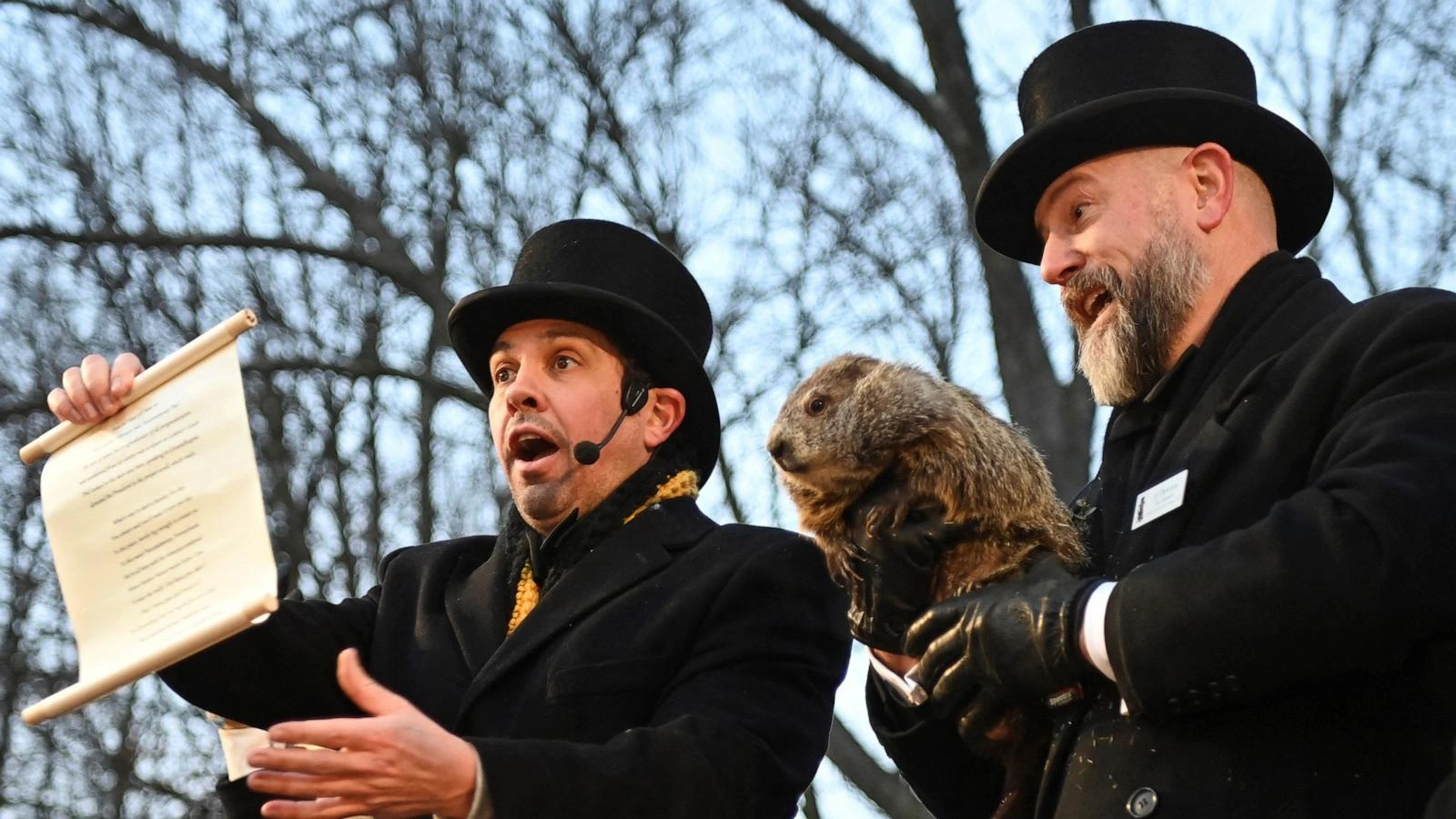
PUNXSUTAWNEY, Pa. — Punxsutawney Phil, the famed groundhog of western Pennsylvania, emerged from his burrow Monday morning and saw his shadow, signaling six more weeks of winter, organizers said.
The event drew thousands of visitors before dawn to Gobbler’s Knob, the site of the 140th official celebration of the holiday that has become an American cultural fixture.
Across the United States and internationally, Groundhog Day is observed each Feb. 2. While some treat it as lighthearted folklore, the event offers a moment for communities to gather amid harsh winter conditions.
This year, particularly cold weather across the East Coast and Midwest heightened public interest in Phil’s prediction. Attendees braved subzero temperatures for the traditional ritual, which blends ceremony, pageantry, and folklore.
Groundhog Day originated with German immigrants in Pennsylvania in the 1800s, who adapted older European customs linked to Candlemas Day.
Historically, clergy would bless candles on Feb. 2 to symbolize the remaining light of winter. Observing the weather at that time was believed to indicate the length of the season.
Punxsutawney Phil has been central to the American version since 1887, when the Punxsutawney Groundhog Club formalized the ceremony. Other regions have similar traditions, including Wiarton Willie in Ontario and Chuck in Staten Island.
The lore states that if the groundhog sees its shadow, winter will continue for six more weeks; if not, spring arrives early.
Although this prediction is widely publicized, scientific studies show Phil’s forecasts are largely symbolic.
The National Oceanic and Atmospheric Administration (NOAA) reports that historical accuracy ranges from 30 to 40 percent, making the tradition more ceremonial than meteorological.
Jill Szwed, a meteorologist with WTAE-TV in Pittsburgh, said Groundhog Day has cultural value but limited predictive power. “The event is fun and community driven,” Szwed said.
“Actual winter conditions are determined by atmospheric patterns, sea surface temperatures, and jet stream movements, not a single day’s observation.”
Dr. Thomas Bryant, a climatologist at Penn State University, noted, “Groundhog Day is a long standing ritual, but modern forecasting relies on data and models.
Phil’s shadow is a story people enjoy, not a reliable seasonal guide.” Both experts emphasize consulting NOAA or regional forecasts for planning travel, agriculture, or outdoor events.
Teresa Myers, a visitor from Ohio, said, “It’s a cold morning, so six more weeks sounds about right. But it’s mostly about being here for the celebration.”
Local business owner Katie Laska added, “Groundhog Day brings visitors and revenue to Punxsutawney every year. The holiday is as much about community as the prediction.”
While Phil’s shadow will be remembered in cultural lore, NOAA and regional meteorologists will continue providing seasonal guidance.
Broader climate factors, including Arctic oscillations and El Niño/La Niña conditions, remain the primary determinants of weather patterns in the coming months.
Groundhog Day maintains a unique place in North American tradition, merging folklore with community festivities.
Punxsutawney Phil’s 2026 prediction of six more weeks of winter reflects historical custom rather than scientific certainty.
Residents and visitors alike will continue to enjoy the ceremonial aspects, even as data driven forecasts guide practical expectations for the season ahead.
NOTE! This article was generated with the support of AI and compiled by professionals from multiple reliable sources, including official statements, press releases, and verified media coverage. For more information, please see our T&C.


