
KEY POINTS
- Denmark and the United States remain at odds over Trump’s repeated calls for US acquisition of Greenland.
- A new working group will focus on Arctic security issues while maintaining Danish sovereignty over the island.
- Denmark is increasing its military presence in the Arctic amid growing geopolitical competition involving Russia and China.
WASHINGTON — A top Danish official said Wednesday that a “fundamental disagreement” remains between Denmark and former President Donald Trump over Greenland.
Following a series of meetings in Washington with Vice President JD Vance and Secretary of State Marco Rubio. Despite the differences.
Both sides agreed to establish a working group aimed at exploring avenues to address security concerns while respecting Greenland’s autonomy.
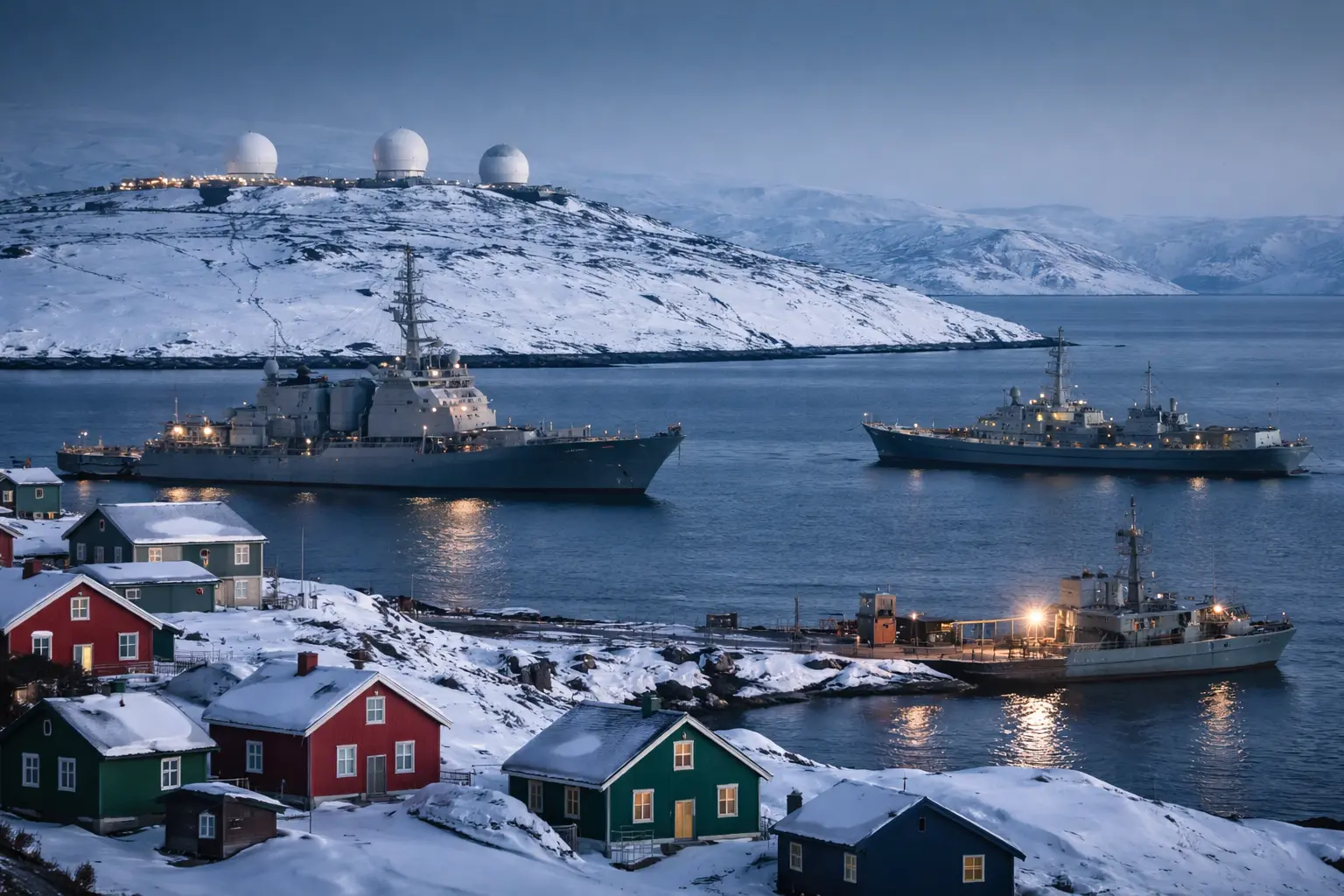
The discussions underscore Greenland’s growing strategic importance in the Arctic region. The island, an autonomous territory of Denmark, sits at the crossroads of global shipping lanes and is home to significant untapped mineral resources.
Trump has repeatedly argued that Greenland is essential for US national security, citing potential threats from Russia and China and pointing to its relevance for missile defense infrastructure.
The Danish delegation, including Foreign Minister Lars Løkke Rasmussen and Greenlandic Foreign Minister Vivian Motzfeldt, met with US officials for roughly an hour to explore common ground.
The talks were preceded by Trump’s social media posts reaffirming that “anything less than Greenland in US hands is unacceptable” and insisting NATO should lead efforts to secure the island.
Greenland has been a strategic location for the United States since a 1951 treaty granted Washington the right to establish military bases with Danish approval.
The island’s importance has grown with climate change, as melting ice opens potential shipping routes between the Atlantic and Pacific oceans.
Previous US attempts to discuss Greenland’s strategic future have been met with skepticism.
Danish officials have consistently emphasized that Greenland remains under Danish sovereignty, and Greenlandic leaders have voiced clear opposition to joining the United States.
Experts say the dispute highlights broader tensions over Arctic geopolitics. Dr. Henrik Sørensen, a senior analyst at the Nordic Institute for Arctic Studies, noted, “Greenland’s mineral wealth and strategic position make it a focal point for US, Chinese, and Russian interests.
The challenge is balancing defense priorities with the sovereignty and political will of Greenland’s population.”
In Denmark, military officials are stepping up activities in the Arctic. Danish Defense Minister Troels Lund Poulsen announced that Denmark, in coordination with NATO allies, will expand its military footprint around Greenland.
Swedish and Norwegian personnel are also contributing to training and mapping exercises, reflecting broader NATO interest in Arctic security. Greenlanders have voiced resistance to Trump’s proposals.
JensBFrederik Nielsen, Greenland’s prime minister, said Tuesday, If we have to choose between the United States and Denmark here and now, we choose Denmark. We choose NATO. We choose the Kingdom of Denmark. We choose the EU.
Local residents also questioned the US rationale for control. Lars Vintner, a heating engineer, said, “The only Chinese I see is when I go to the fast food market. Trump’s claims about Russian and Chinese ships are just fantasy.”
Greenlandic officials emphasized that current treaties allow the US to expand its military presence with consent, but sovereignty cannot be ceded without Greenlandic approval.
The working group is expected to meet in the coming weeks, focusing on security coordination, Arctic infrastructure, and resource management.
Denmark’s bolstered military posture, in cooperation with NATO allies, suggests that Greenland’s strategic importance will continue to attract international attention.
While Trump’s insistence on US acquisition has stalled, the broader debate highlights the intersection of climate change, defense strategy, and local self determination. Analysts say the situation could shape Arctic policy and US European relations for decades.
The US Denmark discussions reflect enduring strategic tensions in the Arctic and underline Greenland’s geopolitical significance.
The outcome of the working group and continued Danish military expansion will be critical indicators of how NATO allies navigate security concerns while respecting territorial sovereignty.
Author’s Perspective
In my analysis, the Greenland US dispute highlights accelerating Arctic strategic competition, where defense, minerals, and shipping routes intersect.
I predict Denmark and NATO will formalize a permanent Arctic security framework, creating a multinational rapid Response presence in Greenland.
For Greenlanders and Arctic businesses, this means more jobs, infrastructure, and economic stability, while global trade could benefit from shorter shipping routes.
Track NATO Arctic exercises, US Denmark defense deals, and mineral exploration announcements to anticipate shifts in Arctic strategy and investment opportunities.
NOTE! This report was compiled from multiple reliable sources, including official statements, press releases, and verified media coverage.


