
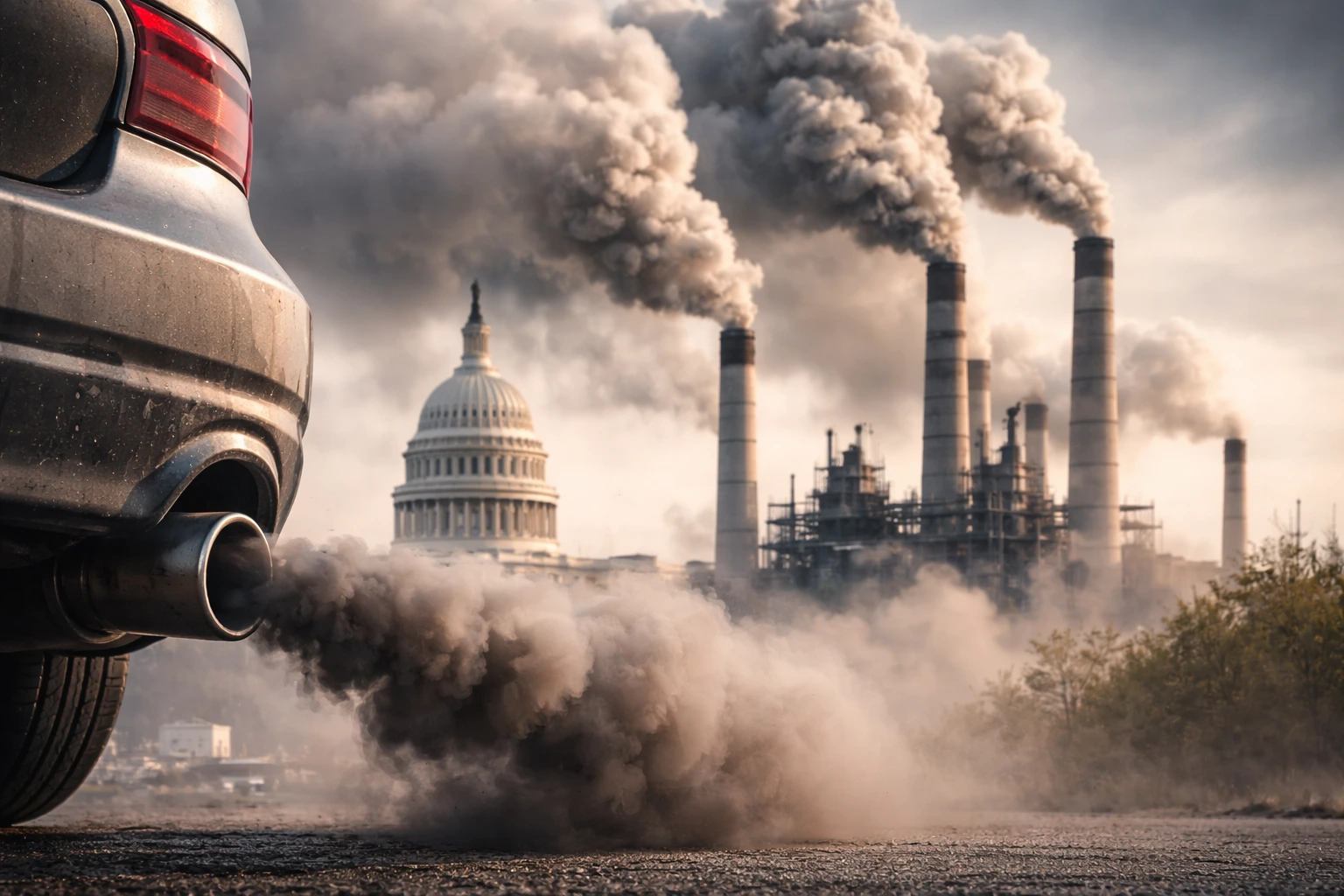
SUMMARY
- The EPA’s rescission removes the legal foundation for controlling heat trapping gases under the Clean Air Act.
- California and other states have pledged legal action to challenge the repeal.
- Analysts warn the decision could create uncertainty for auto manufacturers, power plants, and other major emitters.
WASHINGTON — The US Environmental Protection Agency on Thursday formally rescinded its 2009 “endangerment finding” that classified greenhouse gas emissions as a threat to human health and welfare, President Donald Trump announced at the White House.
The move, part of broader efforts to roll back climate regulations, could complicate future federal emissions rules and is expected to face immediate legal challenges.
The EPA’s decision directly affects vehicle emissions standards and marks the most comprehensive attempt by the Trump administration to dismantle federal climate rules.
The agency argued that it no longer has authority to impose CO2 limits on cars and trucks, a change officials claim will reduce consumer costs.
California Governor Gavin Newsom immediately signaled a lawsuit, describing the action as “illegal” and emphasizing the potential environmental and public health consequences.
The 2009 endangerment finding was issued in response to the 2007 Supreme Court ruling in Massachusetts v. EPA, which authorized regulation of greenhouse gases if they were deemed a threat to human health.
It has since underpinned nearly all federal climate regulations, including vehicle emission standards and rules for industrial facilities.
EPA Administrator Lee Zeldin described the rescission as “basically driving a dagger into the heart of the climate change religion,” reflecting a longstanding Republican effort to roll back regulations introduced under the Obama administration.
Tesla, in comments submitted before the move, warned that ending the endangerment finding could destabilize regulatory certainty for auto manufacturers.
“The endangerment finding and the vehicle emissions standards which flow from it have provided a stable regulatory platform for Tesla’s extensive investments in product development and production,” the company said.
Experts say the repeal could have broad consequences for both industry and public health.
Lisa Patel, head of the Medical Society Consortium on Climate and Health, said the decision “prioritizes the profits of big oil and gas companies over clean air, water, and the health of all people.”
The Edison Electric Institute, representing U.S. utilities, cautioned that focusing on vehicle emissions may create spillover effects for power sector regulations.
“Different parties will assert that such an action casts doubt on EPA’s authority to regulate CO2 from power plants,” the institute wrote in public comments last year.
David Widawsky, US director at the World Resources Institute, emphasized the broader economic and social risks, including rising energy costs, insurance premiums, and climate driven health impacts.
California Governor Gavin Newsom said, “California will not stand by we will sue to challenge this illegal action.”
EPA Administrator Zeldin argued, “It didn’t just regulate emissions it regulated and targeted the American dream.”
Tesla CEO Elon Musk commented, “Regulatory certainty is critical for automakers and clean energy innovation.”
The decision is expected to trigger lawsuits in multiple jurisdictions, likely starting with California.
Legal analysts anticipate that the D.C. Circuit Court of Appeals may challenge the repeal, potentially requiring a final Supreme Court ruling before July 2028 to cement the policy.
The EPA’s rescission of the 2009 endangerment finding removes the core legal framework for US climate regulations, signaling a major policy shift under the Trump administration.
While supporters cite potential cost reductions for consumers, environmental groups, states, and industry stakeholders are preparing for legal battles that could shape US climate policy for years to come.
NOTE! This article was generated with the support of AI and compiled by professionals from multiple reliable sources, including official statements, press releases, and verified media coverage. For more information, please see our T&C.


