
SUMMARY
- Conflicting claims over Ayatollah Ali Khamenei’s death have intensified political uncertainty in Iran.
- Satellite imagery shows heavy damage near the supreme leader’s compound in Tehran.
- Leadership transition rules under Iran’s constitution could shift authority to an interim council if the death is confirmed.
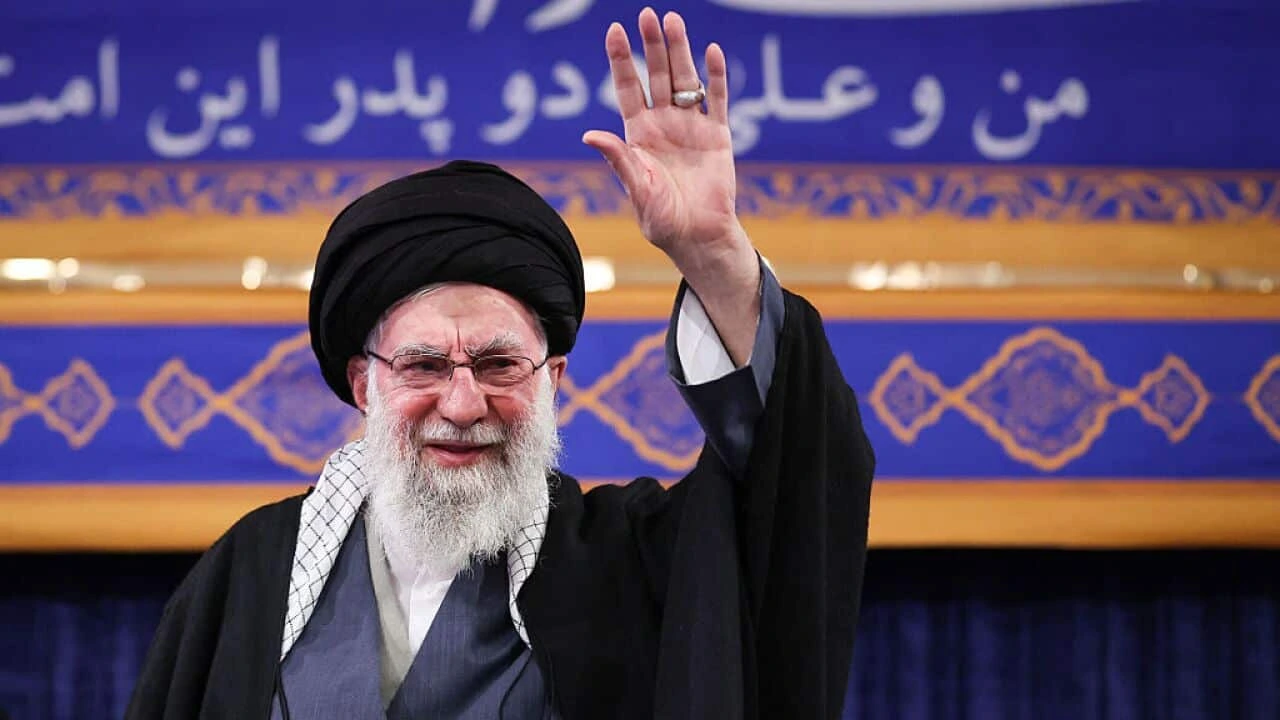
Reports that Ayatollah Ali Khamenei is dead following joint US/Israeli airstrikes on Tehran have triggered confusion inside Iran and alarm across the Middle East, with US President Donald Trump and unnamed Israeli sources asserting the Iranian supreme leader was killed while Iranian officials insist he remains alive.
The unverified reports of Ayatollah Ali Khamenei’s death mark a pivotal moment for Iran, a nation of more than 90 million people that has been governed under his authority since 1989.
Trump announced on his Truth Social platform Saturday that Khamenei had been killed during what he described as a “massive and ongoing operation” aimed at weakening Iran’s leadership.
Israeli officials, speaking on condition of anonymity, said strikes targeted senior Iranian officials.
Iran’s Foreign Ministry denied the claims, stating Khamenei and President Ebrahim Raisi were “safe and sound.” No photographic or video evidence confirming Khamenei’s status has been released.
Khamenei, 86, succeeded Ayatollah Ruhollah Khomeini after the 1979 Islamic Revolution reshaped Iran’s political system into a theocratic republic.
As supreme leader, he held ultimate authority over Iran’s armed forces, judiciary and state media.
The latest escalation follows months of rising tension between Iran, the United States and Israel.
Western sanctions over Iran’s nuclear program have battered the economy for decades.
Inflation has surged, the currency has weakened and protests erupted earlier this year over economic hardship before expanding into broader political dissent.
According to Iran’s constitution, if the supreme leader dies, the Assembly of Experts must appoint a successor.
Until then, a three member interim council composed of the president, the head of the judiciary and a jurist from the Guardian Council assumes leadership duties.
Vali Nasr, professor of international affairs at Johns Hopkins University, said confirmation of Ayatollah Ali Khamenei’s death would open “the most consequential succession question in the Islamic Republic’s history.”
“The institutions exist on paper, but the balance of power would likely shift toward the Revolutionary Guard in a crisis,” Nasr said.
Sanam Vakil, director of the Middle East and North Africa program at Chatham House in London, said uncertainty surrounding Ayatollah Ali Khamenei’s death could destabilize markets and security structures beyond Iran.
“Iran is deeply embedded in regional networks from Lebanon to Iraq,” Vakil said. “Any leadership vacuum would reverberate across those theaters.”
Marco Rubio, US secretary of state, said earlier this year that “no one knows” who would assume authority if Iran’s top leadership were removed, reflecting limited clarity even among US officials.
In Tehran, residents described audible celebrations in some neighborhoods after the reports circulated, though many expressed caution.
“We have heard so many rumors before,” said Leila Farhadi, a 34 year old teacher reached by phone in northern Tehran. “People are waiting for proof.”
Ali Rezaei, an economics student at the University of Tehran, said uncertainty is fueling anxiety. “If Ayatollah Ali Khamenei is dead, the question is what comes next,” he said. “No one wants chaos.”
An Iranian government spokesperson, Nasser Kanaani, reiterated state media denials Saturday evening, saying reports of Ayatollah Ali Khamenei’s death were “psychological warfare.”
If confirmed, Ayatollah Ali Khamenei’s death would trigger constitutional succession procedures while potentially empowering security institutions during the transition.
The Islamic Revolutionary Guard Corps, which commands significant military and economic assets, could emerge as a decisive actor.
Regional governments are closely monitoring developments. Israel has not publicly released evidence, and independent verification remains limited due to restricted access inside Iran.
Oil markets and diplomatic channels are expected to react to any official confirmation. Broader implications for Iran’s nuclear policy, regional alliances and domestic governance will depend on how succession unfolds.
Conflicting claims over Ayatollah Ali Khamenei’s death following US/Israeli strikes have injected uncertainty into Iran’s political system at a time of economic strain and regional tension.
Without independent confirmation, questions remain about the supreme leader’s status and the trajectory of leadership in one of the Middle East’s most influential states.
NOTE! This article was generated with the support of AI and compiled by professionals from multiple reliable sources, including official statements, press releases, and verified media coverage. For more information, please see our T&C.


