
SUMMARY
- Artemis II tests Orion spacecraft systems critical for sustained lunar operations and future Mars missions.
- The mission reflects growing geopolitical competition in lunar exploration and space infrastructure.
- Commercial partnerships may accelerate global space economy expansion through 2030.
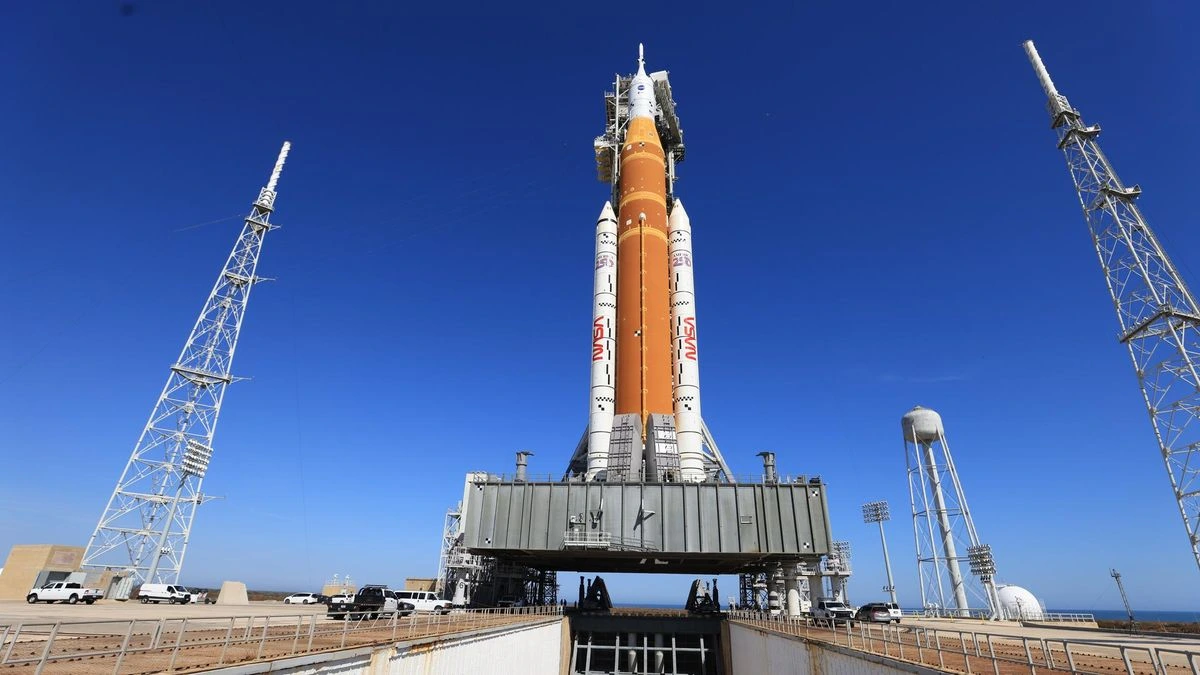
The Artemis II mission will launch Wednesday from Kennedy Space Center, sending four astronauts on a ten day lunar flyby to validate deep space systems and reestablish human presence beyond low Earth orbit.
The launch comes as governments and private firms intensify investment in lunar infrastructure.
The Artemis II mission is central to US strategy to maintain leadership amid rising competition from China and allied programs.
NASA’s Artemis program follows decades of stagnation after Apollo. Artemis I in 2022 validated uncrewed flight systems. Artemis II advances to human spaceflight, setting groundwork for a planned lunar landing later this decade.
Bill Nelson, NASA administrator, said the mission “demonstrates sustained commitment to deep space exploration and international cooperation.”
John Logsdon, founder of the Space Policy Institute at George Washington University, noted that Artemis aligns with strategic competition as China targets a lunar base by the early 2030s.
Economic implications extend beyond exploration. Morgan Stanley projects the global space economy could surpass $1 trillion by 2040, driven partly by lunar resource development and satellite infrastructure linked to Artemis missions.
Reid Wiseman, mission commander, said the crew is “ready to validate systems critical for future explorers.” Jeremy Hansen of the Canadian Space Agency called the mission “a defining moment for international collaboration.”
Over the next 12 months, NASA is expected to finalize Artemis III timelines, while commercial contractors expand lunar lander prototypes.
The Artemis II mission reinforces NASA’s role in shaping a multipolar space era with expanding economic and strategic stakes.
NOTE! This article was generated with the support of AI and compiled by professionals from multiple reliable sources, including official statements, press releases, and verified media coverage. For more information, please see our T&C.


