
SUMMARY
- Gen. Randy George retires immediately; Vice Chief Gen. Christopher LaNeve assumes acting Army chief of staff.
- Hegseth signals broader Army leadership realignment consistent with President Trump’s defense priorities.
- Pentagon stresses change is procedural, not linked to recent Army aviation controversy.
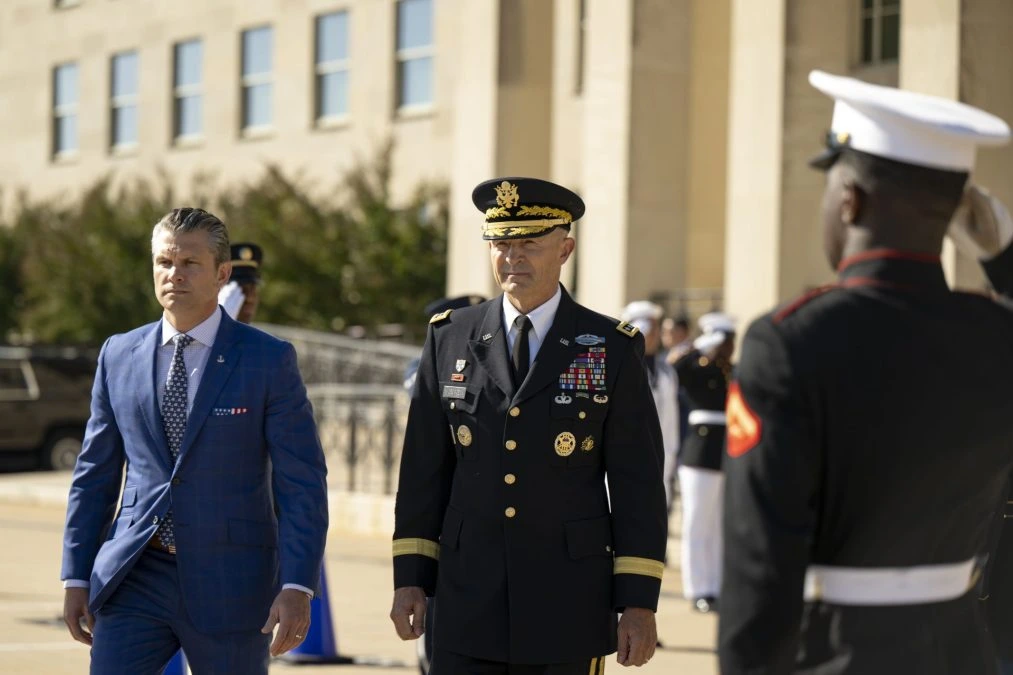
WASHINGTON — Defense Secretary Pete Hegseth asked Army Chief of Staff Gen. Randy George to step down immediately on March 27, 2026, citing the need for leadership aligned with the administration’s strategic vision.
The abrupt retirement of Gen. Randy George marks one of the most consequential shifts in US military leadership in recent years.
The decision directly affects Army operations, global posture, and ongoing modernization programs at a time of heightened geopolitical tensions in Europe and the Indo Pacific.
George, a career infantry officer and West Point graduate, was confirmed by the Senate in 2023 under President Joe Biden. He served in the Gulf War, Iraq, and Afghanistan.
Traditionally a four year term governs the Army chief of staff role, positioning George for service until 2027.
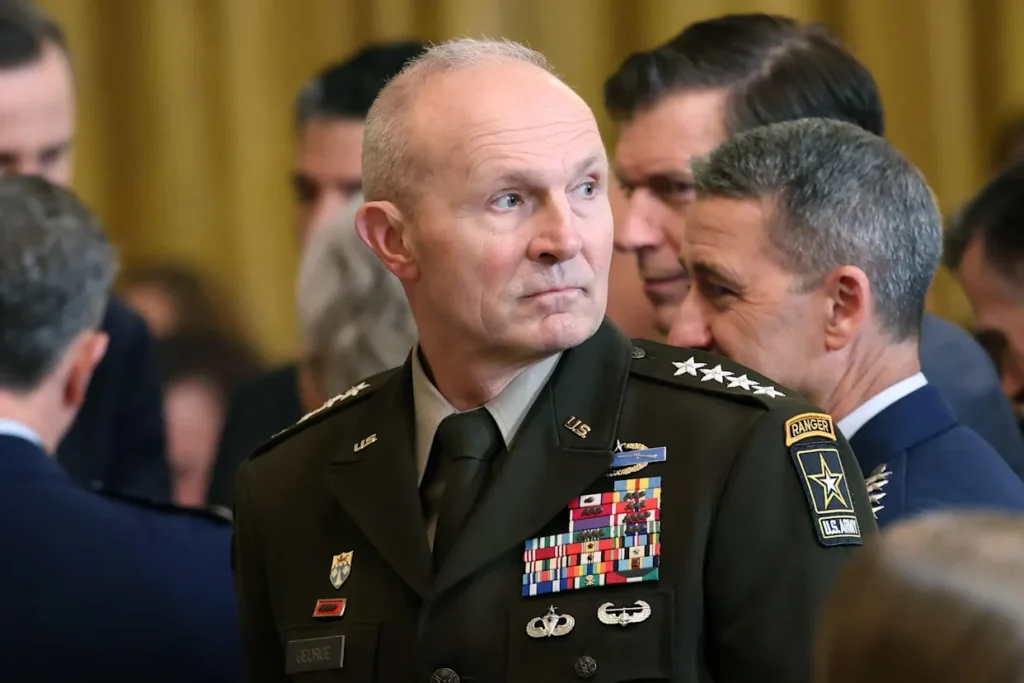
Hegseth’s move follows prior dismissals of more than a dozen senior officers, including Gen. C.Q. Brown and Adm. Lisa Franchetti.
Dr. Laura Martinez, senior fellow at the Center for Strategic and International Studies, noted, “The replacement reflects an intent to tightly synchronize Army leadership with the current administration’s defense and readiness objectives.”
Defense analyst James Holbrook of the Atlantic Council observed, “Such abrupt transitions can temporarily disrupt operational continuity, but they also provide the opportunity to accelerate reforms in personnel management and modernization.”
Army veteran Lt. Col. Sarah Brenner said, “Leadership alignment with policy is crucial, but abrupt transitions challenge unit cohesion.”
Pentagon spokesperson Sean Parnell emphasized, “We are grateful for George’s decades of service.”
The next 6–12 months may see accelerated Army policy realignment, personnel shifts, and an emphasis on modernizing ground forces in line with strategic priorities.
This transition reflects a strategic recalibration of US Army leadership with global operational consequences, influencing readiness, modernization, and international military engagement through 2026.
NOTE! This article was generated with the support of AI and compiled by professionals from multiple reliable sources, including official statements, press releases, and verified media coverage. For more information, please see our T&C.


