
SUMMARY
- Blue Origin’s only New Glenn launchpad suffered heavy damage during a hotfire test.
- Amazon’s planned Kuiper satellite launch now faces likely schedule disruptions.
- NASA and FAA investigations could reshape commercial moon mission timelines.
The failed test carries significance beyond one rocket company. Commercial launch systems now underpin US military logistics, satellite broadband competition and NASA’s Artemis moon strategy.
Any prolonged disruption at Cape Canaveral affects both government and private sector launch schedules in March 2026’s increasingly crowded orbital economy.
Blue Origin had positioned New Glenn as a direct challenger to reusable heavy lift systems operated by SpaceX.
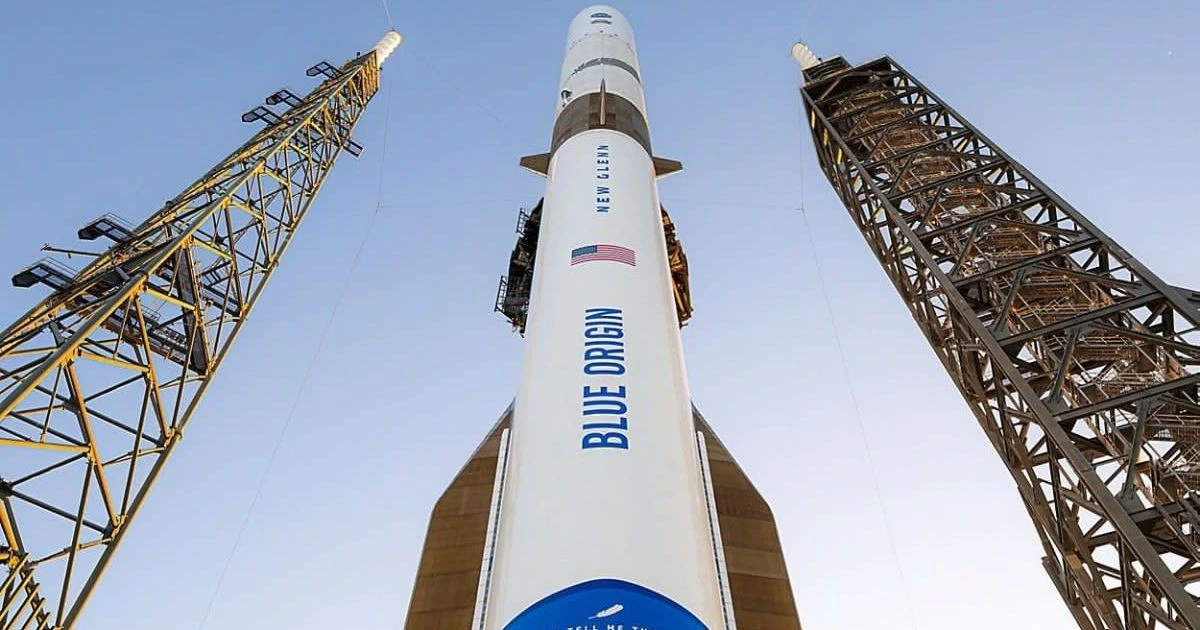
Thursday’s Blue Origin New Glenn explosion interrupted preparations for a mission carrying forty eight Amazon Kuiper satellites into low Earth orbit.
The company previously completed New Glenn’s first orbital demonstration flight earlier this year.
Dave Limp, chief executive of Blue Origin, said engineers were assessing structural damage and propulsion data.
NASA Administrator Jared Isaacman confirmed federal investigators were coordinating with the Federal Aviation Administration.
Carissa Christensen, chief executive of BryceTech, said launchpad damage often creates longer delays than rocket loss because specialized ground infrastructure cannot be rapidly replaced. US Rep. Mike Haridopolos praised emergency crews for rapid containment efforts.
The Blue Origin New Glenn explosion may intensify pressure on NASA to diversify heavy lift launch partnerships while accelerating global competition in commercial broadband and lunar transportation markets.
NOTE! This article was generated with the support of AI and compiled by professionals from multiple reliable sources, including official statements, press releases, and verified media coverage. For more information, please see our T&C.


