
SUMMARY
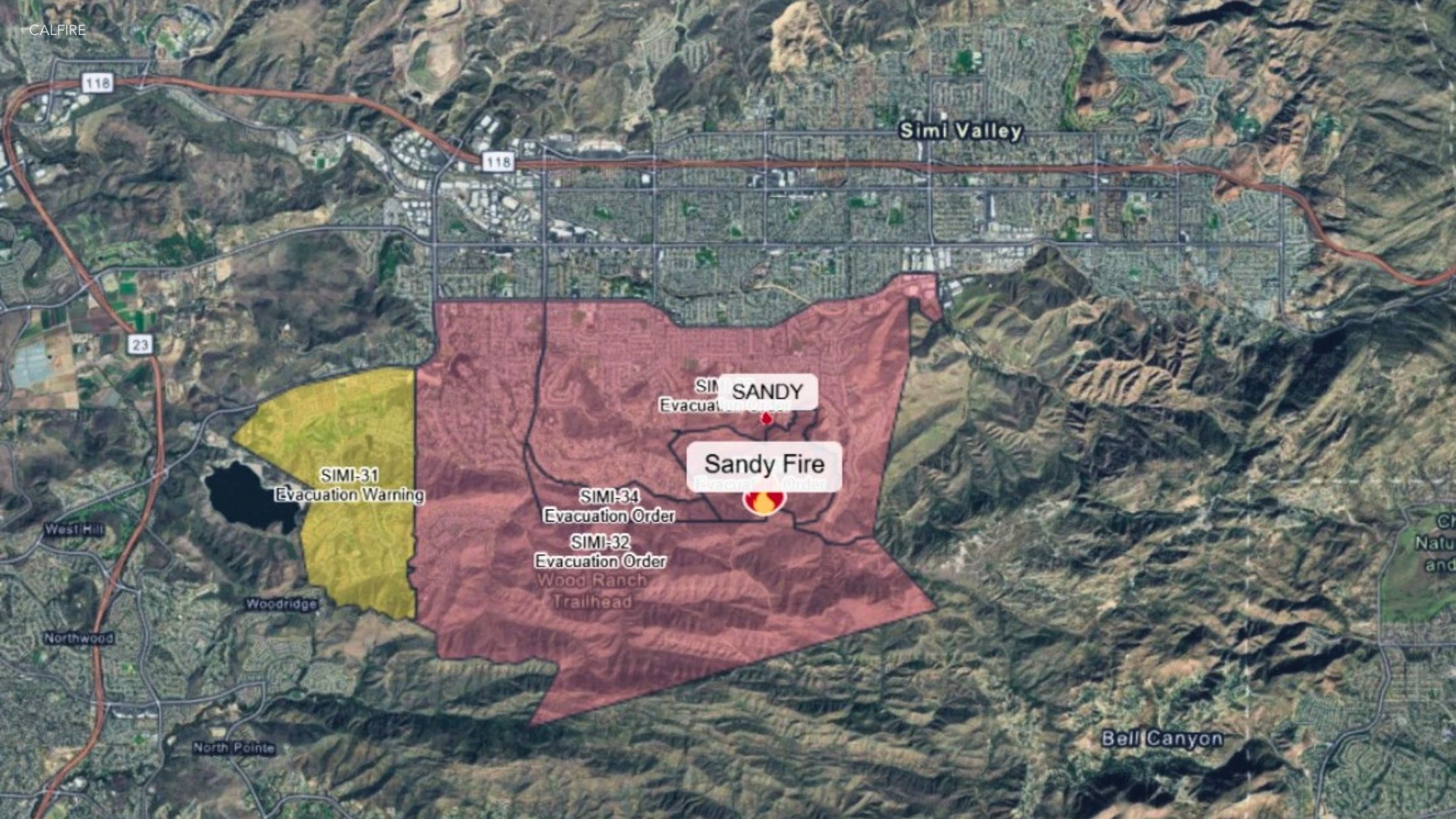
- Sandy fire forced evacuations near schools and residential neighborhoods in southern Simi Valley.
- More than 200 firefighters, helicopters and air tankers responded amid 45 mph wind gusts.
- Dry spring conditions highlight California’s growing year round wildfire exposure entering summer 2026.
The rapid expansion of the Sandy fire underscores mounting wildfire pressure across Southern California as unusually dry vegetation and late season Santa Ana winds persist into May 2026.
Officials from the California Department of Forestry and Fire Protection warned that volatile weather conditions accelerated flame movement toward densely populated suburban corridors west of Los Angeles.
The blaze ignited near Sandy Avenue shortly before 11 a.m. and surpassed 100 acres within its first hour.
By mid afternoon, evacuation orders stretched across parts of southern Simi Valley while warning zones expanded toward Thousand Oaks.
Students from Crestview Elementary and Mountain View Elementary were relocated to Simi Valley High School after initially sheltering indoors because of deteriorating air quality.
Wildfire behavior in Ventura County has intensified over the past decade as hotter springs reduce vegetation moisture earlier in the year.
According to UCLA climate scientist Daniel Swain, recurring offshore wind events outside traditional autumn fire season are reshaping California’s fire calendar. “The atmosphere is creating longer windows for extreme fire spread,” Swain said.
Rick Halsey, director of the California Chaparral Institute, said expanding residential development near wildland areas increases structural vulnerability during wind driven fires.
Insurance analysts at Moody’s estimate wildfire related property exposure in Southern California now exceeds $500 billion.
Ventura County Fire Department spokesperson Andrew Dowd described conditions as “extremely dynamic.” Resident Maria Gonzalez said smoke overtook her neighborhood within minutes.
Fire captain Trevor Johnson said aerial water drops slowed flames near several homes.
State agencies expect elevated wildfire risk across coastal Southern California through late 2026 if drought indicators intensify and wind events continue beyond historical seasonal patterns.
NOTE! This article was generated with the support of AI and compiled by professionals from multiple reliable sources, including official statements, press releases, and verified media coverage. For more information, please see our T&C.


