
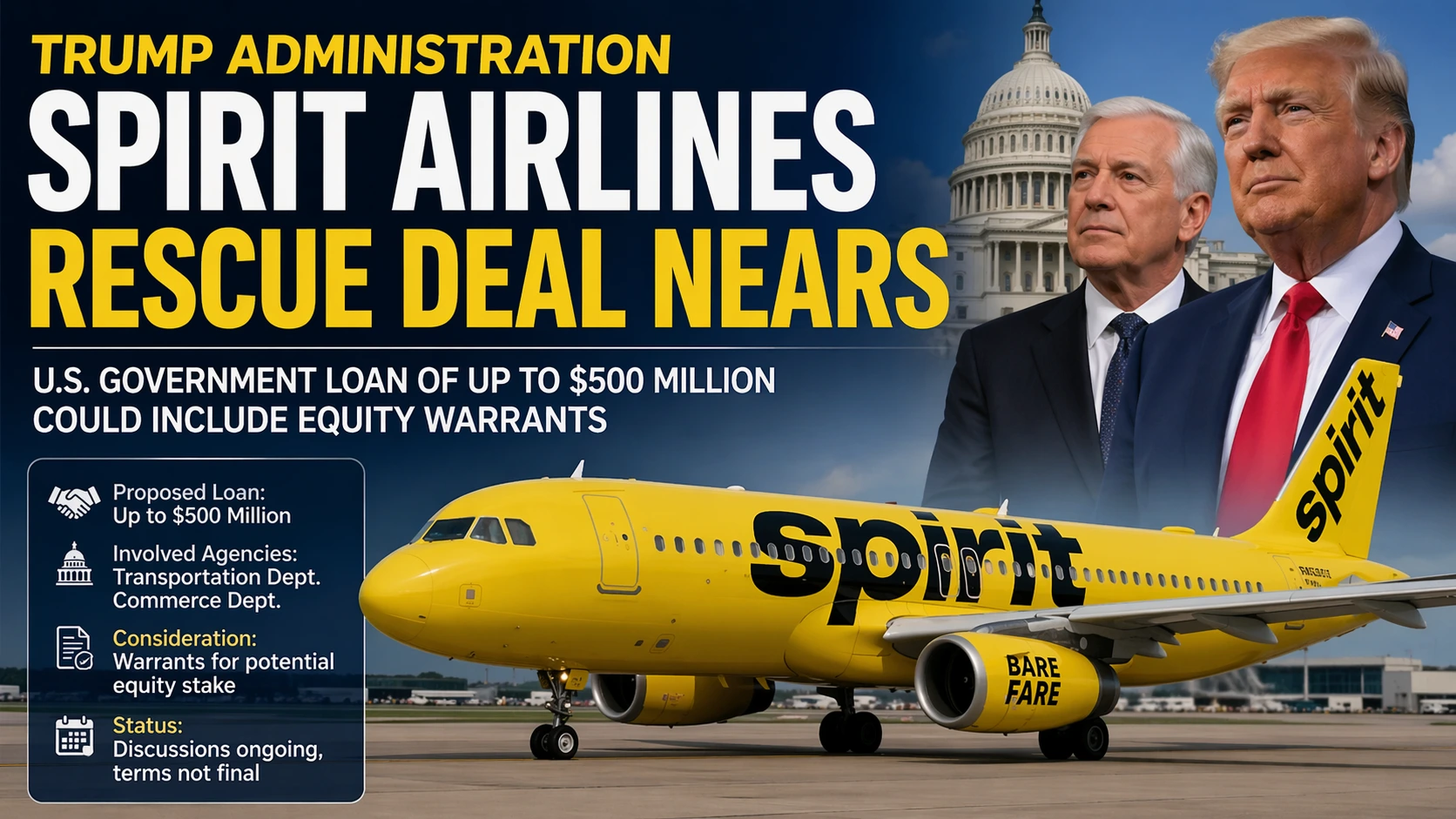
The Trump administration Spirit Airlines rescue deal is nearing completion in Washington this week, aiming to stabilize the low cost carrier through a $500 million federally backed loan amid financial distress.
SUMMARY
- Proposed loan could prevent immediate liquidity crisis and preserve routes.
- Federal warrants may give government partial equity exposure.
- Decision signals broader US aviation policy shift toward intervention.
The negotiations reflect mounting pressure on US budget airlines facing higher fuel costs, debt burdens, and post pandemic demand volatility affecting global aviation markets in March 2026.
Spirit Airlines’ financial strain intensified after failed merger attempts in 2024, rising interest rates in 2025, and declining margins in early 2026.
Brian Yarbrough, airline analyst at Edward Jones, said the deal “mirrors pandemic-era stabilization tools but targets structural debt stress.”
Janet Yellen, US Treasury secretary, noted in February remarks that “targeted liquidity support can prevent systemic shocks in transportation.”
Ted Christie, Spirit CEO, said preserving operations is “critical for workforce stability.”
Sara Nelson, president of the Association of Flight Attendants, emphasized “job security concerns remain central.”
Over six to twelve months, regulatory approval and market response will determine whether the Trump administration Spirit Airlines rescue deal stabilizes pricing or triggers further consolidation.
The Trump administration Spirit Airlines rescue deal underscores shifting federal strategy in safeguarding competitive airline markets globally.
NOTE! This article was generated with the support of AI and compiled by professionals from multiple reliable sources, including official statements, press releases, and verified media coverage. For more information, please see our T&C.


