
SUMMARY
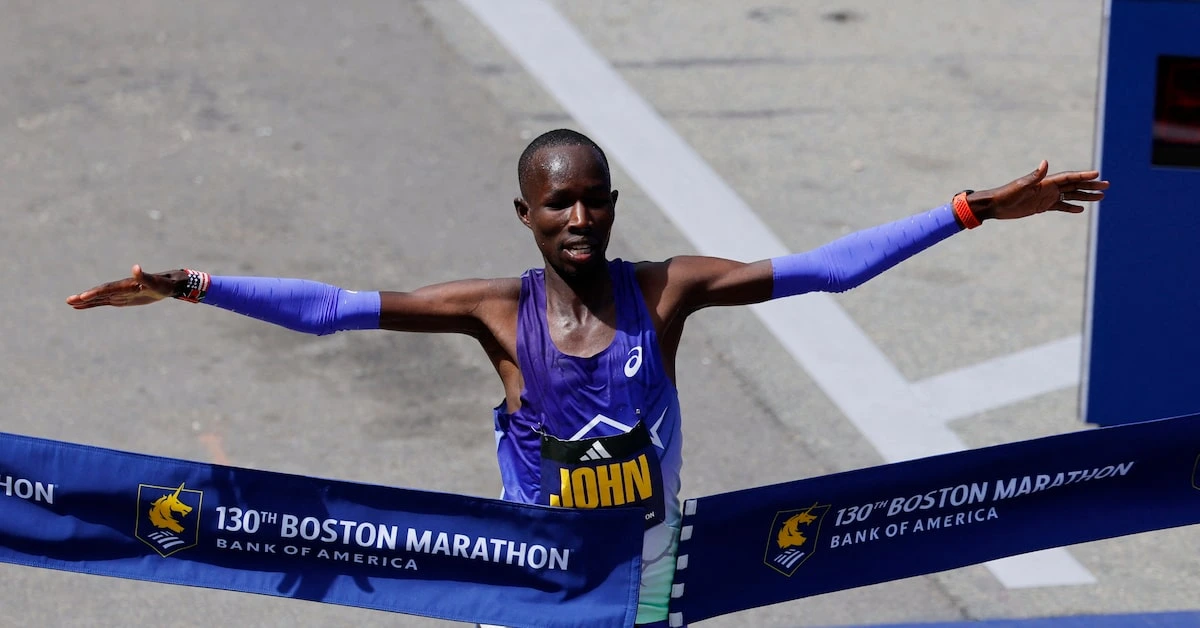
- John Korir’s record time ranks fifth-fastest marathon globally, signaling performance acceleration in elite racing.
- Kenyan runners secured dual victories, reinforcing dominance in lonG distance competitions.
- Favorable weather and course optimization contributed to multiple record breaking performances.
The 2026 Boston Marathon underscores a shift in endurance racing, where marginal gains in weather modeling, pacing and athlete conditioning are converging to produce historically fast results with global implications.
Boston’s course record, set by Geoffrey Mutai in 2011, stood for 15 years. Since 2023, when Kelvin Kiptum reset global expectations, elite marathon pacing has accelerated significantly.
“This performance reflects optimized pacing strategies and environmental alignment,” said Brett Kirby, vice president of performance at Nike Sport Research Lab. He noted tailwinds can reduce energy cost by up to two percent.
Michael Joyner, physiologist at Mayo Clinic, said, “We are seeing cumulative gains from biomechanics, fueling and race execution, not a single breakthrough.”
Economically, record times elevate sponsorship valuations and media rights. According to World Athletics data, marathon viewership rose twelve percent year over year.
Race director Dave McGillivray said, “Athlete flow improvements directly impacted finish times.” American runner Jess McClain said, “Conditions allowed consistent pacing rarely possible here.”
Over the next year, governing bodies may reassess course comparability rules as performances tighten toward the two-hour barrier under variable conditions.
John Korir’s record reinforces a data-driven era in marathon racing, where incremental innovations are reshaping competitive benchmarks globally.
NOTE! This article was generated with the support of AI and compiled by professionals from multiple reliable sources, including official statements, press releases, and verified media coverage. For more information, please see our T&C.


