
SUMMARY
- British Columbia becomes the first Canadian province to adopt permanent daylight saving time.
- Health experts warn permanent DST can disrupt circadian rhythms and increase cardiovascular and metabolic risks.
- Residents prioritize evening daylight despite potential public health concerns.
Vancouver, British Columbia — Beginning this Sunday at 2 AM, most of the United States and Canada will observe the start of daylight saving time, moving clocks forward by one hour.
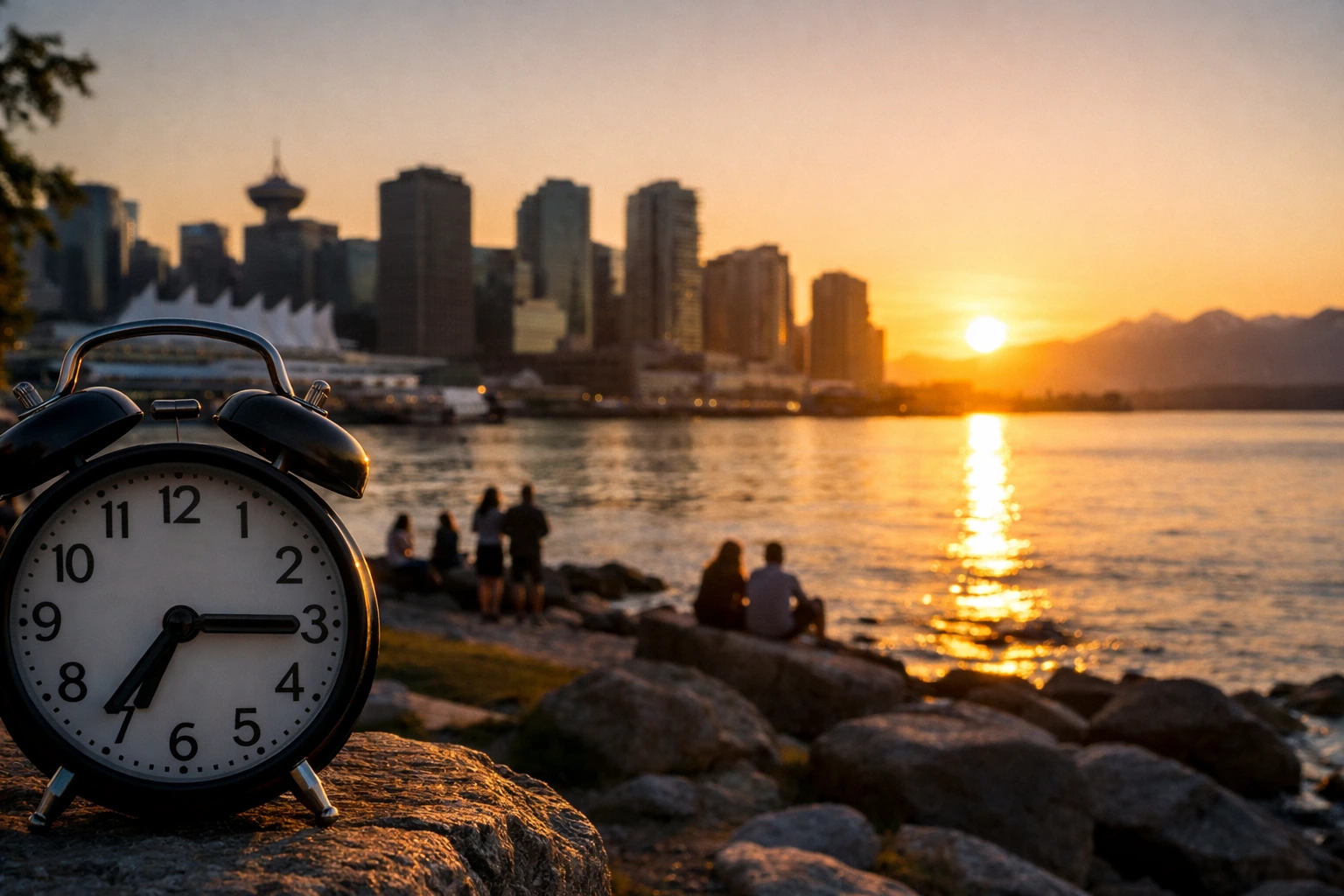
However, British Columbia will make the change for the last time, adopting permanent daylight saving time following widespread public support.
British Columbia’s decision to maintain daylight saving time year-round marks a significant shift in North American timekeeping.
Premier David Eby said more than 90 percent of residents backed the move, emphasizing the social and lifestyle benefits of extended evening light.
“Having an extra hour of sunlight at the end of the day, whether in winter or summer, makes a big difference for people,” Eby told NPR’s Adrian Ma.
Daylight saving time, first widely adopted during World War I and revived in the 1970s to conserve energy, involves shifting clocks forward in spring and back in fall.
While intended to save energy, studies have repeatedly questioned its effectiveness. Temporary adoption of permanent DST in the US in 1974 led to darker mornings, fatal traffic accidents, and a return to standard time within a year.
British Columbia residents, situated on the western edge of their time zone, already experience late sunrises in winter, a factor Eby cited in favor of permanent DST. Medical and sleep experts caution that permanent DST may harm public health.
Emily Manoogian, senior staff scientist at the Salk Institute and executive member of the Center for Circadian Biology at the University of California, San Diego, explained, “Light is the largest cue to coordinate behavior.
Without morning light, the body struggles to wake up, affecting sleep, metabolism, and cognitive function.”
Manoogian added that misalignment with natural daylight cycles can increase risks of heart attacks, strokes, and obesity. “Every medical and scientific society would argue we should never go to daylight saving time,” she said.
| Metric | Biannual DST | Permanent Standard Time | Permanent DST |
|---|---|---|---|
| Annual strokes (US estimate) | Baseline | 300,000 fewer | Reduced, but less than standard |
| Annual obesity cases | Baseline | 2 million fewer | Reduced, but less than standard |
| Morning daylight exposure | Varies | Higher | Lower |
| Evening daylight exposure | Varies | Moderate | Higher |
Premier David Eby emphasized lifestyle priorities: “People really want that hour at the end of the day.”
Local teacher Maria Chen noted, “Waking up in the dark is hard, but the extra evening sunlight allows students to enjoy outdoor activities after school.”
Sleep expert Manoogian recommends mitigating DST effects by getting morning light, maintaining consistent sleep schedules, and gradually shifting children’s routines by 20 minutes per day leading up to the change.
British Columbia’s permanent DST may influence other regions considering similar measures. Policymakers must weigh social preferences against long term public health risks and monitor related health data closely.
The province’s shift to permanent daylight saving time reflects a societal preference for evening light, despite expert warnings about circadian disruption and increased health risks.
British Columbia’s decision provides a live case study in balancing lifestyle desires with biological and public health considerations.
NOTE! This article was generated with the support of AI and compiled by professionals from multiple reliable sources, including official statements, press releases, and verified media coverage. For more information, please see our T&C.


