
SUMMARY
- At least ten Michigan tornado deaths have been recorded since 2000, per NOAA storm records.
- Fatal tornadoes in the state have ranged from EF1 to EF3 intensity, showing that even moderate storms can be deadly.
- Officials emphasize early warnings, public education, and storm shelter access as key to reducing fatalities.
Deadly tornadoes have killed at least ten people in Michigan since 2000, according to data from the National Centers for Environmental Information, with storms ranging from powerful EF3 events to weaker EF1 twisters.
The fatalities highlight how quickly severe weather can turn catastrophic across the state, even in areas not typically associated with high tornado activity.
Michigan experiences fewer tornadoes than the Great Plains or the southern United States, yet the state’s tornado history demonstrates that deadly events can occur across both rural and suburban areas.
From northern communities like Gaylord to densely populated corridors near Detroit, tornadoes have caused fatalities, injuries and extensive property damage in the past two decades.
The storms illustrate the unpredictable nature of severe weather in the Midwest, where tornadoes can form rapidly and strike with little warning.
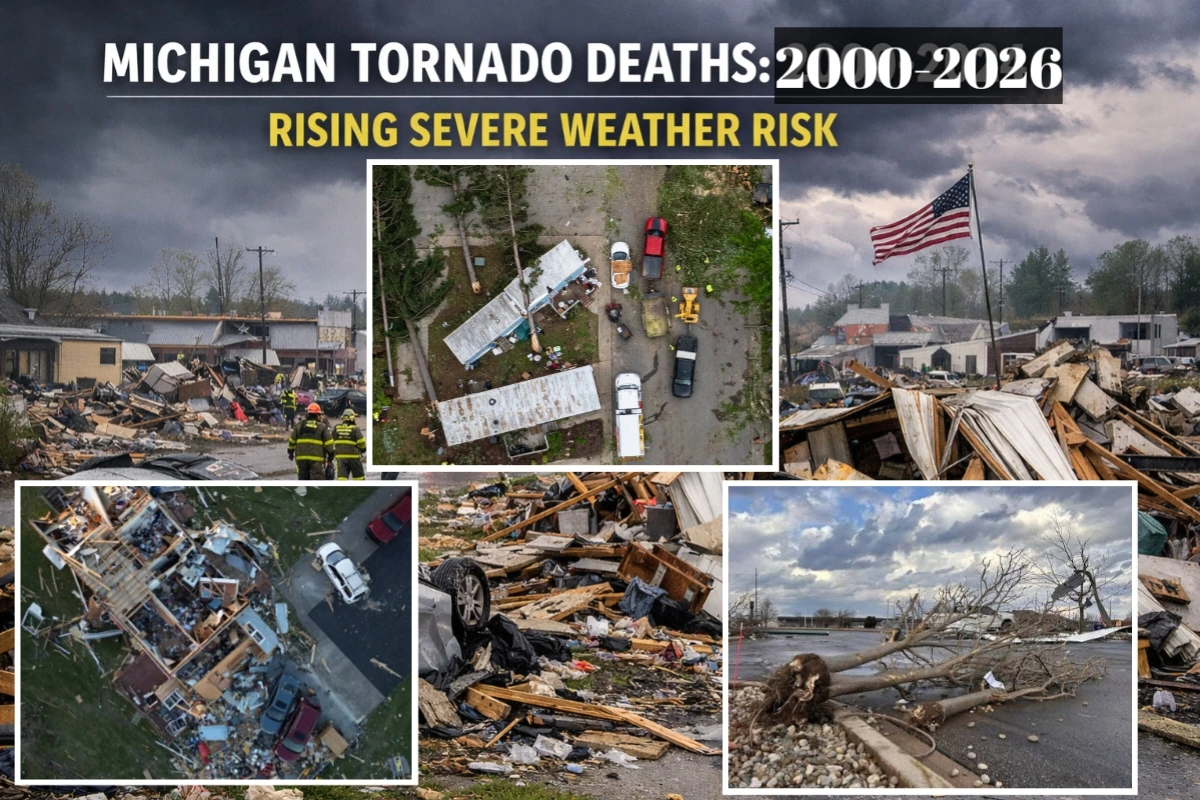
The most destructive recent event occurred on May 20, 2022, when an EF3 tornado struck Gaylord, carving a continuous path through a mobile home community and nearby commercial areas.
According to National Weather Service (NWS) surveys, two people a seventy year old man and a fifty one year old woman were killed, and dozens more were injured as homes were destroyed and vehicles overturned.
In August 2023, a fast moving EF2 tornado tracked along Interstate ninety six near Williamston and Webberville in Ingham County.
The storm killed two drivers when vehicles were thrown by winds or impacted by flying debris. The event damaged homes, downed trees, and caused widespread power outages, according to NOAA’s Storm Events database.
Earlier fatal tornadoes demonstrate that even lower rated EF1 or EF2 storms can be deadly. In October 2007, an EF2 tornado destroyed a mobile home in Kalkaska County, killing one resident.
In June 2008, an EF1 tornado near Needmore in Eaton County caused one fatality when high winds struck a home directly.
Other fatal events include an EF1 tornado in Thornton, St. Clair County, in June 2010 and a Plymouth, Wayne County, EF1 tornado in June 2024, which killed a resident in a suburban area.
A unique case in May 2013 involved an indirect death during cleanup operations following a long track EF2/EF1 tornado moving through Genesee and Oakland counties.
Experts note that tornado intensity does not fully capture the risk to human life. “Even a relatively weak tornado can become deadly if it intersects with vulnerable structures or busy roadways,” said Greg Carbin, warning coordination meteorologist at NOAA’s Storm Prediction Center.
Victor Gensini, professor of meteorology at Northern Illinois University, added, “Urban expansion and population growth increase exposure to tornadoes.
Preparedness, storm shelters, and early warning systems are critical to reducing fatalities.”
He also emphasized that climate variability may increase the frequency of severe storms in regions previously considered lower risk, potentially raising future tornado exposure in Michigan. Residents describe the sudden and chaotic nature of tornado strikes.
Paul Beachnau, Otsego County emergency management coordinator, recalled the Gaylord tornado “Within minutes we had widespread structural collapse and major debris fields. People were caught off guard despite warnings.”
In Plymouth, Wayne County, an emergency official noted after the 2024 tornado “Many residents underestimated the danger because it was an EF1. The event highlighted that even moderate tornadoes can be fatal in populated areas.”
Officials stress ongoing investment in storm warning systems, public outreach, and access to shelters.
The NWS reports improved radar technology and mobile alerts have increased lead times for tornado warnings, but rapid storm development, nighttime tornadoes, and vulnerable housing continue to pose risks.
Preparedness campaigns and updated building codes may mitigate deaths in future storms, according to Carbin and Gensini.
Michigan’s tornado history since 2000 shows that fatalities can occur across all EF-scale intensities and in both rural and urban areas.
The record emphasizes the need for sustained investment in early warning systems, public awareness, and community preparedness to reduce the human toll of severe weather.
NOTE! This article was generated with the support of AI and compiled by professionals from multiple reliable sources, including official statements, press releases, and verified media coverage. For more information, please see our T&C.


