
SUMMARY
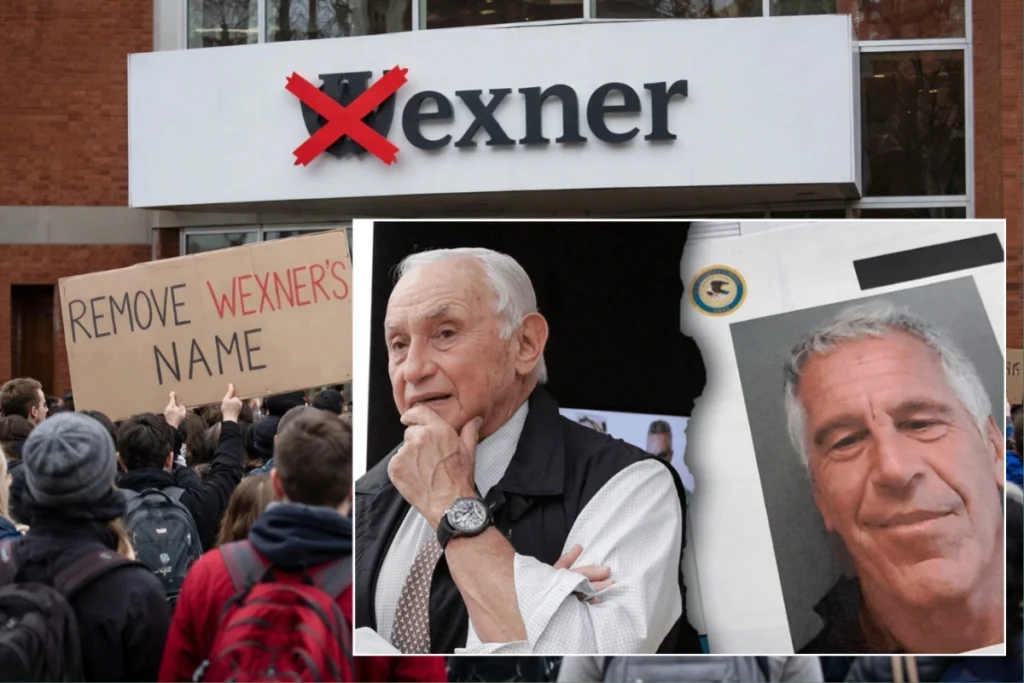
- Nearly 300 requests have been submitted to Ohio State University to remove Wexner’s name from campus buildings.
- Students and alumni cite ethical concerns over Wexner’s connection to Jeffrey Epstein, who worked as Wexner’s financial adviser for decades.
- Wexner maintains he was unaware of Epstein’s crimes and has not been charged with any wrongdoing.
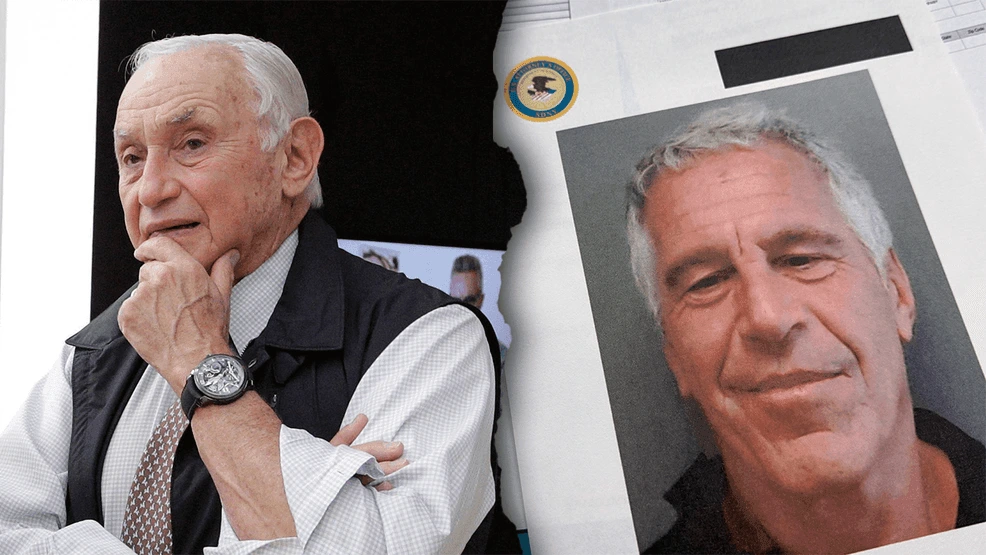
COLUMBUS, Ohio — A growing movement at Ohio State University is calling for the removal of billionaire alumnus Les Wexner’s name from campus buildings following revelations about his longstanding ties to accused sex trafficker Jeffrey Epstein.
The campaign intensified Feb. 19, when students and community members used red tape to cross out the “W” on multiple campus buildings in a symbolic protest.
Ohio State President Ted Carter told The Dispatch on Feb. 19 that the university is “following it very closely” but did not provide a timeline for potential action.
Ben Johnson, a spokesperson for the university, did not immediately respond to inquiries regarding the tape placed on campus signage.
Ohio Gov. Mike DeWine defended Wexner, stating at a governors’ summit in Washington, DC, that there is no evidence Wexner committed a crime.
“He has been a prominent member of the community, done many, many things,” DeWine said, referencing Wexner’s philanthropic contributions, including the Wexner Medical Center.
“Barring some new information of something that he has done illegal, I don’t see that as a problem.”
Wexner, the founder of L Brands and a major Ohio State donor, has come under scrutiny due to his decades long association with Epstein, a convicted sex offender facing federal child sex trafficking charges before his death in 2019.
During a Feb. 18 deposition at his New Albany home, Wexner was questioned by Democrat members of the US House Committee on Oversight and Government Reform about his financial support of Epstein, estimated at over $1 billion, and his potential knowledge of Epstein’s illegal activities.
Wexner has denied any involvement or awareness of Epstein’s crimes. “Let me state from the start I was naïve, foolish, and gullible to put any trust in Jeffrey Epstein.
He was a con man. And while I was conned, I have done nothing wrong and have nothing to hide,” Wexner said in a prepared statement.
The scrutiny comes as Ohio State also confronts lawsuits related to former university doctor Richard Strauss, who was accused of sexually abusing students and athletes.
Wexner, who served on the university’s Board of Trustees during Strauss’s tenure, may be deposed in these cases due to his potential interactions with the university’s administration and funding.
Dr. Marianne Yoder, a professor of ethics at Ohio State University, said the controversy raises questions about institutional responsibility.
“Universities often rely on major donors, but ethical accountability must factor into naming decisions,” she said.
Political analyst David K. Rubin of Columbus Policy Institute noted that the issue extends beyond campus branding.
“This is a public optics problem, particularly as lawmakers and officials have previously accepted Wexner’s contributions,” Rubin said.
“The university’s response will signal how seriously it treats ethics versus financial influence.”
Joseph Pine, 50, a psychology student, said, “It’s long overdue for the university to scrub Wexner’s name from the buildings.
Continuing the association is embarrassing.” Electrical engineering student Grant Riley, 18, noted, “People will have their own opinions, but I doubt the university will part with the donations.”
Brady H., 20, added, “It does not reflect well on OSU, and officials aren’t taking a strong enough stance.” Paige Strasel, 26, said, “There’s nothing sacred about his name. The university has options if it chooses to rename buildings.”
Ohio State faces a complex balancing act: reconciling student and community demands with long standing philanthropic ties.
Legal proceedings involving Strauss may further intensify scrutiny on Wexner’s involvement, potentially influencing decisions on building names and the disposition of his donations.
The situation underscores broader debates about the influence of high-profile donors on universities and public institutions, and the ethical considerations tied to naming rights amid controversy.
As pressure mounts, Ohio State must weigh reputational risks, legal implications, and community sentiment. The outcome could set precedent for how major universities navigate donor legacies tied to high-profile scandals.
NOTE! This article was generated with the support of AI and compiled by professionals from multiple reliable sources, including official statements, press releases, and verified media coverage. For more information, please see our T&C.


