
SUMMARY
- The Labor Department report may reflect statistical adjustments, including seasonal hiring patterns and new methods for tracking business openings and closures.
- Conflicting indicators make labor market trends difficult to assess low unemployment claims contrast with declining job openings.
- Economists anticipate modest growth, with median projections suggesting 68,000 jobs added in January, up from an average of 15,000 per month over the previous six months.
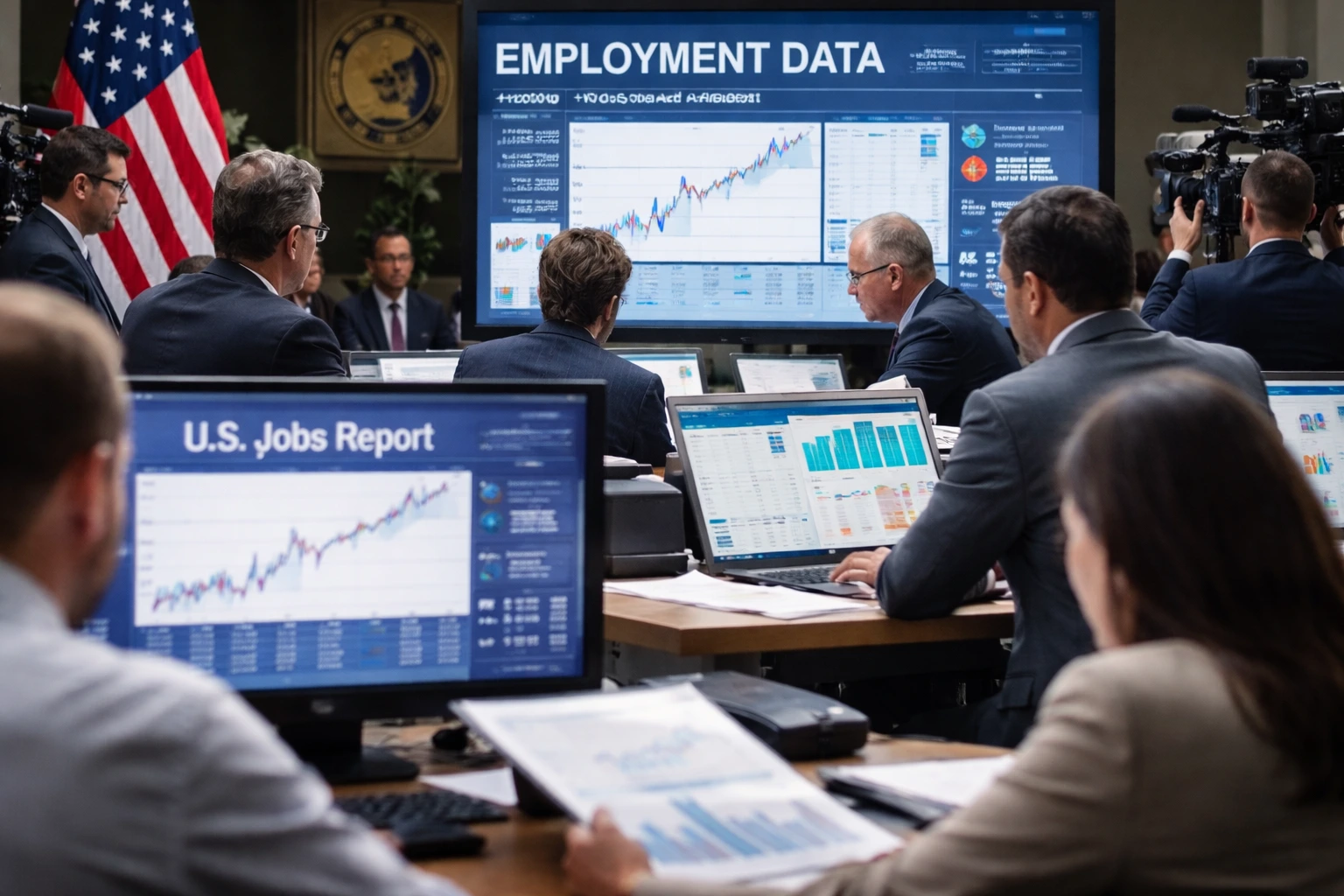
WASHINGTON — The US Labor Department is set to release its January employment report Wednesday at 8:30 AM Eastern, offering the first detailed look at whether job growth in 2026 is improving after last year recorded the slowest expansion since 2009, excluding the pandemic year of 2020.
Analysts and policymakers are watching closely for signs of stability in a labor market showing conflicting signals. The January jobs report carries heightened significance as the US economy navigates uneven growth.
Low unemployment claims suggest layoffs remain limited, while declining job postings signal potential slowdowns in hiring. The report is expected to inform policymakers, investors, and businesses about labor market resilience and consumer spending power.
Employment growth in 2025 was historically slow, constrained by high interest rates, inflation pressures, and shifts in technology driven labor demand.
Seasonal hiring during the holiday period was also below typical levels, potentially reducing layoffs in January.
In addition, a new Bureau of Labor Statistics (BLS) methodology for measuring job creation and destruction among opening and closing businesses is expected to subtract several tens of thousands of positions from totals.
The BLS has been without a Senate confirmed director since former President Donald Trump dismissed the previous head following disappointing employment figures.
Trump recently nominated Brett Matsumoto, a government economist specializing in inflation measurement, to lead the agency.
Matsumoto, who earned his Ph.D in economics from the University of North Carolina in 2015, has worked at BLS since then and spent the past year on assignment at the Council of Economic Advisers.
Economists project soft but steady employment growth. Augustine Faucher, chief economist at PNC Financial Services Group, said, “We’re going to see more of that kind of softer job growth that we saw in 2025, but not a significant slowing from that point.”
Kevin Hassett, director of the National Economic Council, noted that artificial intelligence adoption and changes in immigration policy may influence January data.
“One shouldn’t panic if you see a sequence of numbers that are lower than you’re used to,” he said in a CNBC interview.
Peter Navarro, former White House trade adviser, echoed caution, highlighting shifts in labor demand due to mass deportations. Experts say fewer new hires are required to maintain a stable unemployment rate, but the broader economic effects remain uncertain.
Beth Ann Bovino, chief economist at U.S. Bank, emphasized inequality in the labor market: “High income households continue to pull ahead while lower income households fall further behind.”
Business executives report diverging consumer trends. Dirk Van de Put, CEO of Mondelez, said, “Consumers are worried about overall affordability and are shifting to value store brands.”
Delta Air Lines noted stronger premium seat sales, while McDonald’s reported declining traffic among lower income customers.
Economists expect the labor market to maintain moderate growth in early 2026, though uneven spending patterns and rising technological adoption may exacerbate disparities.
Policymakers will likely consider these dynamics when assessing monetary and labor policy. The January jobs report will provide critical clarity amid an uncertain US labor market.
With mixed signals from unemployment claims, job openings, and business spending, the data could shape economic forecasts, influence corporate strategy, and guide policy decisions in the months ahead.
NOTE! This article was generated with the support of AI and compiled by professionals from multiple reliable sources, including official statements, press releases, and verified media coverage. For more information, please see our T&C.


