
SUMMARY
- Google engineers successfully recovered critical footage from Nest cameras at Nancy Guthrie’s Arizona home despite initial deletion.
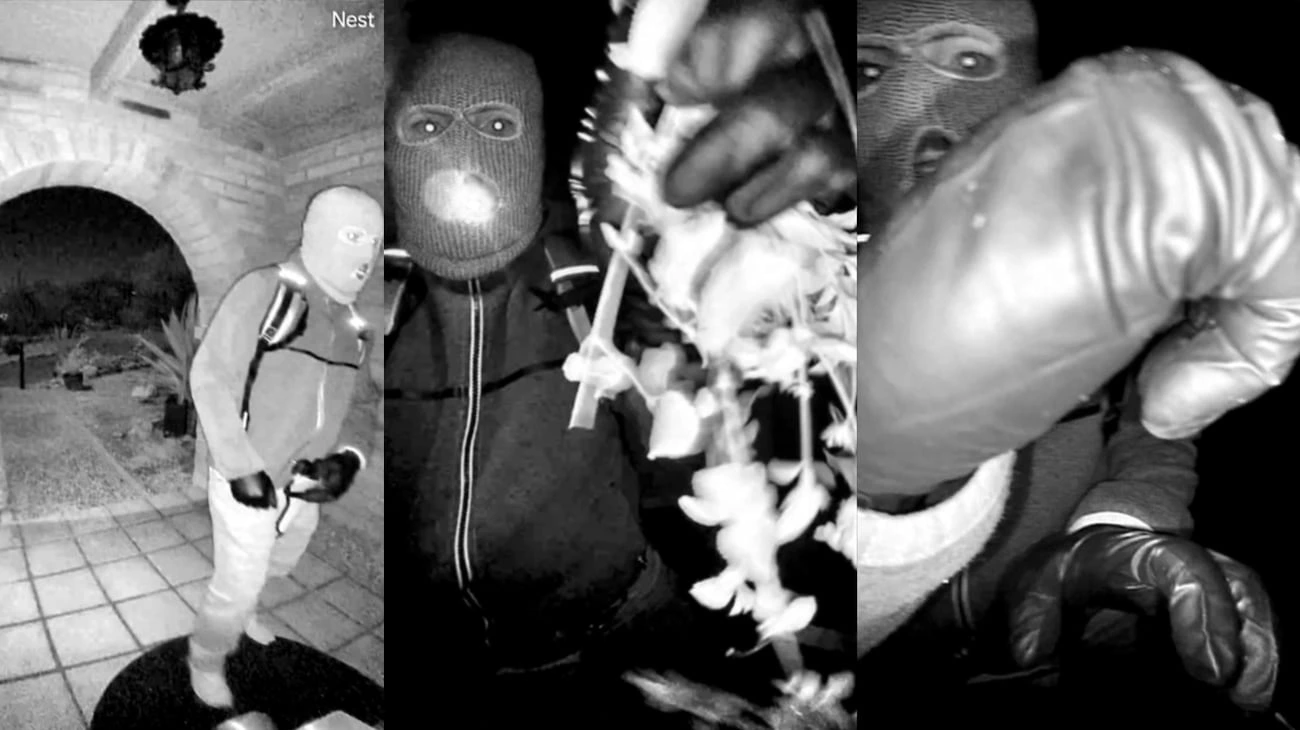
- The recovered video shows a masked and armed person outside Guthrie’s residence on the day she disappeared.
- Experts say cloud based video systems retain residual data even after deletion, allowing for advanced forensic recovery.
PHOENIX — A breakthrough in the investigation into the disappearance of Nancy Guthrie, mother of NBC “Today” host Savannah Guthrie, was made possible by Google’s technical expertise, officials said.
Authorities revealed that footage showing a masked and armed individual outside Guthrie’s home on the day she went missing had been recovered from Nest cameras after several days of effort, despite earlier claims that no video was available.
According to sources familiar with the investigation, Google engineers were able to retrieve the footage from residual data stored in cloud systems, a process investigators initially thought might fail.
FBI officials said the bureau released the images within hours of obtaining them. Guthrie, 66, was reported missing more than a week ago in Arizona.
Pima County Sheriff Chris Nanos initially said there was “no video available” because Guthrie did not maintain a subscription to Google’s cloud based video service, which stores Nest camera recordings.
However, Nest cameras maintain roughly three hours of “event based” video history for free before deletion.
Even deleted footage may persist in Google’s cloud and servers until overwritten, according to Nick Barreiro, founder of Principle Forensics and an audio video forensic analyst.
“A delete function is just telling the file system to ignore that data and feel free to use that space for new data,” Barreiro said. “Until it’s overwritten, the old data is still recoverable. I’ve seen fragments of video remain for months or years.”
FBI Director Kash Patel wrote on social media that authorities, “working closely with our private sector partners,” recovered some video “from residual data located in backend systems.” Investigators had obtained a search warrant for Guthrie’s Nest cameras last week.
Cloud based video systems like Nest employ complex layers of processing, compression, and storage, creating multiple points where data may persist.
Adam Malone, a former FBI cyber special agent and current cyber crisis expert at Kroll, explained that videos move through numerous servers and sub systems, increasing the chance that residual data can be recovered.
“All those layers have code, and as data moves to be made available to the customer, it goes through different sub applications and storage components,” Malone said.
“Authorities would check development pipelines to identify unprocessed or residual data. That is likely how the Guthrie footage was retrieved.”
Experts say the case highlights the growing role of private sector technology companies in digital forensics and criminal investigations.
Sheriff Chris Nanos confirmed investigators had been coordinating with Google on the technical retrieval.
“We are grateful for the expertise that made this video available,” Nanos said. Barreiro noted, “Cases like this show the importance of understanding how cloud storage and deletion work in forensic investigations.”
Authorities continue to examine the recovered footage and other evidence to establish a timeline and identify potential suspects.
Experts caution that while residual data recovery is possible, it requires specialized technical skill and legal authorization.
The Nancy Guthrie video recovery underscores both the complexity of modern digital evidence and the growing necessity of collaboration between law enforcement and technology providers in missing person investigations.
NOTE! This article was generated with the support of AI and compiled by professionals from multiple reliable sources, including official statements, press releases, and verified media coverage. For more information, please see our T&C.


