
SUMMARY
- Russia Starlink access was restrictf ed through a verification system targeting unauthorized terminals
- Ukraine says the move has already disrupted Russian drone and unit coordination
- Moscow lacks a domestic satellite alternative matching Starlink’s speed and coverage
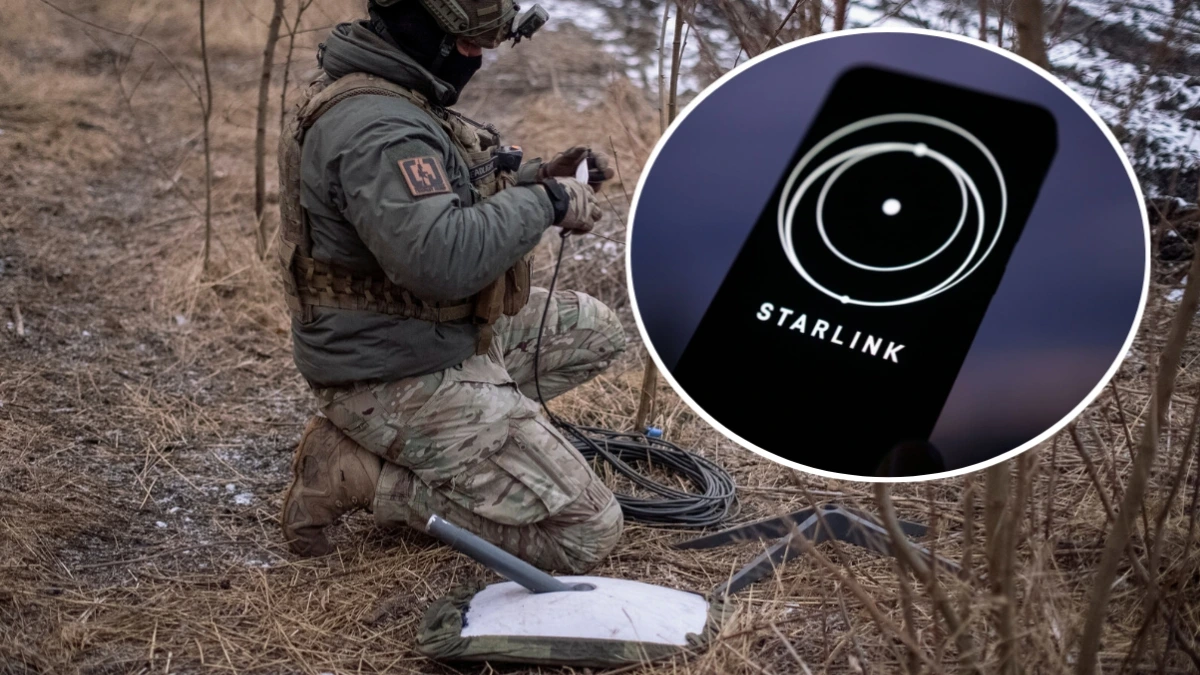
Russia’s military is scrambling to replace Starlink satellite internet on the battlefield after access to the SpaceX network was curtailed, disrupting a communications system Russian forces had been using illicitly during the war in Ukraine, Ukrainian officials said.
The curtailment of Russia Starlink access marks a rare instance in which a private commercial technology has directly altered battlefield conditions in Europe’s largest conflict since World War II.
Ukrainian officials say the move has degraded Russian communications at a critical moment, particularly for drone operations and frontline coordination, underscoring Moscow’s reliance on Western technology four years into the war.
Starlink, operated by Elon Musk’s SpaceX, provides low Earth orbit satellite internet designed for rapid deployment and high resilience against jamming.
Ukraine has relied on the system since early 2022. Russian forces, lacking a comparable capability, began using thousands of contraband terminals smuggled through Central Asia and other routes, according to Ukraine’s defense ministry.
Those terminals enabled Russian units to bypass unreliable military radios, coordinate troop movements and conduct drone strikes in contested areas.
Ukrainian officials say Russian forces increasingly integrated Starlink terminals directly into drones, improving range and accuracy while reducing vulnerability to electronic warfare.
Following talks between Ukrainian Defense Minister Mykhailo Fedorov and SpaceX representatives, Ukraine introduced a “whitelist” verification system that allows only approved Starlink terminals to connect.
Musk acknowledged the effort last week, writing on X that steps taken to stop unauthorized Russian use had been effective.
“The loss of Starlink removes a major force multiplier for Russian units,” said Kateryna Stepanenko, Russia analyst at the Institute for the Study of War.
“It does not stop operations entirely, but it increases friction, delays and exposure to Ukrainian countermeasures.”
Samuel Bendett, an adviser at the Center for Naval Analyses, said Russia’s dependence on illicit Starlink use highlighted structural weaknesses.
“Russia invested heavily in kinetic capabilities but underinvested in secure, flexible communications,” Bendett said. “That gap became visible once access was cut.”
Russian satellite systems, including those operated by Gazprom Space Systems, rely primarily on geostationary satellites with limited bandwidth and uneven coverage, analysts say. Such systems are less suited for mobile frontline units requiring rapid data transmission.
Battlefield Communications Comparison
| System | Orbit type | Coverage | Mobility | Typical use |
|---|---|---|---|---|
| Starlink | Low Earth orbit | Global | High | Drones, unit coordination |
| Gazprom Space | Geostationary | Regional | Low | Fixed command links |
| Fiber or radio | Ground based | Local | Low | Static positions |
Russian military bloggers embedded with frontline units have publicly acknowledged the impact. Yuriy Podolyaka, a Crimea based pro-war commentator, wrote on Telegram that communications were “in chaos” after the shutdown.
Another pro-war channel, Dva Mayora, said Russian units were rushing to deploy backup systems that were slower and harder to use.
Ukraine’s defense ministry said Russian forces were attempting workarounds by recruiting Ukrainian civilians to register terminals in their own names.
“It shows how critical Starlink became for the enemy,” said Andriy Kovalenko, a spokesman for Ukraine’s National Security and Defense Council. “They are trying to rebuild access through civilian networks.”
Analysts say Russia may expand use of fiber-optic lines, radio bridges and domestic satellites, but those options require time, logistics and training.
Ukraine is expected to continue refining verification to limit renewed Russia Starlink access while protecting its own connectivity.
The restriction of Russia Starlink access highlights how commercial satellite internet has become a strategic asset in modern warfare.
As both sides adapt, the episode underscores the growing influence of private technology providers on military operations and the challenges states face when critical capabilities lie beyond their direct control.
NOTE! This article was generated with the support of AI and compiled by professionals from multiple reliable sources, including official statements, press releases, and verified media coverage. For more information, please see our T&C.


