
KEY POINTS
- Bitcoin dropped under a key psychological threshold, intensifying downside risks.
- Institutional investors have shifted from net buyers to net sellers in 2026.
- Market data shows rising liquidations and weakening long term technical support for bitcoin.
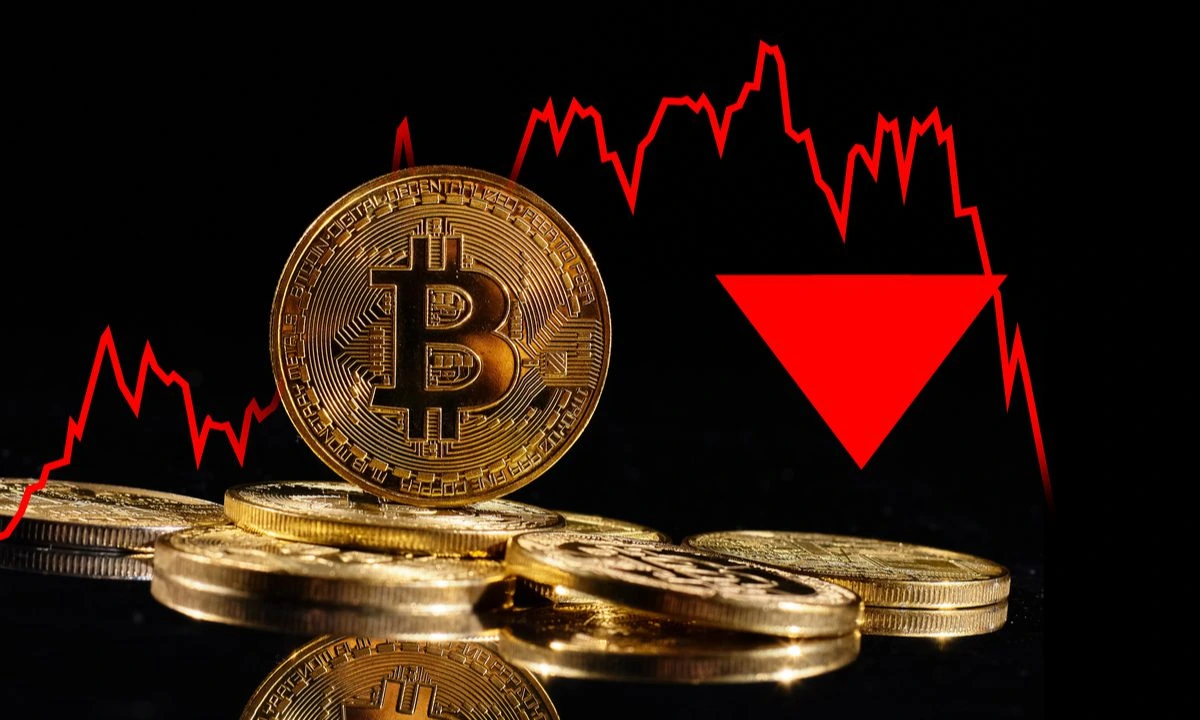
Bitcoin fell below the $70,000 mark on Thursday for the first time since November 2024, extending a months long decline as institutional selling, tighter liquidity and broader risk-off sentiment pressured digital assets across global markets.
The world’s largest cryptocurrency slid to about $69,300 during early US trading hours, according to CoinMetrics, marking a notable breach of a level many traders viewed as critical support.
The move underscores growing fragility in crypto markets as macroeconomic uncertainty and reduced speculative appetite weigh on prices.
Bitcoin’s decline follows a prolonged retreat from its record high above $126,000 reached in October.
After peaking amid optimism around institutional adoption and exchange traded fund inflows, prices have steadily eroded, leaving bitcoin down roughly forty percent from its peak.
The downturn has coincided with volatility in global equity markets, particularly technology stocks, and renewed pressure on other risk sensitive assets.
Market participants have closely monitored the $70,000 level, viewing it as both a technical and psychological benchmark. Its breach has amplified concerns that selling momentum could accelerate if buyers remain cautious.
Ether, XRP and other major cryptocurrencies have also posted sharper percentage losses, reflecting broader weakness across the sector.
James Butterfill, head of research at CoinShares, said the failure to hold $70,000 increases the likelihood of further declines.
“That level has been acting as a psychological anchor,” Butterfill said. “If it does not stabilize, historical patterns suggest prices could test the $60,000 to $65,000 range.”
CryptoQuant, a blockchain analytics firm, reported that bitcoin has now fallen below its three hundred sixty five day moving average for the first time since early 2022.
According to the firm, the asset has declined twenty three percent in the eighty three days since that technical breakdown, a sharper drop than during the initial phase of the 2022 bear market.
Maja Vujinovic, chief executive officer for digital assets at FG Nexus, said bitcoin’s price action reflects a shift away from narrative driven rallies.
“The market is no longer trading on hype,” Vujinovic said. “Liquidity conditions and capital flows are now the dominant forces.”
| Metric | Current Level | Previous Reference |
|---|---|---|
| Bitcoin price | ~$69,300 | Above $70,000 since Nov. 2024 |
| Distance from record high | About 40% lower | October peak near $126,000 |
| Crypto liquidations this week | Over $2 billion | Elevated versus recent weeks |
| ETF activity | Net sellers | Net buyers last year |
Ki Young Ju, founder and chief executive officer of CryptoQuant, said institutional behavior has shifted notably.
“Large holders who were absorbing supply last year are now distributing,” Ju said. “That change matters because institutional flows tend to set the medium term trend.”
A senior digital asset strategist at a European investment bank, who requested anonymity due to internal policy, said rising interest rates and cautious risk positioning have reduced demand.
“Crypto is being treated like other high beta assets,” the strategist said. “When liquidity tightens, these markets feel it first.”
Analysts say near term price direction will likely depend on whether long term holders step in to absorb selling pressure and whether macro conditions stabilize.
On chain data will be closely watched for signs of accumulation or further capitulation. Regulatory developments and ETF flows may also influence sentiment, though no immediate catalysts are evident.
Bitcoin’s fall below $70,000 highlights the evolving dynamics of a market increasingly shaped by institutional capital and global liquidity trends.
As speculative enthusiasm fades, price discovery is becoming more closely tied to broader financial conditions, reinforcing bitcoin’s growing integration into the global risk asset landscape.
NOTE! This article was generated with the support of AI and compiled by professionals from multiple reliable sources, including official statements, press releases, and verified media coverage. For more information, please see our T&C.


