
KEY POINTS
- Two detainees at the Dilley facility have confirmed measles infections, prompting quarantine measures and halted movement.
- Experts warn the virus can spread rapidly in congregate settings, particularly among unvaccinated populations.
- Advocates highlight longstanding concerns over health care and detention conditions for children and families.
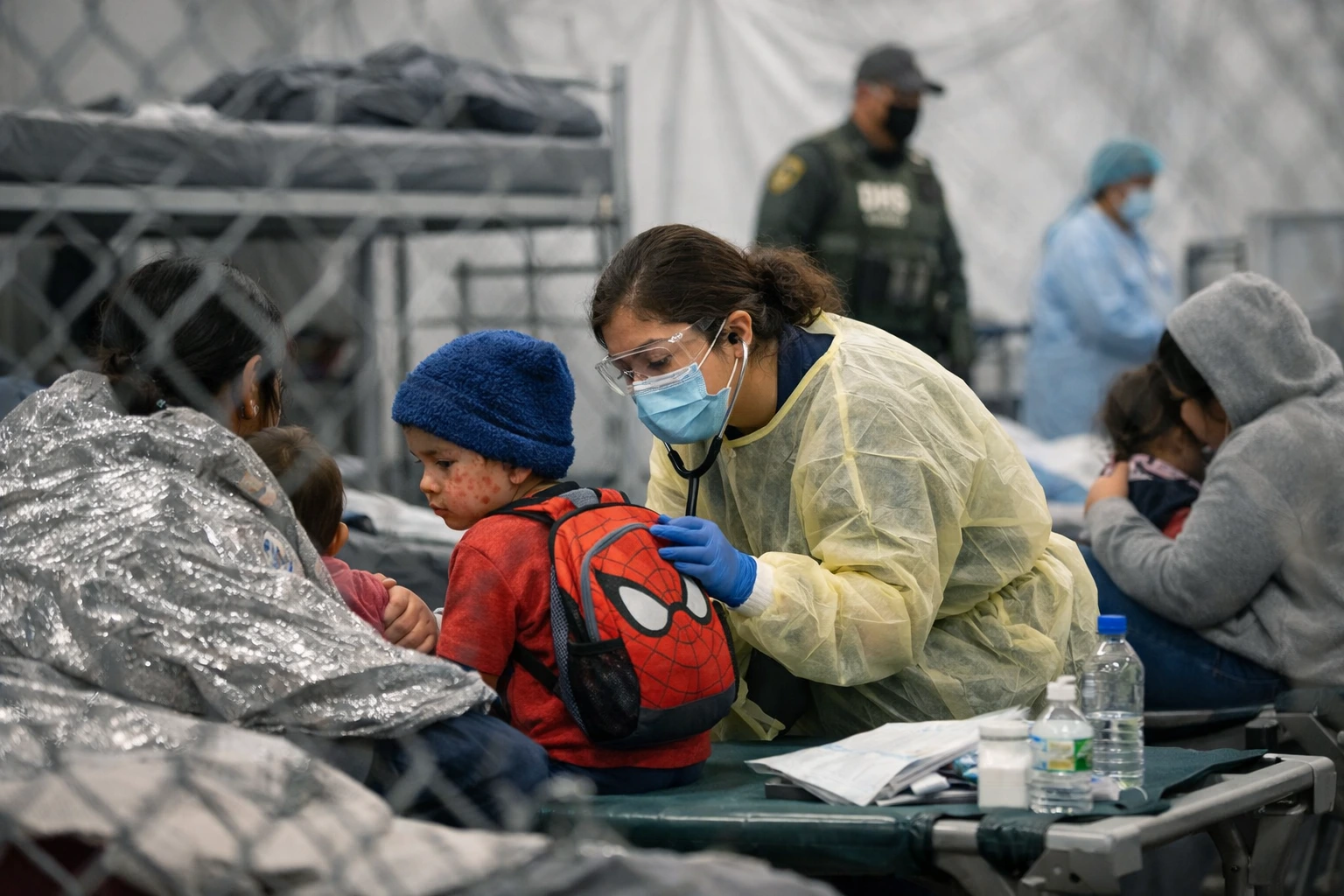
Dilley, Texas — Federal and state officials confirmed Saturday that two detainees at the South Texas Family Residential Center, the nation’s only current immigrant family detention facility, have active measles infections, prompting quarantines and heightened public health scrutiny.
The Department of Homeland Security halted all movement at the center, located about 70 miles south of San Antonio, while some detainees were isolated to prevent further transmission, Tricia McLaughlin, a DHS spokesperson, said in a statement.
The cases raise concerns amid longstanding reports of substandard conditions at the facility, which houses more than 1,400 migrants, including infants as young as two months.
The Dilley detention center gained renewed attention after the temporary transfer of 5 year old Ecuadorian Liam Conejo Ramos, who had been arrested with his father in Minneapolis.
A federal judge later ordered their release. Families at Dilley have historically faced extended detentions, with some held for more than eight months, despite federal guidelines limiting child detention to 20 days when accompanied by parents.
Reports have documented inadequate drinking water, poor hygiene, and round the clock lighting, adding to the risk of communicable disease spread.
The United States recorded over 2,200 measles cases in 2025, including a West Texas outbreak that hospitalized 99 people and resulted in two child fatalities. The Centers for Disease Control and Prevention define an outbreak as three or more related cases.
“Measles is among the most contagious viruses known, and in an institutional setting, unvaccinated individuals face near universal exposure,” said Peter Hotez, dean of Baylor College of Medicine’s National School of Tropical Medicine.
He emphasized the need for detailed vaccination data and rapid containment measures.
Elissa Steglich, co-director of the University of Texas at Austin Immigration Law Clinic, said the outbreak underscores the facility’s historically inadequate medical care.
“Over many years, complaints and reports have highlighted substandard health attention in immigration detention facilities,” Steglich said.
Lee Rogers, chief of podiatry at UT Health San Antonio, called for a coordinated public health response.
“This is a public health emergency. Congregate detention settings amplify exposure risks, and overlapping federal state lines can delay decisive outbreak control,” Rogers said.
| Metric | 2025 | 2026 (Current) |
|---|---|---|
| U.S. measles cases | 2,200+ | 2 confirmed in Dilley |
| West Texas outbreak | 762 | N/A |
| Hospitalizations (West Texas) | 99 | Unknown at Dilley |
| Child fatalities (West Texas) | 2 | 0 reported at Dilley |
| Detained individuals at Dilley | 1,400+ | 1,400+ |
Neha Desai, attorney with the National Center for Youth Law, said: “Children arriving relatively healthy have become seriously ill while detained.
Active measles infections exacerbate our concerns about the facility’s ability to safeguard vulnerable populations.”
Chris Van Deusen, a spokesperson for the Texas Department of State Health Services, confirmed the agency is coordinating with federal authorities to determine the number of vaccine doses required but deferred operational details to DHS.
Officials are monitoring detainees and taking “appropriate and active steps to prevent further infection,” McLaughlin said.
Measles’ incubation period and contagious window four days before and after rash onset complicate containment.
Public health experts stress vaccination verification, rapid isolation, and coordinated federal state response to prevent broader outbreaks.
The detection of measles at Dilley highlights persistent vulnerabilities in US immigration detention settings, particularly regarding the health and safety of children.
Federal and state authorities face the immediate challenge of containing the virus while addressing systemic concerns over detention practices, medical care, and outbreak preparedness.
NOTE! This article was generated with the support of AI and compiled by professionals from multiple reliable sources, including official statements, press releases, and verified media coverage. For more information, please see our T&C.


