
KEY POINTS
- A 4.2 magnitude earthquake struck near San Ramon, California, amid a swarm of more than 30 tremors in the East Bay.
- No injuries or major structural damage were reported, but BART trains ran at reduced speeds during safety inspections.
- Earthquake swarms in the region are linked to the Calaveras Fault system, though scientists cannot fully explain their occurrence.
SAN RAMON, California — A 4.2 magnitude earthquake shook the East Bay city of San Ramon Monday morning, part of a continuing swarm of tremors that has rattled the region in recent months, the US Geological Survey said.
The temblor struck at 7:01 AM local time, following a 3.8 quake at 6:27 a.m., with dozens of smaller earthquakes reported in the area shortly afterward.
Residents across San Ramon, Oakland, Richmond, San Leandro, and Hayward reported feeling the shaking. Video from a local 7-Eleven captured products falling from shelves.
Despite the tremors, authorities reported no injuries. BART issued an alert advising passengers that trains were running at reduced speeds while crews conducted track safety inspections, warning riders to expect up to 20-minute delays.
“Safety is our priority, and all tracks in the affected areas are being thoroughly inspected,” said Jim Allison, BART director of operations.
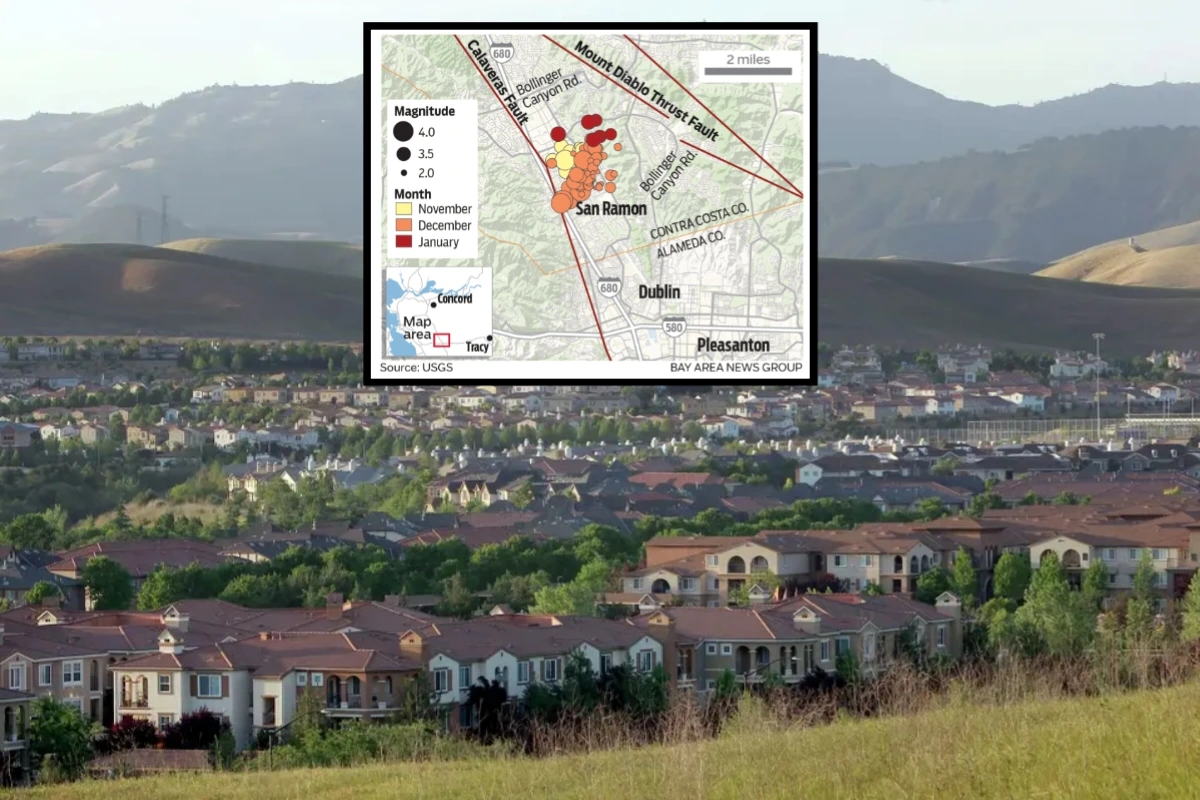
San Ramon has experienced intermittent earthquake swarms over the past several months. Between November and December 2025, the East Bay city recorded 87 earthquakes of magnitude 2 or higher, according to USGS data.
The Tri-Valley region sits atop a branching section of the Calaveras Fault, a known source of seismic activity in Northern California.
Earthquake swarms are characterized by multiple small quakes concentrated in a localized area over a short period.
While the phenomenon is not fully understood, seismologists suggest that underground fluid movements may trigger repeated tremors.
“Swarm activity does not necessarily indicate a larger earthquake is imminent,” said Lucy Jones, senior seismologist at the USGS. “However, monitoring these events helps us better understand fault behavior in populated areas.”
Mark Benthien, executive director of the Southern California Earthquake Center, added, “San Ramon’s proximity to the Calaveras Fault means repeated swarms are expected.
The local authorities’ swift response minimizes potential disruption and ensures public safety.”
“I felt my apartment shake for several seconds, and the windows rattled,” said Angela Martinez, a San Ramon resident. “It’s unsettling, but we’ve learned to expect minor quakes here.”
USGS geologist James McBride noted, “The concentration of quakes along Alcosta Boulevard aligns with known fault structures. Monitoring will continue to track frequency and magnitude.”
Seismologists continue to monitor the East Bay for ongoing swarm activity. While large earthquakes are not predicted solely based on these tremors.
Authorities advise residents to maintain emergency preparedness measures, including securing heavy objects and reviewing evacuation plans.
Monday’s 4.2 magnitude quake underscores the East Bay’s vulnerability to repeated seismic events.
Ongoing monitoring by USGS and local agencies aims to mitigate risks, provide timely alerts, and deepen understanding of earthquake swarm behavior in California’s complex fault system.
NOTE! This article was generated with the support of AI and compiled by professionals from multiple reliable sources, including official statements, press releases, and verified media coverage. For more information, please see our T&C.


